




Quick answer: At 200 people, most companies run onboarding on two layers. An HR platform handles the administrative side: offer letters, Form I-9, tax forms, payroll, benefits, and (with Rippling) device and app provisioning. A training-and-process platform handles the part that makes new hires productive: role-based training, documented processes, and tracking who has learned what. For the HR layer, the strongest fits at this size are Rippling for HR and IT automation, BambooHR for a simple and reliable HRIS, HiBob for a culture-first mid-market HRIS, Paylocity for payroll plus engagement, Justworks if you want a PEO, Deel for global teams, and Workday if you're on track for 1,000+. For the training layer, Trainual pairs with any of them.
Three things change when a company reaches 200 people. Onboarding volume jumps: a team growing 20% a year adds 40 people, and replacing even modest turnover adds dozens more. Onboarding stops being run by a few people and spreads across 20 or more managers, each with their own way of doing it. And the administrative load (multiple states, more benefits options, more systems to provision) gets too big for spreadsheets and email.
The stakes are high. Gallup found that only 12% of employees strongly agree their organization does a great job onboarding new hires, while Brandon Hall Group research ties strong onboarding to 82% better new hire retention and more than 70% higher productivity.
This guide covers what onboarding software needs to do at 200 people, the best options for each part of the job, what each one costs, and how to put the pieces together.
What is the best employee onboarding software for a 200-person company?
The best employee onboarding software for a 200-person company is usually a pair, not a single tool. Choose an HR platform based on your biggest administrative need (IT provisioning, simplicity, culture, payroll, multi-state benefits, or global hiring), then add a training-and-process platform so every new hire learns the job the same way regardless of which manager they report to. Most HR platforms handle paperwork and setup well but don't document how work is done or deliver role-based training, which is where onboarding at 200 people tends to break.
Quick picks:
- Best training-and-process layer (pairs with any HRIS): Trainual
- Best for HR and IT automation: Rippling
- Best simple, reliable HRIS: BambooHR
- Best culture-first mid-market HRIS: HiBob
- Best for payroll plus engagement: Paylocity
- Best PEO for multi-state compliance and benefits: Justworks
- Best for global teams: Deel
- Best if you're heading toward 1,000+ employees: Workday
The two layers of onboarding at 200 people
Every onboarding has two jobs. The first is getting someone set up as an employee. The second is getting them able to do the job. At 20 people, a founder handles both in a week. At 200, they need different systems.
Most onboarding software comparisons only cover the first layer, because most of the tools on those lists are HR platforms. That's why a 200-person company can buy a strong HRIS and still hear managers say new hires take too long to ramp. The paperwork is done on day one. The learning is still happening by shadowing whoever has time.
The best employee onboarding software for a 200-person company
1. Trainual: best training-and-process layer for consistent ramp
The layer that turns 20 managers' versions of onboarding into one.
Trainual handles the second layer: documenting how work is done and getting every new hire to learn it the same way. Each role gets a structured onboarding path built from your documented processes, policies, and HR & compliance courses, assigned automatically through role-based training paths. AI-powered search answers new hire questions from your own content, and policy acknowledgments and completion tracking show who has finished what. HRIS integrations sync people from your HR system and flag new hires with the onboarding steps to take.
It also connects onboarding to what comes after. The Operations suite gives new hires visible goals and scorecards from week one, and the Performance suite brings review cycles and growth areas linked to training to the 90-day check-in.
Best for at 200 people: companies where onboarding quality depends on which manager a new hire gets, or where ramp time is the complaint, not paperwork.
Watch-out: Trainual isn't an HRIS. It doesn't run payroll, benefits, offer letters, Form I-9, or device provisioning, so it pairs with one of the HR platforms below.
Pricing: Plans are built around the suites you use. Book a demo for a quote.
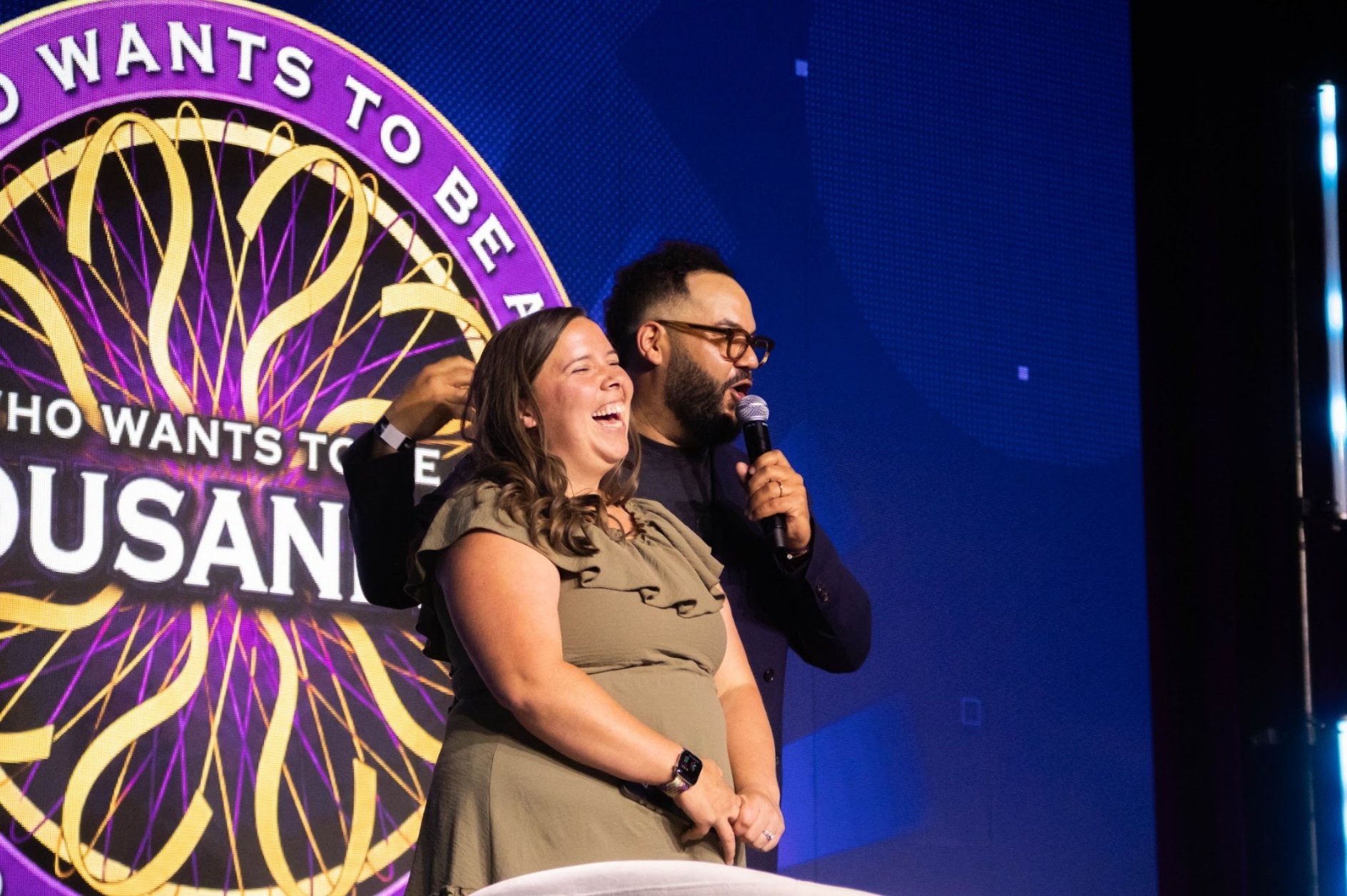
The Phoenix Suns used this approach to get 600 employees through core training in their first week, at more than three times the size of a 200-person company.
2. Rippling: best for HR and IT automation
One workflow for payroll, benefits, devices, and app access.
Rippling unifies HR, IT, and finance, so a single onboarding workflow can set up payroll and benefits, provision a laptop, and create accounts in tools like Google Workspace and Slack. It supports Form I-9 natively, and its workflows use conditional logic, which helps when onboarding differs by role, location, or department.
Best for at 200 people: tech-heavy or hybrid teams where IT provisioning is a big part of onboarding.
Watch-out: costs climb as you add modules, and HR teams without technical backgrounds can find the depth takes time to learn. Like other HR platforms, it gets people set up rather than documenting how the work is done. See Trainual vs. Rippling for how the two fit together.
Pricing: from $8 per employee per month plus a base fee, with a custom final quote.
3. BambooHR: best simple, reliable HRIS
The HRIS a small HR team can run without consultants.
BambooHR is one of the most widely used HR platforms in the 50 to 500 employee range, known for an approachable interface, onboarding checklists, e-signatures, new hire packets, and a large integration library. At 200 people, where HR is often a small team rather than a department, its ease of administration matters.
Best for at 200 people: companies that want a clean core HRIS with onboarding included and minimal setup.
Watch-out: I-9 and E-Verify run through a partner integration, payroll is a paid add-on, and workflow logic is simpler than Rippling's.
Pricing: from $10.25 per employee per month for companies with more than 25 employees.
4. HiBob: best culture-first mid-market HRIS
Onboarding that feels like joining a team, not filling out forms.
HiBob (Bob) is built for mid-sized and global companies, with preboarding portals, new hire introductions, onboarding surveys, and a modern interface new hires enjoy using. It launched native US payroll in 2026.
Best for at 200 people: culture-driven or multi-country teams that want onboarding to feel welcoming and modern.
Watch-out: I-9 and E-Verify run through partners, and compliance tooling is lighter than payroll-first platforms.
Pricing: custom quote.
5. Paylocity: best for payroll plus engagement
Payroll-first HR with a social layer for new hires.
Paylocity combines its own payroll with onboarding packets, native I-9, benefits enrollment, and a Community feed that helps new hires connect with colleagues. It's built for mid-market companies, which puts a 200-person team squarely in its range.
Best for at 200 people: companies that want payroll, HR, and onboarding in one system, with some engagement built in.
Watch-out: pricing isn't published, and like other HR platforms it focuses on administration and engagement rather than role-specific training.
Pricing: custom quote.
6. Justworks: best PEO for multi-state compliance and benefits
Co-employment that takes compliance and benefits off a small HR team's plate.
Justworks is a professional employer organization (PEO). It co-employs your staff, which bundles payroll, benefits, HR tools, and onboarding paperwork into one service and can give a 200-person company access to larger-group benefits plans. It's most useful when a small HR team is managing employees across many states.
Best for at 200 people: US companies that want to outsource payroll and benefits administration and much of the compliance burden.
Watch-out: a PEO is a bigger commitment than software, because it changes your employment structure. Weigh flexibility and long-term cost against the administrative relief.
Pricing: per-employee monthly pricing; check Justworks for current plans.
7. Deel: best for global teams
Hiring and onboarding across borders without setting up entities everywhere.
Deel handles international hiring, contractor and employee management, global payroll, local compliance, and employer-of-record services, alongside native digital I-9 for US hires.
Best for at 200 people: companies hiring across countries or with a large contractor base.
Watch-out: for domestic-only teams, it's not the natural first choice, and contractor and EOR services are priced separately.
Pricing: HR Core from $5 per employee per month, with contractor and EOR services priced separately.
8. Workday: best if you're heading toward 1,000+ employees
Enterprise HCM, with a midsize package.
Workday is an enterprise HCM suite with guided onboarding journeys, native I-9, deep analytics, and its own payroll. Its Workday GO package targets midsize companies with a faster rollout.
Best for at 200 people: companies growing fast toward 1,000+ employees that want to buy once for the long term.
Watch-out: at 200 people, cost and implementation effort are usually more than the onboarding need requires. Even the midsize package is quoted at about one quarter to go live.
Pricing: custom quote.
The 8 tools at a glance
How to choose onboarding software for a 200-person company
Start with the problem you hear about most.
- "IT setup takes forever on day one." Rippling.
- "Our HR team is two people and needs something simple." BambooHR.
- "We want new hires to feel connected, across countries." HiBob.
- "We want payroll and onboarding in one place." Paylocity.
- "Multi-state compliance and benefits are crushing us." Justworks.
- "We hire internationally." Deel.
- "We'll be 1,000 people in three years." Workday.
- "New hires take too long to ramp, and it depends on their manager." Trainual, alongside whichever HR platform you choose.
Then check five things that matter more at 200 people than at 50:
- Compliance coverage: Form I-9, E-Verify, and tax forms for every state you hire in.
- Manager tasks: onboarding steps assigned to managers, with reminders, not just to HR.
- Role-based content: different paths for different roles, so a sales hire and a field technician don't get the same onboarding.
- Reporting by manager and department: a way to see where onboarding is stalling across teams.
- Integration between layers: your HR platform and your training platform should share people and roles, so a new hire in the HRIS automatically gets the right training path.
How the two layers work together
The setup most 200-person companies end up with looks like this. The HR platform owns the employee record, paperwork, payroll, benefits, and provisioning. When someone is hired and added to that system, the integration syncs them into the training platform and flags them for onboarding, and once their role is set, the training path for that role follows. From there, the new hire works through their role's processes, policies, and courses, managers see progress, and HR sees completion across every team.
The connection keeps going after onboarding. In Trainual, the same role that defines a new hire's training also connects to their goals and scorecard in the Operations suite and their first review in the Performance suite. The 90-day check-in is then grounded in what the new hire has learned and delivered, not in a manager's memory.
Adding a second tool is a real cost. In Trainual's operations survey, 57% of respondents named "one more tool" as a barrier to fixing how their team runs. That's why the integration between the two layers matters more than any single feature: if people and roles sync automatically, the second layer adds capability without adding admin.
For more on building this setup, see how to integrate HR systems with role-based onboarding, how to map SOPs to role-based onboarding, and the best onboarding software for 50 to 100 employees if part of your company is still at that stage. Teams that made the switch describe the results in 5 companies cutting onboarding time with Trainual, including Trailstone Insurance, which cut onboarding time by 60%.
Ready to see how Trainual works?
👉 Book a demo and see how Trainual works alongside your HR platform to get 200 people ramped the same way.
Want a sneak peek?
👉 Read customer stories from growing teams who've made onboarding consistent across every manager and location.
Frequently asked questions
What is the best employee onboarding software for a 200-person company?
Most 200-person companies use two tools: an HR platform for paperwork, payroll, benefits, and provisioning, and a training-and-process platform for role-based ramp. Strong HR platforms at this size include Rippling for HR and IT automation, BambooHR for simplicity, HiBob for culture-first teams, Paylocity for payroll plus engagement, Justworks as a PEO, and Deel for global hiring. Trainual is the training-and-process layer that pairs with any of them.
Do I need separate onboarding software if I already have an HRIS?
For the administrative side, no. Most HR platforms handle offer letters, e-signatures, Form I-9, tax forms, and benefits enrollment. For the training side, usually yes. HR platforms rarely document how work is done or deliver role-based training, so 200-person companies that want consistent ramp across managers typically add a training-and-process platform that syncs with the HRIS.
Is Rippling or BambooHR better for a 200-person company?
Rippling fits better when IT provisioning and automation are a big part of onboarding, since it can set up devices and app access in the same workflow as payroll and benefits. BambooHR fits better when a small HR team wants a simple, easy-to-run HRIS. Both handle the administrative side of onboarding, and neither documents how work is done, so many companies pair either one with a training platform.
How much does onboarding software cost for 200 employees?
Most HR platforms price per employee per month. Published starting rates include $8 per employee plus a base fee for Rippling, $10.25 per employee for BambooHR above 25 employees, and $5 per employee for Deel HR Core. HiBob, Paylocity, and Workday use custom quotes. At 200 employees, per-employee pricing adds up quickly, so request quotes for your exact headcount and modules.
Is Workday overkill for a 200-person company?
Usually, unless you're growing fast toward 1,000 or more employees and want to buy once. Workday's depth and implementation effort are built for large organizations, and even its midsize package is quoted at about one quarter to go live. Most 200-person companies get faster value from a mid-market HR platform.
Should a 200-person company use a PEO or an HRIS for onboarding?
A PEO like Justworks makes sense when you want to outsource payroll, benefits, and much of the compliance burden, especially across many states, and you're comfortable with co-employment. An HRIS makes sense when you want to keep employment in-house and control your own benefits and processes. Either way, the training side of onboarding still needs its own system.
What features matter most in onboarding software at 200 employees?
Compliance coverage for every state you hire in, manager task assignment, role-based onboarding paths, reporting by manager and department, and integration between your HR platform and your training platform. At this size, the biggest risk is inconsistency across managers, so role-based content and visibility into progress matter as much as paperwork automation.
How long does it take to implement onboarding software for 200 employees?
It varies by platform. Among vendors that publish timelines, Rippling cites two to four weeks for most implementations, and Workday's midsize package is about one quarter. Training-and-process platforms can launch faster when you start with your highest-volume roles and add the rest over time.