




⭐ TL;DR: The results
- 70 → ~290 employees — quadrupled headcount without onboarding suffering
- Onboarding scores stayed strong — validated through new hire, manager, and annual engagement surveys
- Repeat questions dropped significantly — centralized info and the redirect habit turned Trainual into a genuine self-serve system
- Department-level customization — role-specific onboarding paths mean new hires get what they need, not everything at once
- Cross-departmental visibility — any employee can search across teams to find processes and answers without tracking someone down
- Documentation ownership spread company-wide — directors and rising talent own their departments' subjects, reducing single points of failure
- Reporting democratized — department heads now run their own audits, taking the load off central admin
- AI upskilling centralized — course access requests, funding processes, and learning resources all live in one place
829 Studios is a tech-enabled digital marketing partner supporting clients from SMB to enterprise across paid media, content, PR, creative, and more. Check out their LinkedIn here.
Agency life moves fast
Digital marketing agencies are fast-paced, ever-changing environments.
Deadlines stack. Clients change their minds. New platforms emerge every six months. Teams grow fast, and the pressure to deliver never lets up — even when the person who knows how to do something is on vacation, on a call, or just hired two weeks ago.
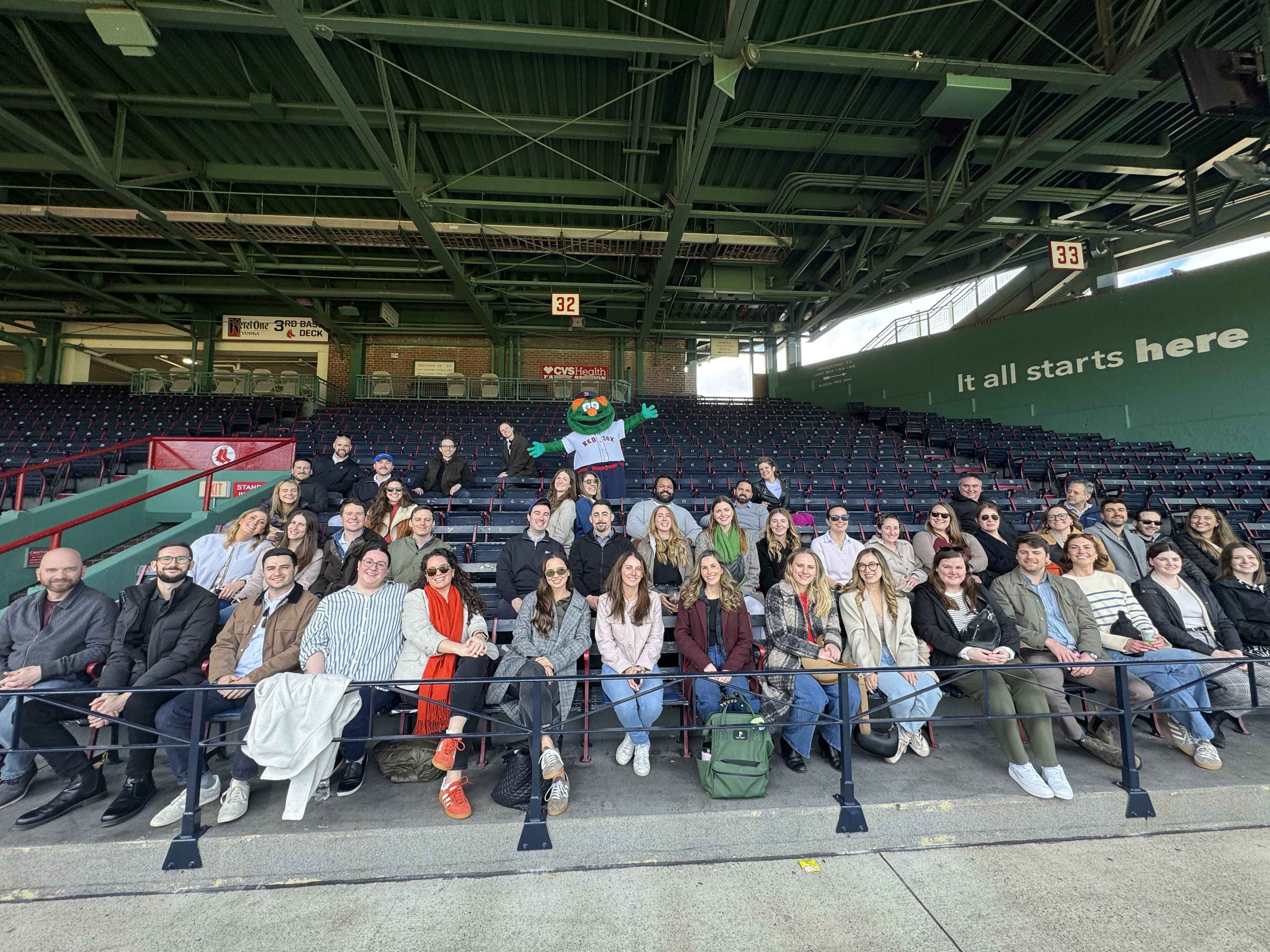
829 Studios knows this better than most. They're a tech-enabled digital marketing partner that's been at it for nearly 20 years — starting with camp websites before evolving into a full-service partner covering paid search, paid social, programmatic, content, PR, creative, and more. Today, they sit at roughly 290 employees and are actively moving upmarket toward mid-size and enterprise clients.
Getting there without letting onboarding, consistency, or institutional knowledge fall apart? That's the story.
From scattered docs to one place that works
When COVID hit and brands doubled down on digital work overnight, 829's headcount exploded. Fast growth means fast hiring — and fast hiring means a flood of new people who need to get up to speed immediately.
Before Trainual, information lived everywhere. Zendesk articles. Company files. Knowledge tucked inside people's heads. The kind of setup where finding the answer to a simple question meant knowing exactly who to ask. It's the same pattern we've seen across companies that replaced binders, docs, and wikis with Trainual — scattered information becomes a single searchable system.
"There's certain tasks I'll do once a month and sometimes I forget the exact process," says Kate Reilly, 829's HR and Learning & Development lead. "I'm able to go back and do the training again step by step."
That's the shift Trainual made possible — not just having information documented, but having it findable in seconds by anyone who needs it. No chasing down a manager. No digging through shared drives. No "I think this is how we did it last time."
One search. Done.
Onboarding that truly prepares people
New hire onboarding at a 290-person company with a dozen service lines is not a simple effort.
829 operates across departments — paid social, paid search, programmatic, content, PR, creative — and each one has its own processes, tools, and expectations. A one-size-fits-all onboarding doesn't cut it. Neither does throwing everything at someone on day one and hoping it sticks.
Kate built a system that solves both problems. Department heads and directors own their subjects, meaning onboarding is customized to what each person needs to know for their role — not a generic information dump. Kate built a lightweight guide on what engaging training looks like so department heads weren't starting from scratch. And because Trainual lets her nest subjects across departments, someone in paid advertising can get the full paid media picture — paid social, paid search, and programmatic — or just the slice relevant to them.
"The way that Trainual does the grouping so that I can put subjects in different umbrellas is a big enabler," Kate says.
The result: new hires walk in ready, not overwhelmed. And when they do feel like information is coming at them fast?
"It's not a one-time thing," Kate says. "You can always return to it."
That's the part most onboarding programs miss. Nobody retains a handbook on day one. The real value shows up on day 30, when someone needs to know exactly how to submit a referral or request a digital learning license — and they find it in twelve seconds without asking anyone. It's exactly the dynamic we break down in how to onboard a new hire in their first 30 days.
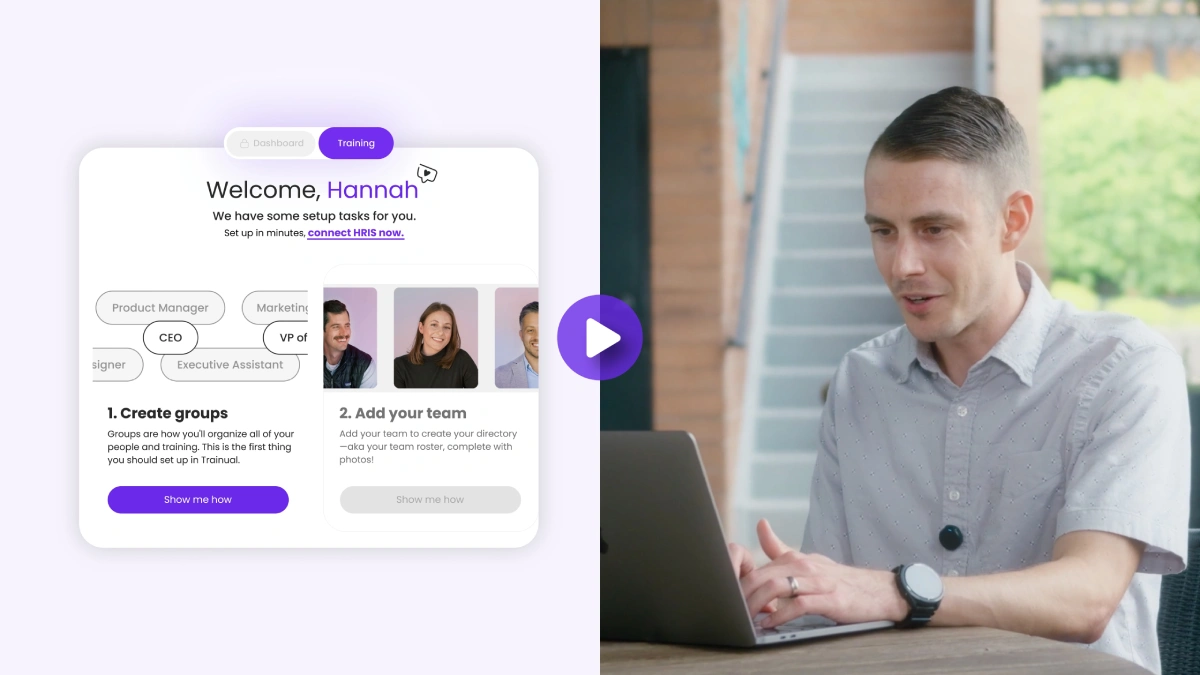
The screen capture feature is a bigger deal than it sounds
Digital marketing is a lot of clicking. Navigating platforms, pulling reports, setting up campaigns — so much of the work is visual and step-by-step, which makes documentation uniquely painful when you're doing it manually.
"With our previous training, people would have to do a lot of screenshots — and that's just not as engaging," Kate says. "The screen capture component being built into Trainual shortens the process significantly, to not only create the training but also make it more engaging."
For a tech-forward agency team that's already documentation-averse, removing friction from the creation side is just as important as removing friction from the consumption side. If building a subject takes half the time, more subjects get built. The same logic applies to Trainual's AI-powered SOP creation features — lower the bar to documenting, and more documentation happens.
The search bar is doing more work than you think
829 has a lot of information in Trainual. And the thing that makes a large, well-documented system useful — rather than just technically thorough — is the ability to find things instantly.
Kate keeps coming back to this.
"There are so many different search bars within the platform. You can search on a keyword, search within the subject level — you can get the subject, the page, or just a mention of it. And that is huge."
The practical impact is real. People have stopped asking Kate questions they should be able to answer themselves — not because she told them to stop, but because finding the answer in Trainual is faster than waiting for a reply. When someone asks about the referral program, she doesn't explain it. She sends a link.
"My constant refrain is: yes, I do have the answer for that. Here — click this link in Trainual."
She coaches her managers to do the same. Over time, the behavior becomes the culture. This is the exact pattern that breaks the help-desk loop senior employees get stuck in — redirect to the documented answer, every time, until it's the team's default.
Reporting that scales with the team
Early on, Kate was the only one with visibility into how Trainual was being used. She was manually checking completion rates, auditing content uploads, and tracking everything herself on a quarterly basis.
Then reporting access opened up to department heads — and the whole system got lighter.
"Now that reporting access can be seen by more people besides the admin, it's a lot easier for me to instruct department heads that they can go through and do the audits themselves," Kate says.
Instead of one person watching everything, ownership is distributed. Directors can see who's completed what, where the gaps are, and what needs updating — without routing every question through Kate. The system maintains itself. We've covered the broader playbook in how to use an LMS for team accountability tracking and reporting.
Giving people a reason to own it
One of the more underrated things Kate did: she turned subject ownership into a career opportunity.
Rather than keeping documentation centralized, she pushed it out to department heads — and encouraged them to designate someone below them to own and maintain their subjects. She frames it not as extra work, but as visibility. This is the same kind of thinking that goes into defining ownership across overlapping roles — distribute accountability rather than centralize it.
"Being the person to audit information, create new subjects, and get them on the platform — that's a good leadership opportunity," she says. "If you're looking to give someone more responsibility and visibility, this is a great way to do it."
The upside is mutual. Rising employees get real ownership of something meaningful. Kate doesn't have to chase anyone down to get content built. And departments stay accountable to keeping their own knowledge current. It's also one of the strongest defenses against the knowledge loss that happens when a senior employee leaves without documenting — distributed ownership means no single point of failure.
One thing she's clear on: someone needs to own the whole system. Not a committee — one person. The accountability has to land somewhere, or it lands nowhere.
"Designate one main person who is the decision maker," she says. "One person needs to be ultimately accountable."
Keeping pace with AI — inside Trainual
If there's one thing every marketing agency is navigating right now, it's AI. How to use it. How to train for it. How to make sure the team isn't falling behind.
829 is leaning in. They're actively distributing digital course licenses to employees who want to upskill — and the entire process for requesting access lives in Trainual.
"People are asking me all the time how to get access to this platform or get funding for a new initiative," Kate says. "I just refer them to that subject, where the process is outlined really cleanly. And they're able to self-serve."
One subject. Zero back-and-forth. And on the creation side, Kate's keeping an eye on how Trainual's AI features are developing — particularly for building subjects from scratch.
"I've seen Trainual grow that capability a lot more than before. It's exciting to see the evolution."
Nearly 300 people. Onboarding scores still high.
Here's the proof point that matters.
829 went from roughly 70 employees to nearly 290 — through a merger, through market shifts, through years of layering on service lines and departments — and their onboarding held up. They know because they measure it.
New hire surveys. Manager surveys. An annual employee engagement survey that asks whether people feel equipped with the tools and resources they need.
"If we didn't have Trainual, that would probably have dipped down quite a bit," Kate says.
That's not a marketing quote. That's an L&D professional who spent three years building something, watching it run, and telling you honestly what the data showed.
For any agency in growth mode, that's the outcome worth chasing.
Ready to build what 829 built?
👉 If your agency is growing fast and your processes aren't keeping up, Trainual was made for exactly this. One place for everything your team needs to know — searchable, scalable, and built to grow with you. Book a demo and see it in action.