





Strong onboarding has been linked to 82% better retention and a 70% lift in productivity (Brandon Hall Group), yet roughly 1 in 5 new hires leaves within the first 90 days (Enboarder). For a company adding people every month, the space between those two numbers is where growth either compounds or stalls. Hire fast without a way to bring people up to speed, and each new face adds confusion instead of capacity — questions pile onto the same few senior people, the work gets done differently every time, and the knowledge that makes the company good stays locked in a handful of heads.
That's the onboarding problem unique to fast growth: the rate of hiring outpaces the systems meant to support it. A process that worked at 15 people breaks at 50, and the patch — a senior person walking each new hire through the job — is exactly the thing that doesn't scale. What a fast-growing company needs instead is onboarding software that does three things at once: centralizes knowledge so it's not trapped in people, speeds ramp time so new hires contribute sooner, and delivers role-based training so each person learns the right job — with search fast enough that answers are self-serve.
Trainual is built for exactly that. It turns how the company works into structured, role-based onboarding backed by a searchable knowledge base, so growth doesn't dilute how well the work gets done. Here's what that looks like.
Centralize knowledge so it isn't trapped in people
In a fast-growing company, the most dangerous place for knowledge to live is in someone's head. It doesn't scale, it walks out the door when they leave, and it makes every new hire dependent on catching a busy person at the right moment. Centralizing it is the foundation everything else builds on.
The fix is to capture how the company operates as process documentation in one searchable system — the procedures, the policies, the how-we-do-it-here — so it's an asset the company owns rather than a risk it carries. Done well, that documentation becomes both the onboarding content for new hires and the reference the whole team uses day to day. How to Document Institutional Knowledge Before Senior Employees Leave and How to Turn Institutional Knowledge Into Documented Systems cover the capture work.
Speed ramp time with role-based paths
Centralized knowledge only speeds ramp if each new hire gets the right slice of it. A generic onboarding track makes a sales hire sit through operations content and leaves a manager without the context they need — slow for everyone and relevant to no one.
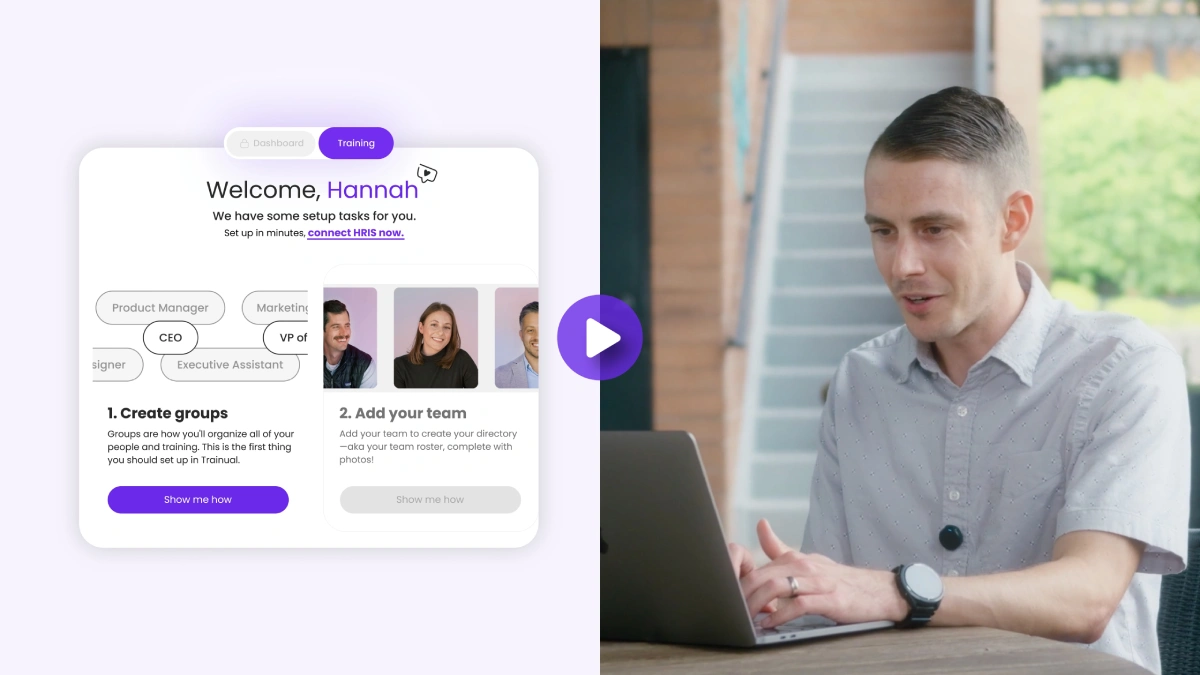
Role-based onboarding fixes that by assigning each person a training path built for their role, sequenced so they learn what they need in the order they'll use it. New hires reach productive work faster because they're not wading through irrelevant material, and managers get their time back because the path does the explaining. How to Onboard a New Hire in Their First 30 Days walks through what that ramp looks like.
AI-powered search so answers are instant
Even the best onboarding path ends, but the questions don't. The difference between software that gets used and software that gets abandoned is whether a new hire can find an answer the moment they're stuck — without interrupting someone or guessing.
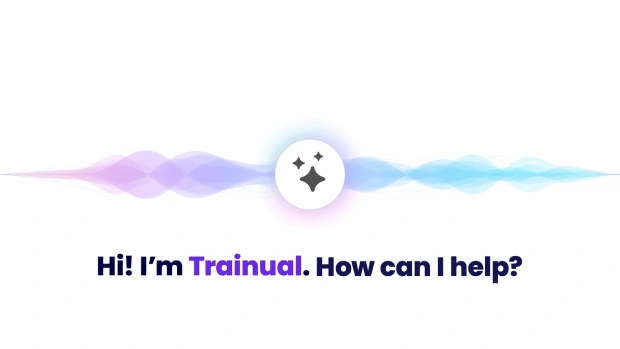
AI-powered search turns the centralized knowledge base into something a new hire can simply ask, getting the right procedure or policy back in seconds rather than scrolling or messaging a colleague. For a fast-growing company, that self-service is what keeps onboarding from becoming a permanent drain on senior people's time — the searchable knowledge base answers the routine questions so the team doesn't have to, all year, not just in week one.
Onboarding that scales as the company changes
A fast-growing company changes constantly — new tools, new processes, new roles every quarter. Onboarding that's accurate today is wrong by next quarter unless something keeps it current, and stale onboarding is worse than none because it teaches the wrong thing confidently.
Keeping it current is structural: give each piece of content a clear owner, use version history so changes are tracked and the latest version is the trusted one, and keep everything where it can be edited in place rather than rebuilt. Connect it to the HRIS, Slack, and SSO the team already uses so adding a hire triggers the right onboarding automatically. That's what lets onboarding keep pace with growth instead of falling a quarter behind it.
Onboarding software that grows with you
Putting it together, onboarding software that keeps up with a fast-growing company does four things: centralizes knowledge so it's an owned asset rather than a personal dependency; delivers it as role-based paths so each hire ramps on what's relevant; makes it instantly searchable so answers are self-serve; and keeps it current with ownership and version history as the company changes. Connect that to the systems the team already uses, and onboarding scales with headcount instead of buckling under it.
The payoff is growth that compounds. Each new hire ramps faster than the last, the knowledge that makes the company good gets stronger instead of more diluted, and senior people get to build rather than repeat themselves. If you're weighing whether your current setup can keep up, 5 Signs You Need a Modern LMS, Not an Enterprise One and How to Roll Out an LMS Without It Failing are useful next reads, and the agency and accounting teams in why marketing agencies and accounting and tax firms choose Trainual show it in practice.
Ready to see how Trainual works?
👉 Book a demo and see how Trainual helps fast-growing companies centralize knowledge, speed ramp time, and onboard by role.
Want a sneak peek?
👉 Read customer stories from fast-growing teams who've kept onboarding consistent as they scaled.
Frequently asked questions
What is the best onboarding software for fast-growing companies?
The best fit centralizes knowledge, delivers role-based onboarding, and makes answers instantly searchable — so ramp scales with hiring instead of routing through a few overloaded people. Trainual is built for that, turning how the company works into role-based paths backed by an AI-powered, searchable knowledge base, with version history that keeps it current as the company changes. Transparent-priced LMS tools and HR suites cover parts of the picture, but the deciding factor for a fast-growing company is whether onboarding stays consistent and self-serve as headcount climbs.
How does onboarding software speed up ramp time?
By giving each new hire a role-based path built for their job, so they learn what's relevant in the right order instead of wading through generic content — and by making answers searchable so they're not blocked waiting on a senior person. Centralized, current documentation means the path teaches the real work, and completion tracking shows when someone's ready. Together those compress the time from hire to productive and make it predictable rather than dependent on who has time to train.
What is role-based onboarding?
Role-based onboarding gives each new hire a path built for their specific role — its responsibilities, sequence, and required knowledge — rather than one identical program for everyone. For a fast-growing company hiring across many roles at once, it matters because a generic track is slow and irrelevant for most people; role-based paths get each person to productive work faster on the content that applies to them.
How does AI-powered search help with onboarding?
AI-powered search lets a new hire ask a question and get the right procedure or policy back in seconds, instead of scrolling through documents or messaging a colleague. That turns the knowledge base into genuine self-service — which is what keeps onboarding from becoming a permanent demand on senior people's time. For fast-growing teams especially, instant answers are what make the software something people keep using long after week one.
Why do fast-growing companies need dedicated onboarding software?
Because the rate of hiring outpaces informal onboarding. A senior person walking each new hire through the job works at 15 people and breaks at 50 — it doesn't scale, and it spends the company's most valuable time. Dedicated onboarding software centralizes the knowledge, delivers it by role, keeps it current, and makes it searchable, so onboarding scales with headcount and the knowledge that makes the company good is captured rather than carried in a few people's heads.