





If you manage a team and "accountability" makes you wince a little, you're not alone. For most managers the word comes loaded with everything they don't have time for — chasing people for updates, status meetings that breed more status meetings, hovering over work that should run without them. So accountability quietly becomes the thing that slips: not because managers don't care, but because the only version they've been shown costs more time than they have.
There's a lighter version. Real accountability isn't surveillance — it's clarity about who owns what, visibility into how it's going, and a small, fixed rhythm for surfacing problems early. Built right, it takes a manager minutes a week and runs largely on its own. Here's a lightweight accountability system you can put in place without micromanaging anyone or adding a single meeting. Trainual assembles all of it inside Operations suite.
Why accountability usually means micromanaging
The default picture of accountability is a manager personally holding all the threads — remembering who's doing what, checking in constantly, re-asking for updates that never came. That doesn't scale past a handful of people, and it teaches the team that nothing's truly theirs until the manager asks about it. So managers either burn out trying to hold it all, or let it go and hope.
The data says most pick "hope." When Trainual surveyed managers and leaders across industries, 24% admitted they rely on memory for accountability, and 49% named accountability and visibility into the day-to-day as their single biggest priority — the gap between how much it matters and how shakily it's held. The instinct to fix it by adding a tool or a meeting runs into another wall: 57% say "one more tool" is the very barrier stopping them. The answer can't be more overhead. It has to be less.
The lightweight principle: clarity and visibility, not surveillance
The shift is from watching people to making the work visible. When everyone knows what they own, the numbers are on a shared scorecard, progress shows up in short async updates, and the team reviews it once a week, accountability stops being something the manager enforces and becomes something the system surfaces. The manager's job moves from chasing to unblocking.
Four parts make up the whole system — and none of them require standing over anyone.
Clear owners
Everything that matters has one named owner. Not a team, not "we" — one person accountable for each goal, metric, and recurring responsibility. This is the foundation, and it's the highest-leverage move on its own: assigning a single owner boosts completion by 26%. When ownership is clear, accountability is automatic — there's no question who answers for what. Mapping owners to a role chart makes it stick, and it's the same discipline as defining ownership across overlapping roles.
Visible goals and scorecards
Owners need somewhere their work shows up without being asked. A short scorecard of the team's key metrics and a clear list of goals — each with a target and a status — make progress visible at a glance. Visibility replaces interrogation: the manager can see how it's going without asking, and the owner can see it too.
Async updates
Instead of chasing status, the team pushes it. A short weekly written update from each owner — what moved, what's stuck, what they need — keeps the manager informed without a meeting and without a single "any update on this?" message. It's the Friday update habit doing the heavy lifting.
One weekly review
The whole system needs exactly one standing checkpoint — a brief weekly review of the scorecard, goal statuses, and anything an update flagged. Not a new meeting; the first ten minutes of one you already hold. Teams that review on a weekly cadence complete 43% more of their goals, because problems surface while they're still small.
Roll it out in four weeks
You don't install this all at once. Layer it in over a month so each piece sticks before the next arrives.
Week one is ownership: go through everything that matters and assign one owner to each. Week two is visibility: stand up a simple scorecard and a goal list so the work shows up in one place. Week three is the async update: ask each owner for a short weekly written update, replacing your status chasing. Week four is the review: fold a ten-minute scorecard-and-goals check into a meeting you already hold. By the end of the month the system runs itself, and your role has shifted from chasing updates to clearing blockers.
How to make it run itself in Trainual
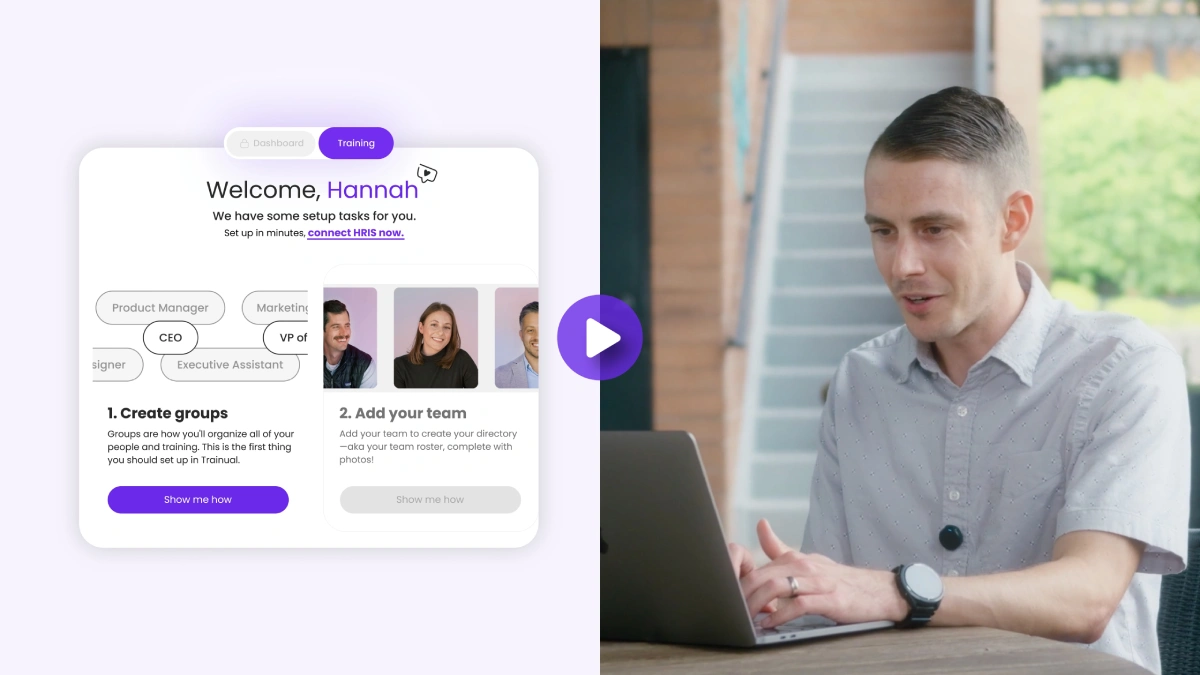
Each part of this can live in a separate tool — and that's exactly the "one more tool" trap that stops most managers. The point of running it in Operations suite is that the four parts are one system. Goals carry a single owner, a target, and a status. Scorecards track the metrics side-by-side. Owners post async updates that roll into a shared feed. And a recurring meeting pulls all of it onto one screen for the weekly review — with Team Pulse AI flagging the goals going at-risk so you spend your ten minutes on what needs attention, not on reading down a list.
Because it's connected to the rest of Trainual, the accountability layer sits on top of your documented processes and role chart, so ownership maps to how the work is genuinely run. The full setup is in the complete Operations Suite guide. For managers drowning in the busywork this is meant to replace, the people-manager time-savers piece is a useful companion, and if you're weighing dedicated tools, the accountability dashboard comparison covers the landscape. The result is accountability that costs you minutes, not your management style.
Quick wins to start this week
You can lay the foundation in a single afternoon.
Quick win #1: Assign one owner to everything that matters
List your team's goals and key responsibilities and put a single name next to each. Reassign anything owned by "the team."
Quick win #2: Stand up a five-metric scorecard
Pick the handful of numbers that show whether your team is healthy and put them in one place where everyone can see them.
Quick win #3: Ask for a weekly written update
Replace your status-chasing with a short async update from each owner — what moved, what's stuck, what they need.
Quick win #4: Add a ten-minute review to a meeting you already hold
Don't add a meeting. Bolt a quick scorecard-and-goals check onto the front of an existing one.
Quick win #5: Stop asking "any update?"
For one week, resist every "any update on this?" message and let the system surface progress instead. Notice how much time it gives back.
Ready to see how Trainual works?
👉 Book a demo and see how Operations Suite makes accountability run on its own — without micromanaging or another meeting.
Want a sneak peek?
👉 Read customer stories from teams who've replaced their scattered tools with one system.
Frequently asked questions
What is a lightweight accountability system?
It's a way of holding a team accountable through clarity and visibility rather than oversight. Four parts make it work: a single owner for everything that matters, visible goals and a scorecard, short weekly async updates, and one brief weekly review. Together they surface progress and problems on their own, so the manager spends minutes a week rather than constantly chasing status.
How do you hold a team accountable without micromanaging?
Make the work visible instead of watching the people. When everyone has clear ownership, the numbers live on a shared scorecard, progress shows up in async updates, and the team reviews it once a week, accountability comes from the system rather than the manager. The manager's role shifts from chasing updates to clearing blockers.
Does better accountability require more meetings?
No — that's the most common mistake. A lightweight system adds zero new meetings: status moves to short async updates, and the one weekly review fits into the first ten minutes of a meeting you already hold. More than half of managers say "one more tool" or meeting is the barrier, so the system is designed to reduce overhead, not add it.
What's the most important part of an accountability system?
Clear ownership. Everything that matters needs one named owner rather than a shared "we," because shared ownership is where accountability quietly disappears. Assigning a single owner is also the highest-leverage move on its own, measurably improving how much gets completed.
How long does it take to set up?
About a month if you layer it in — ownership in week one, visible goals and a scorecard in week two, async updates in week three, and the weekly review in week four. Adding one piece at a time lets each habit stick before the next arrives, so by the end of the month the system runs largely on its own.