




About this episode
"You'd be surprised how often you could remove half of someone's responsibilities and the business keeps moving forward."
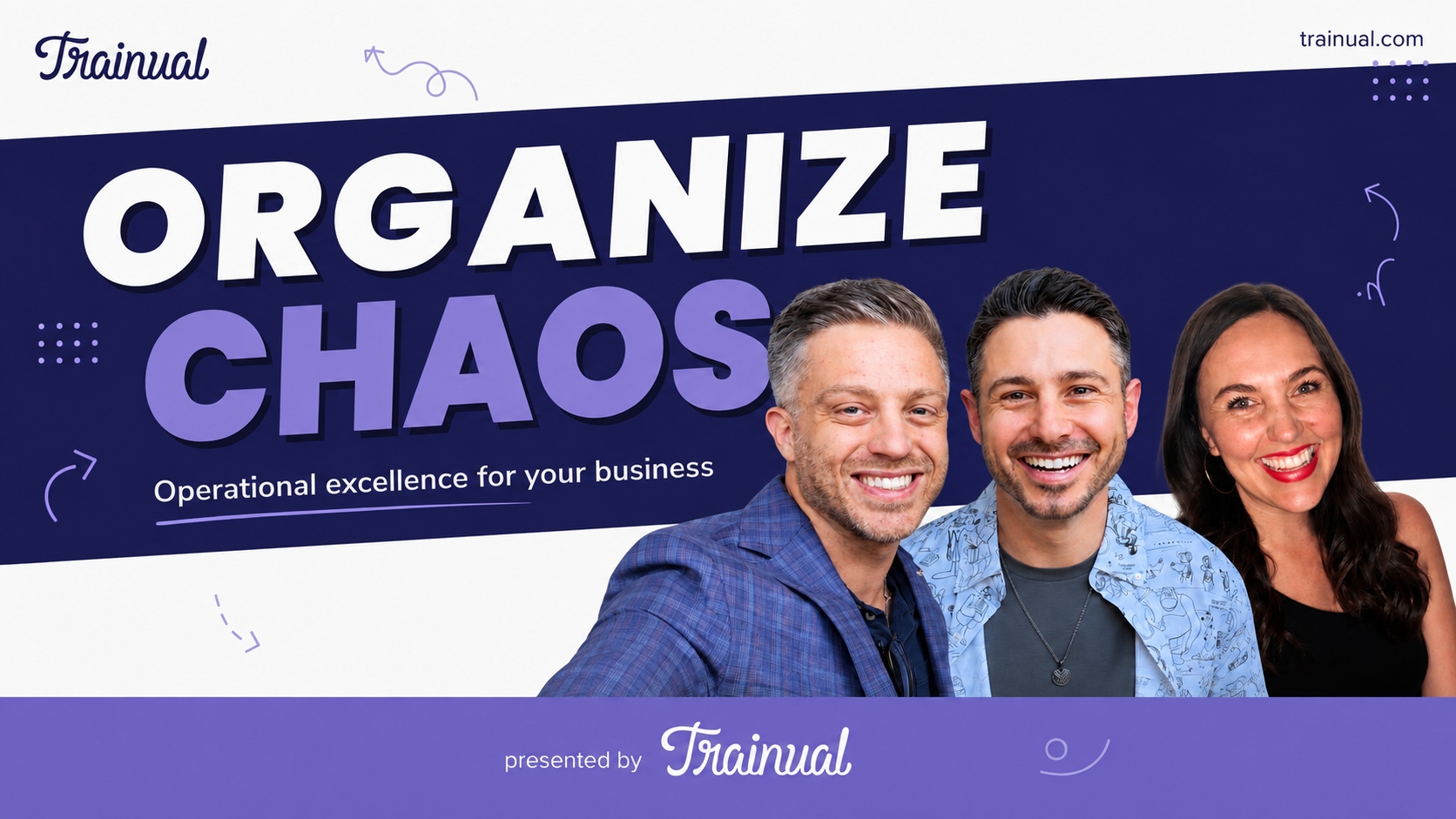
Optimism is up and hiring intent is at a multi-year high — but a third of owners have roles they can't fill, health premiums are climbing at the steepest rate in over fifteen years, and almost nobody wants to raise prices into an inflation-nervous market. That's the squeeze. Chris Ronzio, Jonathan Ronzio, and Sasha Robinson work through six news stories and land on where the levers actually are.
The strongest stretch is the last one. When you can't cut pay and won't raise prices, the assumed answer is squeeze more out of the team you have. Sasha rejects the premise — most companies are carrying work that stopped producing value a while ago, and nobody has audited it. Jonathan pushes further and separates two things that get used interchangeably: operational efficiency isn't a polite phrase for doing more with less. It's whether the business is actually organized.
Before that: how to bridge a hiring gap without over-hiring into demand that may not arrive, Sasha's full menu of options when health coverage stops being affordable, why the industries reporting no use case for AI are the ones most exposed, and whether you hire skilled people or build the training yourself. The episode opens on an AI-generated theme song and a genuine disagreement about it, since one of the three hosts is a working musician.
Key Takeaways:
- Bridge the hiring gap instead of betting on it. Optimism isn't data. If you have cash and conviction you can front-load a hire, but the downside lands on a real person who moved their career for you. Sasha's alternatives: post the role now and say openly you're hiring next quarter, start people as contractors with a path to W2, or bring them on part-time and scale hours as demand materializes. Chris's old consulting rule was simpler — feel the need for two to three months before you make it a full position, or have already banked the cash to cover the person for that long. Jonathan's one exception is the candidate who isn't right for the posted role but is obviously good enough to build a role around.
- When coverage stops being affordable, there are real options before you drop it. Sasha's first question is competitive, not financial: in some industries employer-covered healthcare is table stakes and you simply can't close candidates without it. Where it isn't, the alternatives are a taxable reimbursement so someone can join a partner's plan or an ACA marketplace plan, or moving to a high-deductible plan paired with an HSA and real consumer education — what's already free and preventative, what a triple-tax-advantaged account actually does, plus cheap telehealth so people stop defaulting to urgent care. The education is the part most companies skip, and it's what makes the cheaper plan survivable.
- "No applicable use case" is a competitive tell, not an industry exemption. Adoption among growing small businesses has climbed sharply, but construction, skilled trades, and service businesses report the lowest uptake by a wide margin. Sasha's position: every hands-on business still has a back office and a sales motion, and if you're not using AI for at least the administrative burden or closing work, you'll be out-operated by the shop down the street. Jonathan's addition is that this likely tracks narrative exposure more than industry logic — what owners are hearing about AI differs a lot by where and how they consume information.
- Par-baked beats both extremes on hiring. Chris's video production company hired camera operators from news stations, art schools, and freelance film — all of them needed training on the specific job anyway. The efficient version isn't finding someone fully formed or starting from zero; it's finding people adjacent enough to your work that you can finish the job. Sasha's more aggressive take, if she were building a trades business: hire for grit and values, build the training program yourself, and consider an ROTC-style arrangement where you fund trade school in exchange for a service commitment. Jonathan's caveat is stage-dependent — early on, chemistry and curiosity can beat credentials, but at scale some roles genuinely need the specialty.
- Raise prices on a cadence, and let switching cost do the work. If you haven't moved prices in 24 months you're overdue; the rhythm should be every 12 to 18. The thing owners underweight is the cost on the other side of the table — it's genuinely inconvenient for a customer to leave, which gives you headroom as long as you don't blow past it. Chris's illustration: an $800 paint job quoted at $1,200 next time prompts a conversation, at $850 it doesn't. Jonathan's framing is that if a 6% increase loses the relationship, the relationship was only ever about price. And for low-ticket items, think in dollars rather than percentages — a dollar increase sounds like a dollar, while the same move described as 18% sounds like something else entirely.
Chapter Markers:
[0:00] Cold open: the AI-generated theme song
[1:46] The case against Suno, from a working musician
[4:52] Are humanoid robots coming for service businesses?
[6:30] Would you let a robot into your house?
[11:00] The ABBA hologram concert and the future of live
[13:35] Optimism is up, but roles go unfilled
[14:30] Should you hire ahead of demand?
[19:00] Incentivizing the team that's absorbing the crunch
[20:40] Health premiums are climbing fast
[22:00] What to do when you can't absorb the cost
[24:55] Whose job is it to keep employees alive?
[27:45] The AI adoption gap as a competitive line
[33:01] Hire skilled, or train green talent?
[34:30] Par-baked: the middle path on hiring
[39:12] Pricing versus retention
[42:30] Switching cost is your pricing buffer
[45:20] The productivity squeeze
[46:00] Do less, not more with less
[47:50] Operational efficiency is organizing the chaos
[52:00] This week in Trainual
Resources:
Have a topic you'd like covered? Connect with the hosts on LinkedIn — Chris, Jonathan, and Sasha — or email chris@trainual.com.
Want more resources from this episode? We've got an episode recap, replay, and every template, process, and resource we covered right here: Organize Chaos
Trainual
Organize Chaos is where founders and leaders learn how to build businesses that scale. Hosted by Chris Ronzio, Jonathan Ronzio, and Sasha Robinson, each episode explores the systems, leadership, operations, performance, and AI strategies behind high-performing organizations. Through candid conversations, practical frameworks, and real-world experience, they help you replace chaos with clarity — so your business can grow with confidence.
This is one of a few podcasts from Trainual, a software platform that helps businesses build playbooks to train and grow their team. You can check out the rest of our shows here: Podcasts