






There's a question that managers ask in nearly every check-in, and it almost never works: "Are we on track?" The honest answer is hard to give and easy to fake. People say yes because yes is the path of least resistance, because the goal is three weeks away and still feels reachable, or because they don't want to be the one raising a hand. So the goal stays "on track" right up until the week it's obviously not — and by then it's too late to do anything about it.
The problem isn't the check-in. It's the question. "On track" asks for a verdict when what you need is information — what's moved, what's stuck, and what would help. Swap the question and the check-in starts surfacing problems while there's still time to fix them. Here's what to ask instead, and how to run goal check-ins that catch drift early. Trainual builds this rhythm into Operations suite.
Why "are we on track?" fails
"Are we on track?" is a yes/no question about an uncertain future, which makes it almost designed to produce false comfort. It rewards optimism, punishes the person who flags risk, and gives you no detail to act on even when the answer is honest. A "yes" tells you nothing about what's actually happening, and a "no" arrives too late to matter.
It also leans on memory instead of evidence. When 24% of the managers Trainual surveyed rely on memory for accountability, "on track" becomes a gut feeling traded back and forth rather than a read on real progress. And the cost compounds: 65% of teams fail to connect their goals to anything that gets reviewed, so check-ins drift into vague status theater instead of moving the number.
What to ask instead
The fix is to replace one vague question with a few specific ones that pull out information rather than a verdict. Four questions do most of the work:
What moved since last check-in?
This grounds the conversation in evidence. Instead of a feeling about the future, you get the concrete progress — a number that changed, a milestone hit, a step completed. If nothing moved, that's the signal, and it shows up immediately.
What's blocking the next step?
This surfaces the obstacle while it's still small. Most goals don't fail in a single dramatic moment; they stall quietly on a blocker nobody named. Asking directly makes raising the blocker the expected thing, not an admission of failure.
How confident are you in the target, one to five?
A confidence score turns a binary into a signal with range. "Three, and dropping" tells you far more than "yes," and it gives the owner a low-stakes way to flag worry before it's a missed goal. Watch the trend in confidence as closely as the trend in the number.
What would help?
This turns the check-in from a status report into a working session. It signals that the point is to move the goal, not to grade the person — and it's often where a manager can unblock something in thirty seconds that would have cost a week.
How to run a check-in that works
The questions only help if the check-in happens on a rhythm and most of it happens in writing. Run a light async check-in weekly — each owner answers the four questions on their goal in a couple of minutes — and reserve live time for the goals where the answers raised a flag. Teams that check in weekly complete 43% more of their goals — not because they meet more, but because drift gets caught while it's cheap to correct.
Two things make the rhythm hold. Every goal needs a single owner — assigning one boosts completion by 26%, and it's the same principle behind clear ownership across overlapping roles. And the goal needs to be connected to something the team reviews, so the check-in feeds a real cadence — which is exactly what aligning team goals to company objectives sets up.
How to make check-ins effortless in Trainual
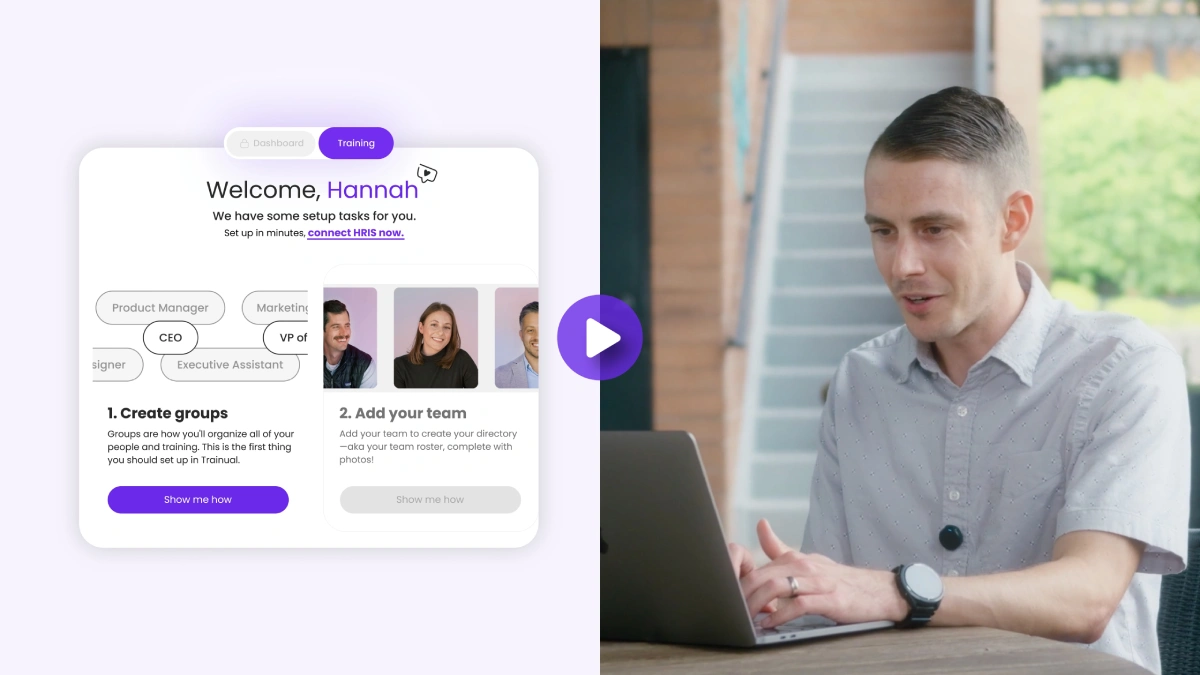
The reason check-ins decay into "are we on track?" is that the alternative feels like overhead — chasing updates, compiling status, running another meeting. Operations suite removes that overhead. Every goal carries an owner, a target, a status, and an activity feed, so progress is visible without anyone assembling it. Owners post a short update against the goal on a set cadence — the async check-in — and those updates roll into the goal's history. Team Pulse AI flags goals going at-risk from the signals in those updates, so the goals that need a live conversation surface themselves instead of hiding behind a blanket "yes."
Because goals, scorecards, and meetings live in one place, the check-in feeds the weekly meeting directly — at-risk goals are already flagged when you sit down. The full mechanics are in the complete Operations suite guide. The shift is small but the effect is large: stop asking for a verdict, start collecting signals, and you catch the goal slipping while you can still save it.
Quick wins to start this week
You can upgrade your next check-in immediately.
Quick win #1: Retire "are we on track?"
Replace it with "what moved since last time?" in your next check-in and notice how much more you learn.
Quick win #2: Add a confidence score
Ask each goal owner for a one-to-five confidence number, and track whether it's rising or falling week to week.
Quick win #3: Always ask "what would help?"
End every check-in with it. Treat unblocking as the manager's job, not the owner's failure.
Quick win #4: Make the check-in async first
Have owners answer the questions in writing before any live conversation, so the meeting is only for the goals that flagged a risk.
Quick win #5: Give every goal one owner
Go through your active goals and assign a single accountable owner to each — the person who answers the four questions.
Ready to see how Trainual works?
👉 Book a demo and see how Operations suite surfaces at-risk goals before they slip — no "are we on track?" required.
Want a sneak peek?
👉 Read customer stories from teams who've replaced their scattered tools with one system.
Frequently asked questions
What should you ask in a goal check-in?
Replace "are we on track?" with a few specific questions: what moved since the last check-in, what's blocking the next step, how confident the owner is in hitting the target on a one-to-five scale, and what would help. These pull out evidence and early warning signs instead of a yes/no verdict that hides problems until it's too late.
Why is "are we on track?" a bad check-in question?
Because it asks for a verdict about an uncertain future, which rewards optimism and punishes whoever flags risk. A "yes" gives you no detail to act on, and a "no" usually arrives too late to fix. It also leans on memory rather than evidence, so the answer is often a gut feeling rather than a real read on progress.
How often should you do goal check-ins?
Weekly for most teams, mostly async. A short written check-in each week catches drift early, and teams that check in weekly complete substantially more of their goals. Reserve live time for the goals whose answers raised a flag, rather than walking through every goal out loud.
How do you keep goal check-ins from becoming status meetings?
Do the routine part in writing and ask working questions, not reporting ones. When owners answer a few specific questions async, the live conversation can focus on blockers and help for the goals at risk — turning the check-in into a working session instead of a round of verbal status updates.
Who should own a goal in a check-in?
One person. Every goal needs a single accountable owner who answers for its progress — shared ownership is a common reason goals stall. Assigning a clear owner measurably improves completion and gives the check-in a single person to talk to about each goal.