




About this episode
“Those final moments, final hours, final weeks are how your former employees remember you.”
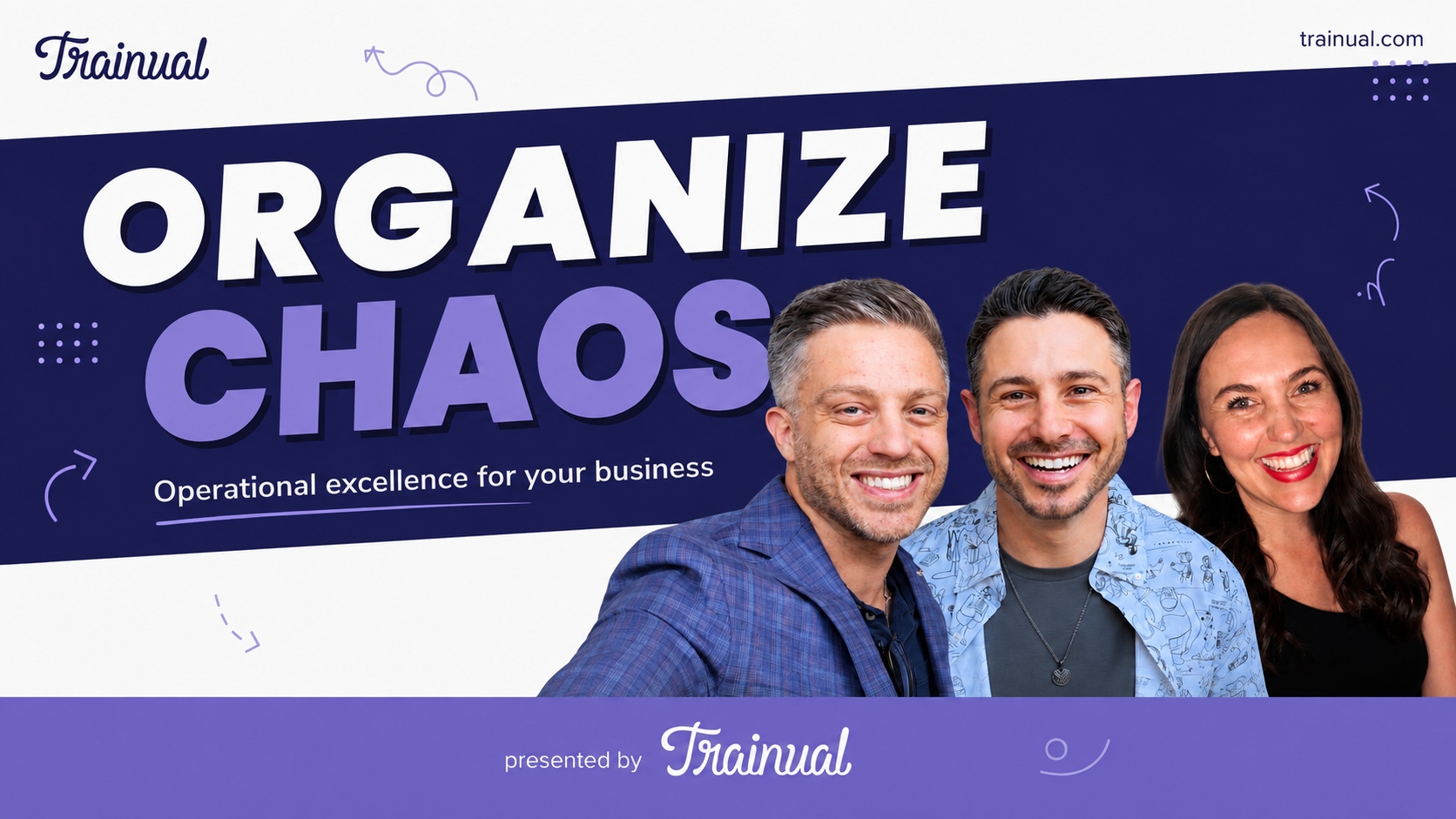
Most companies put real effort into onboarding and almost none into the other end. Chris, Jonathan, and Sasha take on offboarding: why it gets skipped, what Sasha’s team actually does when someone leaves, and how to part ways without burning the bridge, whether the person resigned or was let go.
Chris has a theory for why it gets overlooked. Most exits come either after months of built-up frustration, so the main feeling is relief, or as a resignation that feels like a betrayal. Neither mood leaves room to think about what the experience is like for the person walking out.
The tactical half is Sasha’s playbook. For involuntary exits, that means a short call with two people on it, a prepared explanation, and an email that lands right after the call with everything the person won’t remember. It also covers who to tell ahead of time and the career support Trainual offers on the way out. For resignations, it’s the letter, the transition plan, and the send-off. The other half is mindset. Chris admits he used to take resignations personally, and he explains what changed: he now wants people to look back on Trainual as a chapter of their story, not a place they escaped from.
Key Takeaways:
- The end of the relationship is what people remember. Years of raises, promotions, and great events can be undone by how someone is treated in their last few weeks. If a person resigns and you’re cold about it, they leave feeling awkward. If you let someone go carelessly, that’s the story they tell. You can fire someone for cause and still treat them like a human being.
- Two private questions tell you where someone really stands. The first is built into Trainual’s performance reviews as a manager-only question: knowing what I know now, would I rehire this person? The second: if this person resigned tomorrow, would you fight to keep them with a new role, a scope change, or a raise? If the answer is no, take a hard look at whether they belong on the team. Sasha’s honest note is that every time she’s extended extra benefit of the doubt, it still ended in an exit, and in hindsight she wishes she’d acted sooner.
- Keep the termination conversation short, and put everything else in writing. Have two people on the call, ideally with someone from HR or people ops there to answer benefits and final-pay questions. Say up front that it’s their last day and the decision is final. Keep the explanation of why to about 90 seconds, with specifics prepared ahead of time. Then give a quick verbal overview of the logistics and thank them for their time with the company. Most people black out once they hear the news, so an email follows immediately with 401(k) and HSA rollover details, COBRA, the final paycheck, and mental health resources. Before the call, give HR, ops, and IT at least 48 hours to prepare, tell the management team a day or two ahead, and draft short personal notes to the coworkers closest to the person so they don’t hear it through the grapevine.
- Help them land somewhere they’ll succeed. Trainual’s exit email includes career support: resume reviews, mock interviews, warm introductions through the team’s network, LinkedIn recommendations, letters of recommendation, and help showcasing work they did on the job. A credible introduction depends on knowing what someone is exceptional at and what stage of company they thrive in, not just where they struggled with you. That means managers need to keep track of people’s strengths all along, not only when something goes wrong.
- Resignations run on a different process, and they’re a chance to celebrate. A voluntary exit carries less risk, so the steps are lighter. Get a written resignation letter for the file and send the exit email about a week before the last day. Map systems offboarding and project handoffs with the delegation planner, and start planning the backfill. The company shares a message first, then the person is free to tell the people who matter to them. Where there’s no risk, Sasha extends that dignity to involuntary exits too, letting people say goodbye and frame the exit as their next chapter. Send-offs can be a compiled video, a message board of favorite memories, or cupcakes and a round of stories, scaled to the person and their tenure.
Chapter Markers:
[0:00] Cold open: HR reviews of ’90s rom-coms
[5:57] Why offboarding gets overlooked
[7:12] The last few weeks are what people remember
[8:32] Voluntary vs. involuntary exits
[11:46] Have you already made the decision?
[12:44] Would you fight to keep them?
[13:36] “Knowing what I know now, would I rehire them?”
[15:07] Involuntary exits: running the conversation
[17:03] The HR handoff and the follow-up email
[18:22] Who to tell before it happens
[20:12] Reshuffling responsibilities with the delegation planner
[21:36] Personal notes to the people closest to them
[22:45] Deciding how much to help them land
[24:00] Career support: resumes, mock interviews, warm intros
[26:12] Keeping an inventory of what people are great at
[27:47] When someone has outgrown the org chart
[29:08] Voluntary exits: what changes on resignation
[31:40] Letting people leave with dignity
[33:07] Celebrating people on the way out
[34:44] Why resignations used to feel personal
[38:28] Making your company a chapter in someone’s story
[40:27] Losing the fear of losing people
[41:33] A year-long heads-up and a perfect landing
[42:52] Asking what people want from day one
[44:28] Plan offboarding like you plan onboarding
[46:02] This week in Trainual
Have a topic you’d like covered? Connect with the hosts on LinkedIn — Chris, Jonathan, and Sasha — or email chris@trainual.com.
Want more resources from this episode? We’ve got an episode recap, replay, and every template, process, and resource we covered right here: Organize Chaos
Trainual
Organize Chaos is where founders and leaders learn how to build businesses that scale. Hosted by Chris Ronzio, Jonathan Ronzio, and Sasha Robinson, each episode explores the systems, leadership, operations, performance, and AI strategies behind high-performing organizations. Through candid conversations, practical frameworks, and real-world experience, they help you replace chaos with clarity — so your business can grow with confidence.
This is one of a few podcasts from Trainual, a software platform that helps businesses build playbooks to train and grow their team. You can check out the rest of our shows here: Podcasts