



.jpg)

Walk the floor of most growing companies right now and you'll find four generations working side by side. Gen X is leading, millennials are managing, Gen Z fills much of the front line, and Gen Alpha is about to clock in for a first summer shift. For the manager caught in the middle, it can feel like running four teams at once, each one wanting something different from you.
Before we get into what each group tends to want, here's the part most advice skips: the research on generational differences at work is far weaker than the headlines suggest.
When you look at the studies, the variation within a generation dwarfs the variation between generations. The gap between two 25-year-olds is usually wider than the gap between the average 25-year-old and the average 55-year-old. Life stage, tenure, and the role someone holds explain far more than the year they were born. So treat what follows as useful color, not a rulebook. The person in front of you always outranks their generation.
With that caveat firmly in place, here's the whole framework at a glance.
Now the detail behind each row.
Gen X: the self-sufficient operators
Gen X (born roughly 1965 to 1980) came up prizing independence, and it shows. They tend to want autonomy over oversight and results over ceremony. Connect with them by respecting their time: fewer meetings, clearer asks, less performance. Coach them as peers rather than pupils, and hand them a problem along with the room to solve it. On feedback, most prefer it direct, private, and tied to outcomes. Skip the compliment sandwich and tell them what's working, what isn't, and what you need next. They'll respect the candor.
Millennials: the growth-seekers
Millennials (roughly 1981 to 1996) are now the largest share of the workforce and most of your management bench. They tend to want the "why" behind the work and a visible path forward. Connect by linking their day-to-day to a bigger goal and to their own development. Coach with regular check-ins instead of a once-a-year review. Feedback works best when it's frequent and forward-looking: less "here's your grade," more "here's your next step." One common frustration is fuzziness about what they own, so getting clear on their roles and responsibilities removes a lot of friction before it starts.
Gen Z: the digital natives who want it clear
Gen Z (roughly 1997 to 2012) grew up with an answer to every question a search away, so they expect information to be findable, fast, and self-serve. Connect by being straight and specific; they tend to read corporate polish as evasion. Coach in short, frequent loops rather than long lectures, and give them the resources to work things out before they have to ask. On feedback, they want it often, fair, and specific. Vague praise lands as hollow, and long silence reads as a problem. This is the generation where a searchable knowledge base earns its keep, because "go find someone and ask" is exactly the friction they can't stand.
Gen Alpha: who's about to walk in the door
The oldest of Gen Alpha (born 2013 and later) are barely in their teens, so nobody's building a career team around them yet. But for service, retail, and the trades, they are your next wave of summer hires, apprentices, and part-timers, and your full bench a few years after that. They're growing up with AI assistants as the default way to get an answer, which means their instinct will be to ask a system before they ask a supervisor. The teams that onboard them smoothly will be the ones building self-serve resources now. If a 16-year-old can look up how you do something instead of shadowing someone for a week, you've won half the ramp already. A clear, structured onboarding path is how you get there.
The move that works for all of them
Now look at what every section above has in common. Nobody wants to guess. Gen X wants autonomy, which only works when the boundaries are known. Millennials want a path, which requires knowing what's expected. Gen Z and Gen Alpha want to self-serve, which requires somewhere to look. The common thread isn't a personality quirk by decade. It's that people of every age do their best work when the "what" is clear and they're trusted with the "how."
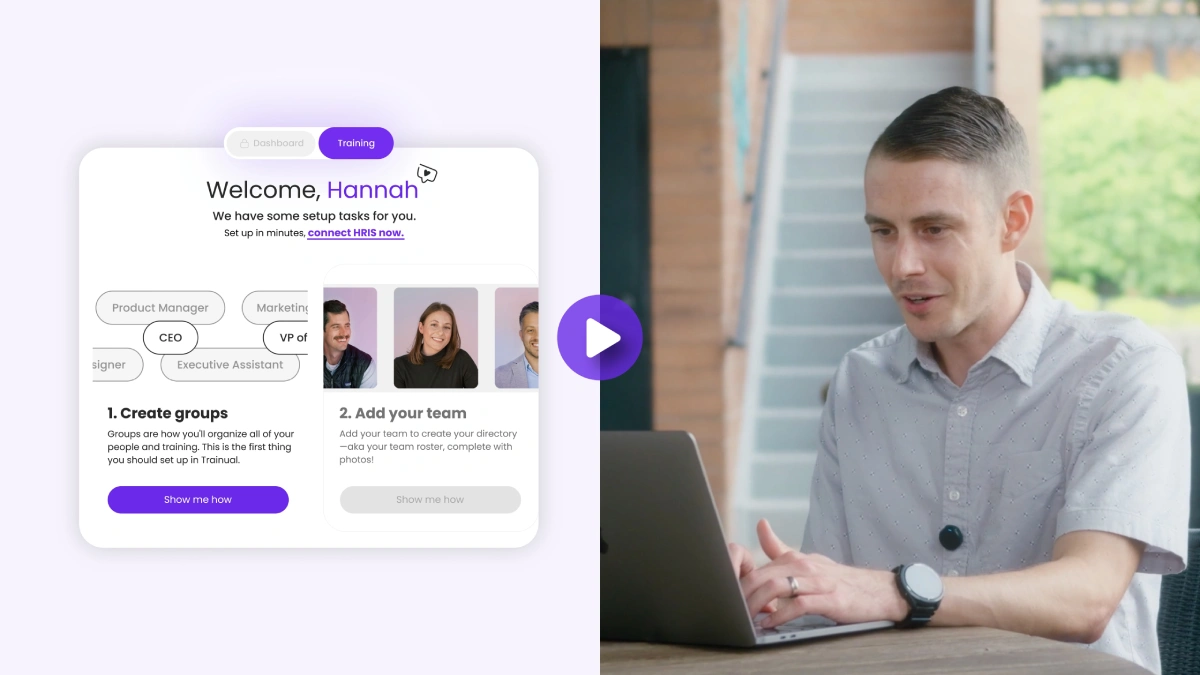
So the answer isn't running four management styles from memory. That's how managers burn out and stay inconsistent anyway. The answer is one clear system everyone can reach, one that flexes to the person using it. That's the whole idea behind Trainual: getting how your team operates out of individual heads and into a single source of truth that a new hire of any age can follow without tapping you on the shoulder.
Consistency is what frees you to flex. When the process is written down and findable, a veteran gets to run with it, a first-timer gets a clear path through it, and both are working from the same playbook. You stop repeating yourself and start coaching the person instead of re-explaining the process.
So don't build four playbooks. Build one, make it easy to find, and let it meet each person where they are. That's the version that keeps working as the generations keep rolling in.
Want to see how teams put one system in place for every generation on the payroll? Book a demo.