








About this episode
"If all your value to the organization is that you talk to people and you coach people, you are very replaceable."
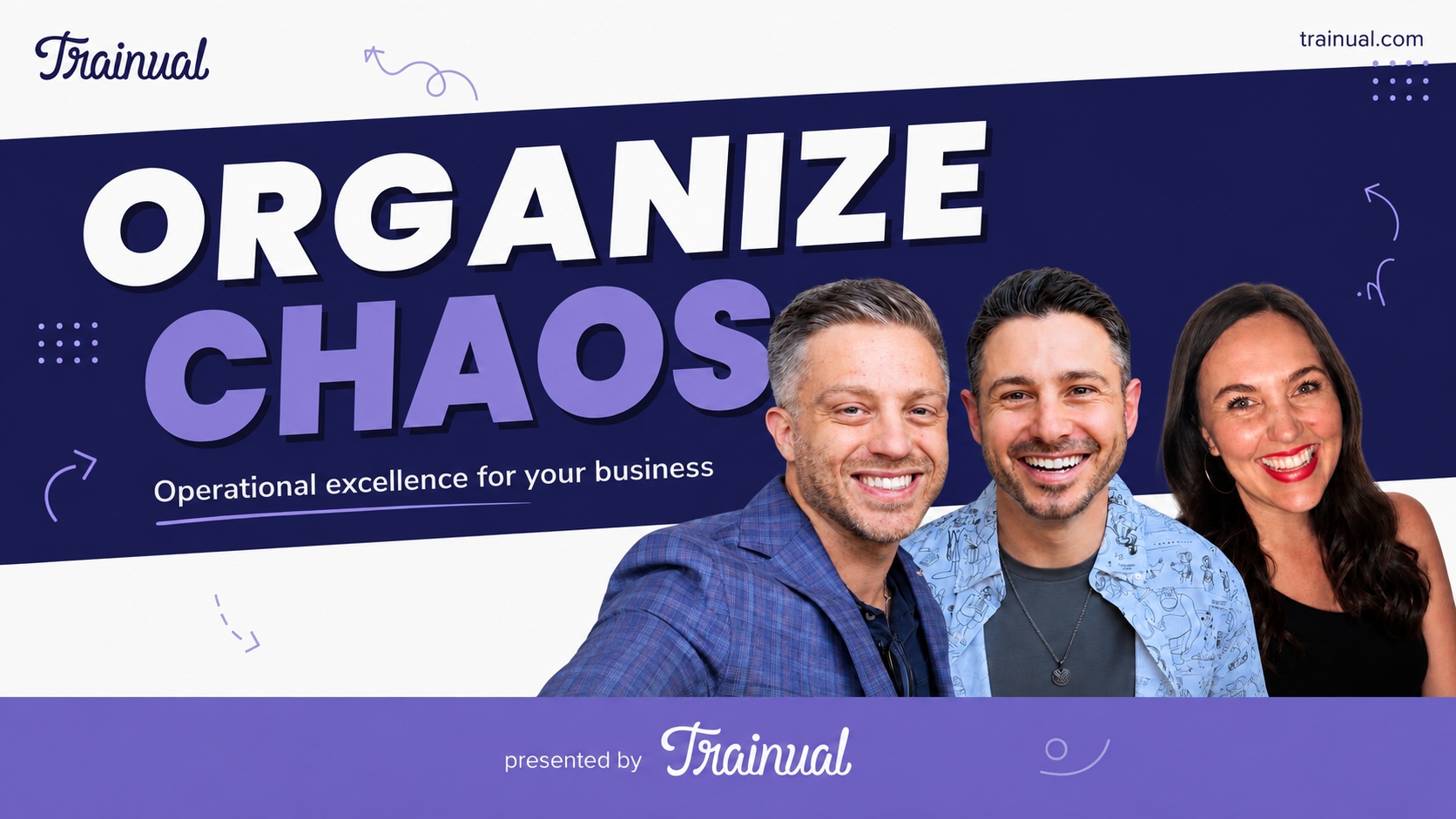
184,000 workers laid off, and 55% of the companies doing it are pointing at AI. Is that true, or is AI just the most convenient thing to blame? Chris Ronzio, Jonathan Ronzio, and Sasha Robinson open with that one and don't fully agree on the answer. From there it's GitLab stripping three layers of management out of its org chart, engagement hitting an 11-year low while nobody quits, and a genuinely unresolved argument about whether anyone should be working from home. Chris wants everyone in the office. Jonathan is a former digital nomad who came armed with data. Sasha has to run the company that exists in between them. Nobody wins. You'll get an hour of the actual reasoning instead, plus the org chart math on why a manager who used to handle eight reports can now hold fifteen — and the three things that have to be true before that works.
Fair warning: they meant to make this the performance management episode and ran out of clock. That one's next.
Key Takeaways:
- "Because of AI" is doing a lot of work in those layoff announcements. Sasha's read is that many companies are using AI to mask decisions executives don't want to own — and that the cost is real, because when your friends get cut for air-quotes AI, you become scared and resentful of the technology instead of curious about it. Jonathan points at Meta killing the metaverse as the tell: pivoting strategy to AI and having AI replace people are different things reported the same way. Chris's caveat is that public companies facing quarterly numbers often can't retrain fast enough to do anything but cut.
- Middle management is compressing, and the bar for managers went up rather than down. GitLab pulled up to three layers out. The argument isn't that management is worthless — it's that conversational mentorship alone is now replaceable. Jonathan built an agent that scrubs every closed-lost deal in HubSpot each Friday, compares the rep activity against what the team knows wins deals from Fathom recordings, and posts a personalized breakdown to each AE in Slack. Managers who aren't tactical, in the tools, and driving numbers are competing with that.
- AI raised the ceiling on span of control from roughly 8 reports to 15 — if three things are true. You need the tooling infrastructure, a manager capable of context-switching across fifteen real human relationships, and direct reports who don't need daily hand-holding. That last one is the actual constraint. A team of people who each want feedback every other day will cap your manager no matter what software you buy.
- 100% retention is a red flag, not a trophy. Trainual once walked into an investor meeting proud of 94% retention and got told it sounded like bad management. Nobody opted out of the sales team for six or seven years — then a new sales leader arrived and the problem surfaced immediately. Healthy attrition means people leaving for growth you genuinely can't provide, plus underperformers you've coached and then moved on from. The teams that never lose anyone are often the teams that never give hard feedback.
- Engagement is at an 11-year low and low quit rates are hiding it. The quiet quitters became quiet stayers: disengaged, but not willing to risk a job search. The early detection is unglamorous — direct, emotionally regulated conversations about whether someone's role still overlaps with what the company needs. The later signals are behavioral: the person who's suddenly always camera-off, never in the Slack thread, doing exactly what's asked and nothing more.
Chapter Markers:
[0:49] Cold open: the "and, not or" debate
[4:02] 184,000 layoffs and whether AI is the real reason
[9:58] GitLab flattens three layers of management
[13:00] The agent that replaced part of a sales manager's job
[17:19] Why you'll need fewer managers, and what has to be true first
[20:06] Engagement at an 11-year low and the rise of quiet stayers
[23:36] The Venn diagram of your role and your company's needs
[29:29] The aspiration index: not everyone wants to climb
[30:37] Hybrid vs. in-office: Chris and Jonathan go at it
[45:15] This week in Trainual
Resources:
Want more resources from this episode? We've got an episode recap, replay, and every template, process, and resource we covered right here: Organize Chaos
Trainual
Organize Chaos is where founders and leaders learn how to build businesses that scale. Hosted by Chris Ronzio, Jonathan Ronzio, and Sasha Robinson, each episode explores the systems, leadership, operations, performance, and AI strategies behind high-performing organizations. Through candid conversations, practical frameworks, and real-world experience, they help you replace chaos with clarity — so your business can grow with confidence.
This is one of a few podcasts from Trainual, a software platform that helps businesses build playbooks to train and grow their team. You can check out the rest of our shows here: Podcasts

.svg)