





If a new hire's first morning is spent hunting for a charger, waiting on logins, and signing forms they could have signed last week, onboarding started late. The gap between a signed offer and day one is the most wasted stretch in most onboarding — weeks of silence, then a first day that burns its best hours on logistics that had nothing to do with the job.
That gap has a name when you use it on purpose: preboarding. It's everything you handle before the new hire walks in, so day one can be about people and the role instead of paperwork and password resets. It's also where first impressions form — and those impressions are hard to reverse. Companies with a strong onboarding process see 82% higher retention, and a meaningful share of that starts before the start date.
This is the preboarding checklist — what to handle, when, and why — and how to set it up in Trainual so it runs the same way for every hire. (It's the front end of the new hire onboarding checklist; this piece zooms in on the part most teams leave to chance.)
What is preboarding?
Preboarding is the work you do between a signed offer and a new hire's first day — paperwork, accounts, equipment, tool access, and a clear first-day plan. The goal is simple: remove every logistical task from day one so the first day can be spent on the team, the role, and a real first task instead of setup and forms.
The word matters less than the shift in timing. Most teams treat day one as the start of onboarding; preboarding treats the signed offer as the start. That earlier line is what separates a new hire who arrives feeling expected from one who arrives feeling like a surprise the office is scrambling to accommodate.
Why does preboarding matter so much?
Because the early signal is loud and lasting. A new hire forms a fast read on whether a company is run well, and a chaotic first day reads as "this place is disorganized" before they've judged a single coworker. Preboarding also protects an investment you've already made — companies spend roughly $4,700 per hire getting someone in the door.
There's a quieter reason too. A first day spent on forms and logins is a first day not spent on belonging — and belonging is what makes someone want to come back on day two. When the laptop works, the logins are ready, and there's a plan on the desk, the new hire's first impression is competence. When none of that is ready, the first impression is improvisation, and you spend the next month overcoming it.
What should you handle before day one?
Five things, in roughly this order: send and collect the paperwork, provision accounts and equipment, set up tool access, share a welcome note with the first-day plan, and set up the first real task. Each one is small. Together they convert day one from a setup day into a working day — which is exactly the head start the rest of onboarding compounds on.
Move the policy acknowledgments and e-signatures to preboarding so the new hire isn't reading the handbook on the clock. Provision the tools your team uses and wire access through your HRIS, Slack, and SSO integrations so logins are waiting, not requested. Name the point person and set up a first task ahead of time so there's somewhere to start and someone to ask. None of this is heavy — it's just decided in advance instead of discovered at 9 a.m.
How do you keep preboarding from falling through the cracks?
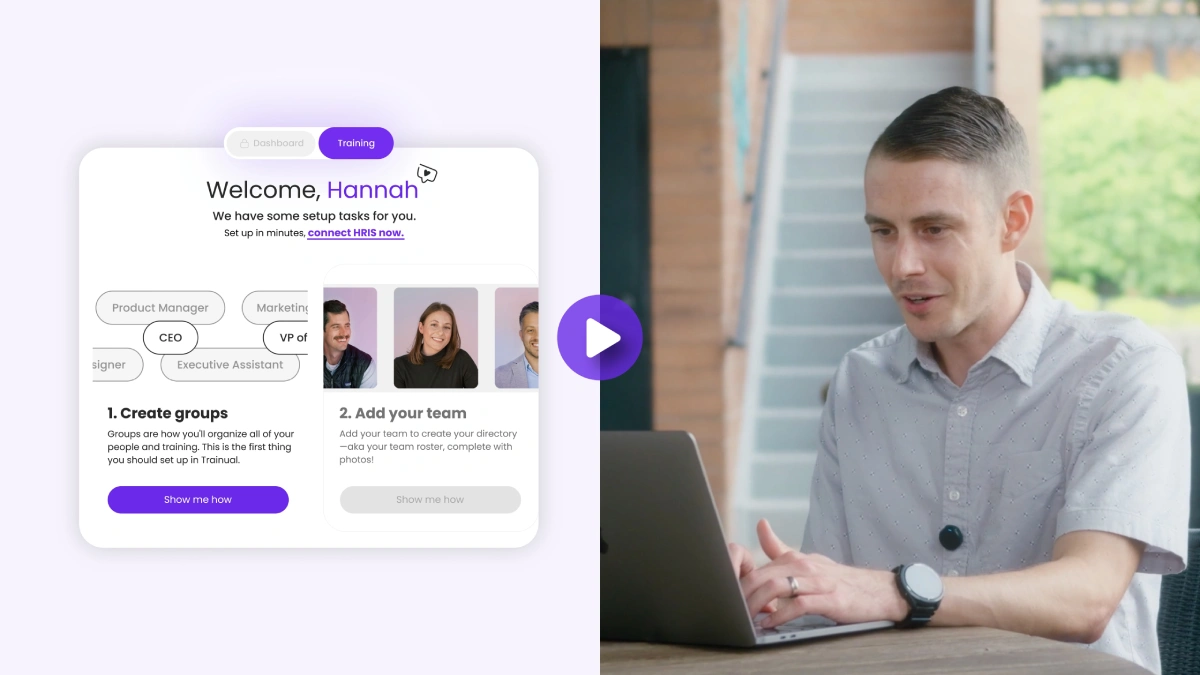
Make it part of the role, not a personal to-do list. When the preboarding steps live in an assignable structured onboarding sequence — paperwork, access, welcome, first task — the same steps fire for every hire automatically, instead of depending on whether the hiring manager remembered. Consistency here is what makes day one reliably good rather than occasionally good.
The failure mode is always the same: preboarding lives in one busy person's memory, that person gets pulled into something urgent, and a new hire shows up to nothing. Building it on a single source of truth removes the dependency — the role-based path carries the steps, ownership is clearly assigned, and nothing waits on a person to remember. Trailstone Insurance cut onboarding ramp time by 60% partly by front-loading the setup that used to eat into a new hire's first days. The same discipline scales: companies cutting onboarding time with Trainual tend to start the clock before day one. From here, the first 30 days and the full 30-60-90 day plan carry the momentum forward — and remote hires especially can't afford a rough start, which is why onboarding remote employees leans hard on preboarding. HR teams running this across every role will find the definitive guide to LMS onboarding automation for HR leaders useful for automating the whole sequence.
Quick wins to start this week
Preboarding is the easiest part of onboarding to fix, because most of it is just moving existing tasks earlier.
Quick win #1: Move paperwork before the start date
Send forms and e-signatures the week before day one. Reclaim the first morning for the team and the role.
Quick win #2: Make an equipment and access checklist
List every account, login, and piece of equipment a new hire needs, and assign an owner. Run it the week before, every time.
Quick win #3: Send a welcome note with the first-day plan
A short message with the schedule, the point person, and where to show up turns first-day nerves into a plan. It takes ten minutes.
Quick win #4: Set up the first task in advance
Have one small, completable task ready on day one. Finishing something early is the fastest way to feel like part of the team.
Quick win #5: Turn the list into an assignable sequence
Move your preboarding steps into a role-based path so they fire automatically for the next hire instead of relying on memory.
Ready to see how Trainual works?
👉 Book a demo and see how Trainual turns preboarding into a sequence that runs itself before every new hire's first day.
Want a sneak peek?
👉 Read customer stories from teams who've made day one about the role instead of the setup.
Frequently asked questions
What is preboarding?
Preboarding is the work you do between a signed offer and a new hire's first day — paperwork, accounts, equipment, tool access, and a clear first-day plan. The goal is to remove every logistical task from day one so the first day can be spent on the team, the role, and a real first task instead of setup and forms.
What's the difference between preboarding and onboarding?
Preboarding is the front end of onboarding. Preboarding covers everything before day one — the setup and the welcome — while onboarding is the full arc that follows, from the first day through the new hire reaching independence over the first 90 days. Strong preboarding makes onboarding faster because day one starts with momentum instead of logistics.
What should be on a preboarding checklist?
Five things: send and collect paperwork and e-signatures, provision accounts and equipment, set up tool access through your HR and SSO systems, share a welcome note with the first-day plan and point person, and set up a small first task the new hire can complete on day one. Each is minor on its own; together they turn day one into a working day.
When should preboarding start?
The day the offer is signed. Treating the signed offer — not the start date — as the beginning of onboarding gives you a week or more to handle setup without rushing, and it keeps the new hire engaged during the gap that would otherwise be silence. The earlier you start, the less of day one gets spent on tasks that could have been done in advance.
How do you preboard remote employees?
Remote preboarding matters even more, because there's no front desk to improvise a fix on day one. Ship equipment early, confirm it arrives and works, set up every login and tool ahead of time, and send a clear first-day plan with who to meet and where to be online. A remote hire who logs in on day one to working access and a plan starts on the same footing an in-office hire would.