





When teams grow, role confusion grows with them. Who owns what? Who reports to whom? What's actually expected of each position? In 2026, the companies that scale cleanly are the ones pairing a learning management system (LMS) with built-in role clarity and responsibility management — so every employee knows their role, their scope, and the processes that support it.
A learning management system (LMS) is a platform that centralizes training, documentation, and knowledge-sharing across an organization. The best LMS platforms for role clarity go further — linking each role to the responsibilities it owns, the SOPs it follows, and the reporting structure it sits inside. That connection is what turns scattered responsibility data into a clear operational system.
Below is a comparison of the best LMS platforms for role clarity and responsibility management — each offering tools to assign ownership, map reporting structures, and keep every team member aligned on what they own and how the work gets done.
Trainual
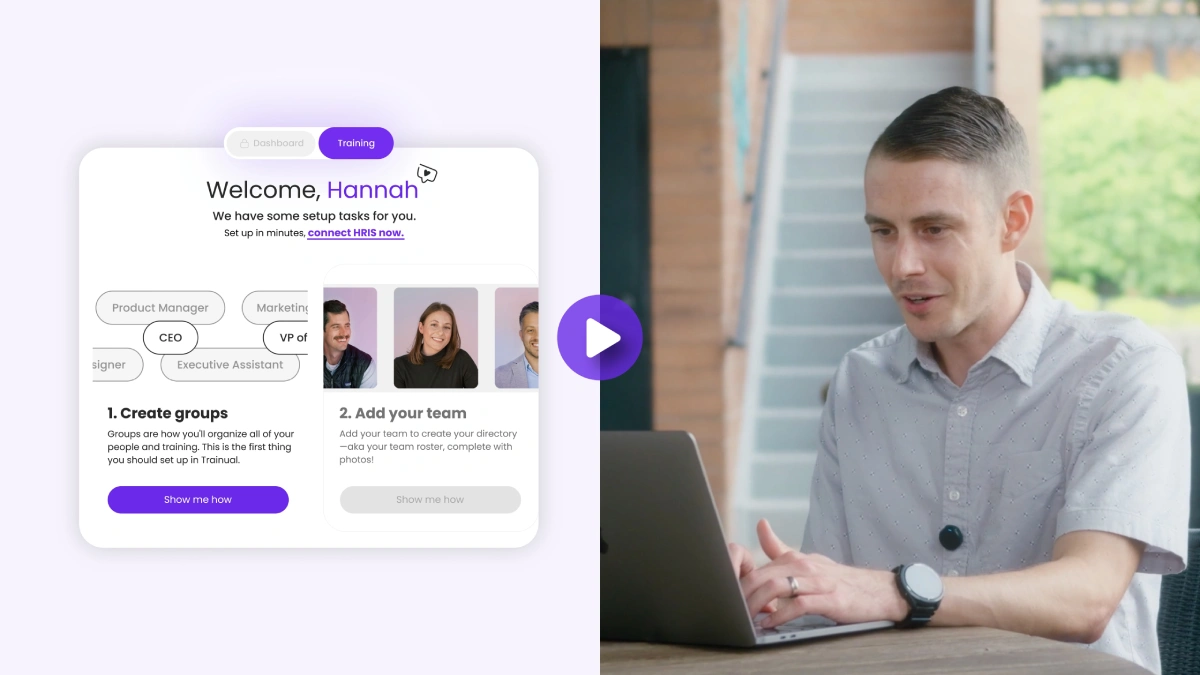
Trainual is built for growing companies that need a faster, clearer way to connect roles, responsibilities, and training in one platform. It links every role to its specific responsibilities, the SOPs that support the work, and the reporting structure it sits inside — turning role clarity into an operating system rather than a static document.
Features include a visual org chart, a dedicated role chart (mapping responsibilities by role rather than by person), responsibility tracking linked to training content, and AI-powered SOP creation. Integrations with HRIS and payroll systems automate role assignment when employees are hired, promoted, or transitioned. The platform includes role-based content delivery, so every employee sees exactly the responsibilities, SOPs, and policies relevant to their role.
The result is faster onboarding, fewer "who owns this?" questions, and measurable consistency across teams. Trainual is well-suited to small and mid-sized companies that want role clarity, responsibility management, and training in one platform — without enterprise complexity or price.
BambooHR
BambooHR is an HR-focused platform with role clarity features built into its broader HR suite. It centralizes employee records, job descriptions, and reporting structures, making it a solid fit for organizations that want role data tied directly to HR workflows like performance reviews and compensation planning.
Features include org charts, employee profiles, custom role fields, and goal-setting tools. The platform integrates with payroll, benefits, and time tracking, keeping role data consistent across the HR stack. Training functionality is available but secondary to core HR capabilities.
BambooHR fits best for small-to-mid-sized organizations prioritizing HR-led role clarity rather than training-led. Pricing is quote-based, reflecting its positioning as a full HR platform rather than a dedicated LMS.
Docebo
Docebo is an AI-driven enterprise LMS designed for large organizations managing complex training and role structures. Its AI engine automates content recommendations, learning path assignments, and skill mapping — helping enterprises maintain role-specific learning at scale.
Features include extended-enterprise portals, role-based learning paths, skill management, and advanced analytics. Docebo fits organizations that need to train internal employees, partners, and customers from a single system — with role clarity applied across multiple audience types. Pricing is quote-based and reflects its enterprise focus.
LearnUpon
LearnUpon delivers strong role-based training management for organizations running multiple training programs across different audiences or regions. Each location or role can have its own branded learning experience, while head offices maintain unified oversight of who's trained on what.
Features include role-based assignments, multi-portal management, automation, and centralized reporting. User reviews consistently rate the platform highly on ease of use and customer support. LearnUpon is a solid fit for mid-to-large organizations coordinating role-specific training across regions, departments, or external audiences.
Workday Learning
Workday Learning is built for large enterprises where HR data drives role clarity and training strategy. The system ties employee roles directly to learning paths, automating course assignments based on promotions, role changes, or compliance requirements.
Features include deep HR integration, automated role-based assignments, and skill management tied to workforce planning. The platform fits best for organizations already using Workday's HR or payroll systems and wanting tight connectivity between role data and learning. Implementation is complex, but the integration depth is unmatched for enterprises managing thousands of employees globally.
360Learning
360Learning enables collaborative learning — a model where employees and managers co-create role-specific lessons, turning institutional knowledge into scalable training. This peer-driven approach helps capture best practices from experienced role-holders and share them with the rest of the team.
Features include role-based course authoring, learning paths, and analytics. Pricing starts around $8 per user for smaller teams, with a free trial available. 360Learning is a strong fit for organizations that want their senior team members to actively shape the content new hires use to learn their roles.
iSpring Learn
iSpring Learn is a simple, budget-friendly LMS built for small to midsize businesses needing quick role-based training deployment. It's cloud-based, includes automated delivery, and supports role-specific onboarding, partner training, and certification tracking.
Features include course authoring, role-based assignments, quizzes, and reporting. Setup is fast — often within a day — and pricing starts around $3.58 per user monthly. You'll trade off some advanced features and customization, but for fast-moving teams needing straightforward role-based training, iSpring delivers solid value.
How to choose the best LMS for role clarity and responsibility management
Selecting the right LMS starts by mapping your current structure: how roles are defined, how responsibilities are tracked today, and where the confusion most often shows up. The steps below help guide your decision.
Prioritize platforms that link roles to responsibilities and training
The strongest role clarity platforms don't stop at job titles — they connect each role to the specific responsibilities it owns and the SOPs or training that support those responsibilities. Look for tools that let you define a role once, then assign content, track ownership, and update everything together when the role evolves.
Evaluate org chart and role chart capabilities
An org chart shows who reports to whom. A role chart shows responsibilities by role, independent of the specific person in the seat. The best platforms offer both — so you can visualize your reporting structure and your responsibility map separately. This matters most for growing teams where one person may hold multiple roles or where role definitions evolve faster than headcount.
Check integrations with HRIS and payroll systems
Direct integration with your HR system keeps role data synchronized — so when someone is hired, promoted, or changes departments, their responsibilities and training assignments update automatically. Look for platforms with single sign-on (SSO), real-time roster updates, and open APIs.
Consider role-based content delivery
Role clarity is easier when employees only see what's relevant to them. Evaluate platforms that let you assign content, SOPs, and policies by role — so a sales rep sees sales-specific content, a finance lead sees finance-specific content, and no one gets overwhelmed with a firehose of irrelevant material.
Pilot test before full rollout
Before scaling across the full organization, pilot the platform with one team or department. Test role assignment speed, how cleanly responsibilities link to training content, and how intuitive the org chart and role chart tools are for managers to maintain. Early pilots surface process gaps before they scale.
Frequently asked questions
What features should an LMS have for role clarity and responsibility management?
The strongest platforms combine role-based content assignment, a visual org chart, a role chart that maps responsibilities by position, HRIS integrations that keep data current, and the ability to link each role's responsibilities directly to supporting SOPs and training.
How does an LMS help with role clarity across a growing team?
A good LMS makes role clarity an operating system, not a document. Every role has defined responsibilities, assigned training, and a place in the reporting structure — all linked together — so when a team grows, new hires understand their scope on day one and managers have a living reference for who owns what.
What's the difference between an org chart and a role chart in an LMS?
An org chart visualizes reporting relationships — who reports to whom — by showing individual team members. A role chart visualizes responsibility ownership — what each role does — independent of the specific person. Platforms like Trainual offer both, giving managers a clear view of reporting structure and responsibility distribution.
Can an LMS replace a traditional HR system for role clarity?
Typically, no. HR systems manage employee records, compensation, and benefits. An LMS focused on role clarity manages responsibilities, training, and documentation. They solve different problems. The best setups integrate the two, so role data flows between HR and the LMS without manual entry.
How do AI-powered features improve role clarity in an LMS?
AI-powered LMS features can auto-generate role descriptions, suggest responsibilities based on similar roles, draft SOPs for each role's workflows, and recommend training paths based on an employee's position — reducing the time it takes to define, document, and scale role clarity across a team.
For more insights on building role clarity, responsibility management, and training in one system, explore Trainual's demo.