





In 2026, operations leaders comparing SOP software to a company wiki are usually asking a bigger question than they realize: what does it take to run operations, not just document them? A company wiki stores knowledge people look up. SOP software documents processes people follow. But running an operation, meetings that drive the day, goals everyone can see, action items that don't slip, also takes an operating layer neither a wiki nor a basic SOP tool provides. Trainual pairs documented, trackable SOPs with an operations suite that runs that cadence, which is why it's often the stronger fit for teams that need to run operations, not just file them.
That's the short version. Below, what a wiki does for operations, what SOP software adds, the gap both leave, and how to choose.
Quick answer: SOP software vs a company wiki for operations
A company wiki, like Notion or Confluence, is flexible storage for reference knowledge. SOP software, like Trainual or Process Street, documents processes as structured, trackable procedures people follow. For running operations, both are only part of the picture: documentation is the floor, but a growing operation also needs meetings, goals, scorecards, and accountability to move work forward. Teams that want documentation and the operating layer in one system, rather than a wiki bolted to a stack of separate tools, are the ones a platform like Trainual fits, because it adds the operations suite on top of trackable SOPs.
What a company wiki does for operations, and what it doesn't
A wiki is genuinely good at one job: storing reference knowledge and making it searchable. Policies, how-we-think docs, meeting notes, and the long tail of "where do I find X" all live comfortably in a flexible, interlinked space. For a team that mostly needs a place to write things down and look them up, it works.
What a wiki doesn't do is run anything. It stores a process without confirming anyone followed it, holds a goal without tracking progress toward it, and keeps meeting notes without driving the meeting. In a recent survey, 24% of teams said they rely on memory for accountability, which is precisely what happens when operations live in a wiki: the knowledge is there, but nothing moves it. That's the honest limit for operations, spelled out in Trainual vs. Notion and Trainual vs. Confluence.
What SOP software adds
SOP software goes a step further than a wiki by documenting processes as structured, sequential procedures that can be assigned, followed, and tracked. Where a wiki stores a process, SOP software turns it into something you can hold people to: a documented, ordered procedure with ownership and a record of completion, explored in what is an SOP. For consistency and accountability on repeatable work, that's a real upgrade over a wiki, and it's why tools like Process Street exist. See Trainual vs. Process Street.
But documenting and tracking a process still isn't the same as running the operation around it. A close checklist can be perfectly documented and followed, and the team can still miss its numbers because nobody ran the meeting, updated the scorecard, or closed the loop on last week's action items. That's the gap.
What running operations takes
Running a growing operation takes an operating layer on top of documentation: a cadence that moves work forward and makes accountability visible. Concretely, that's five things a wiki and a standalone SOP tool leave out:
- Meetings that drive the day, with agendas and follow-through, not just notes filed after the fact.
- Goals and scorecards everyone can see, so priorities and progress are visible rather than buried in a spreadsheet.
- Action items that don't slip, tracked to an owner and a due date, through decisions and action tracking.
- Clear ownership, so every responsibility maps to a person, connected to the documentation that explains it.
- Async updates that replace status meetings and keep everyone aligned without another calendar block.
This is the operating layer, and it's why 57% of teams say "one more tool" is a barrier: they've bolted a wiki, a checklist app, a goals spreadsheet, and a meeting doc together, and the seams are where accountability leaks. The fuller case is in the guide to operations software.
Take a month-end close as an example of the gap. The close SOP can be documented in a wiki and even turned into a tracked checklist in an SOP tool, and the team can still slip: the weekly meeting where blockers surface never happened on a real agenda, the "days to close" number nobody put on a scorecard kept creeping up, and the fix someone suggested last month sat in a comment thread instead of an owned action item. The documentation was fine. What was missing was the layer that runs the work around it.
Takeaway from the table: a wiki stores knowledge, SOP software documents and tracks process, and running operations needs an operating layer on top of both. A system built to span all three closes the gaps a wiki-plus-tools stack leaves open.
Where Trainual fits
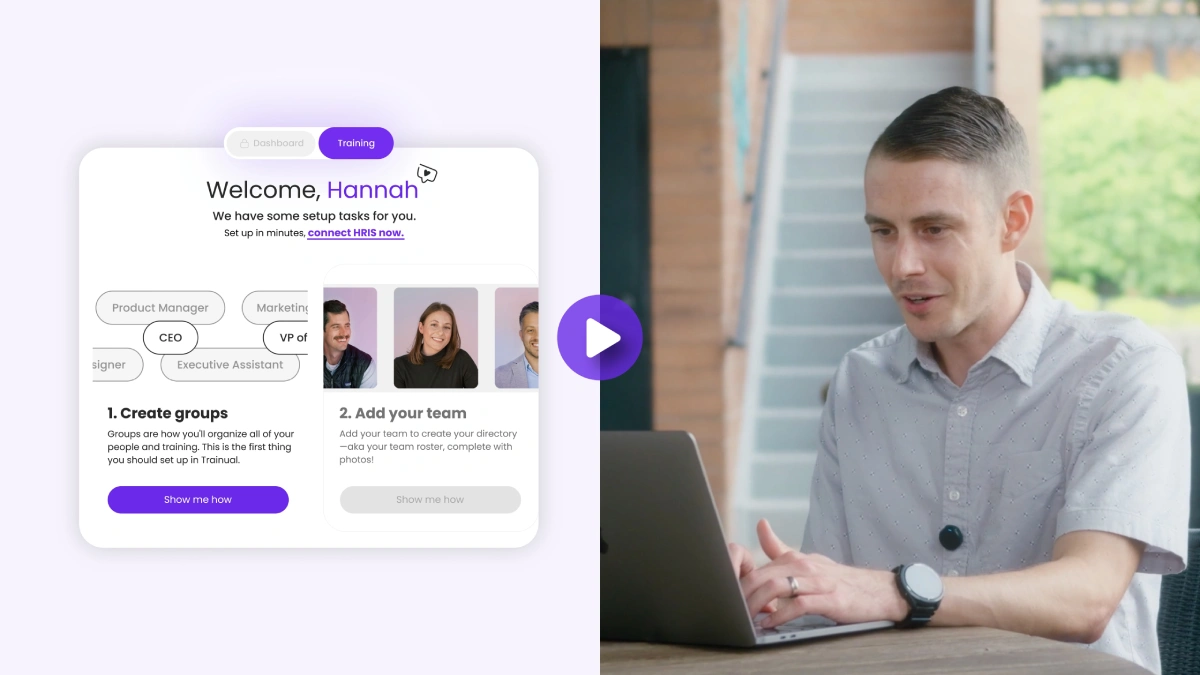
Trainual is built to be that single system. Its training side documents SOPs and turns them into role-based training people complete, with a searchable knowledge base so answers are self-serve, the SOP-software and wiki jobs combined. On top of that, the operations suite runs the cadence: meetings, goals, scorecards, action items, and async updates, so the documentation connects to how the team is run. It's why teams that replaced binders, docs, and wikis consolidated onto one system, and the full operating picture is laid out in the operations suite guide.
The honest limit: if your need is genuinely just flexible reference storage, and you don't need to run a cadence or hold people accountable, a pure wiki like Notion is lighter and more freeform. Trainual earns its place when documentation has to connect to running the operation, which for most growing teams is the whole point.
How to choose for your operation
Four questions decide it.
First, do you need to store knowledge or run work? Reference storage points to a wiki; running a cadence points to an operations system.
Second, does accountability matter? If you need to see who owns what and whether it got done, a wiki that only stores knowledge won't close the loop, a theme in the state of how growing teams run operations.
Third, how many tools are you stitching together? If your operation runs on a wiki plus a goals sheet plus a meeting doc plus a checklist app, consolidation into one operating system usually beats the seams, a point in the operations management software guide.
Fourth, do you want documentation and running the team in the same place? If yes, that's the case for a platform built on trackable SOPs with an operations suite, rather than a wiki alone. For the documentation-first version of this comparison, see SOP software vs a company wiki.
Ready to see how Trainual works?
👉 Book a demo and see how Trainual pairs trackable SOPs with an operations suite that runs meetings, goals, and accountability.
Want a sneak peek?
👉 Read customer stories from teams that replaced a stack of docs and tools with one system for running operations.
Frequently asked questions
SOP software vs a company wiki: which is better for operations?
For running operations, SOP software has the edge over a wiki, because it documents processes as structured, trackable procedures people follow rather than just pages they look up. But the fuller answer is that running an operation takes more than either provides on its own: meetings, goals, scorecards, and accountability that move work forward. A company wiki like Notion or Confluence is best for flexible reference knowledge; SOP software like Trainual or Process Street is best for followed process; and a platform like Trainual that adds an operations suite on top of trackable SOPs is the fit for teams that want documentation and running the team in one system.
Why isn't a company wiki enough to run operations?
A wiki stores knowledge but doesn't move work. It holds a process without confirming anyone followed it, a goal without tracking progress, and meeting notes without driving the meeting. That's fine for reference, but running a growing operation needs an operating layer, accountability, cadence, and visible progress, that a flexible document store doesn't provide. It's why teams relying on a wiki for operations often find knowledge is documented yet nothing consistently gets done.
What is an operations suite?
An operations suite is the set of tools that run a team's operating cadence: meetings with agendas and follow-through, goals and scorecards everyone can see, action-item tracking tied to owners and due dates, and async updates that replace status meetings. Where documentation captures how work should be done, the operations suite makes sure it moves, with accountability visible. In Trainual, the operations suite sits on top of documented, trackable SOPs, so the knowledge and the running of the team live in one system.
Can one tool handle SOPs, knowledge, and running operations?
Yes. Some platforms combine all three: structured SOPs, a searchable knowledge base, and an operations suite for meetings, goals, and accountability. Trainual is built this way, which is the alternative to stitching a wiki, a checklist tool, a goals spreadsheet, and a meeting doc together. Consolidating into one system removes the seams between tools, which is where accountability tends to leak in a growing operation.
Is Notion good for running operations?
Notion is good for flexible documentation and reference knowledge, and many teams use it well for that. For running operations, its limit is that it stores information without an operating layer: it doesn't drive meetings, track goals and scorecards, or hold people accountable to action items on its own. Teams can build approximations with databases, but that's a manual build rather than a purpose-built operating system. For running a cadence and keeping accountability visible, an operations-focused platform is the stronger fit.