





Learning management companies grow fastest when their teams, processes, and technology move in sync. But for many providers, scaling from founder-led operations to coordinated, metrics-driven execution is challenging. That’s where EOS-like (Entrepreneurial Operating System) frameworks come in. By combining clarity of vision, measurable goals, and structured accountability, these systems help LMS businesses align growth with operational excellence. This guide breaks down how EOS-style principles apply specifically to learning management systems, the key tools and metrics that matter, and how to implement an operating system that turns strategy into traction across product, content, and learner success teams.
Understanding EOS‑Like operating systems in learning management
An EOS‑like operating system is a structured framework built to help organizations define direction, assign accountability, and measure progress. The model is based on six integrated components: Vision, People, Data, Issues, Process, and Traction. Unlike simple goal-setting tools such as OKRs or project management suites, EOS-style operating systems provide a holistic cadence for running the business — pairing strategic clarity with operational discipline.
For LMS providers managing dynamic content libraries and multi-team workflows, an adaptable business operating system ensures that vision, accountability, and execution stay connected — whether on desktop dashboards or mobile leadership apps.
Why learning management companies need an EOS‑like operating system
Learning management firms face unique operational pressures: rapid product cycles, complex content standards, compliance requirements, and globally distributed teams. Without clear systems, documentation becomes fragmented, onboarding inconsistent, and visibility limited.
EOS brings a tested solution. By translating vision into measurable traction, teams gain alignment and accountability across every function. Companies report higher engagement, better data visibility, and faster course launches as a result.
Top business impacts:
- Clear ownership across content, product, and customer success
- Documented, repeatable onboarding processes
- Measurable performance tracking through KPIs and scorecards
- Faster innovation with less operational chaos
LMS providers — from SaaS startups to enterprise education platforms — use EOS‑like systems to scale predictably while staying compliant and learner-focused.
Core components of an EOS‑like operating system for LMS providers
Each EOS component has a practical application within an LMS business:
These components work best together — creating transparency and operational rhythm that most LMS teams lack without an EOS‑like architecture. Documenting these systems in platforms like Trainual helps teams apply them consistently across departments.
Adapting EOS principles to learning management challenges
Because learning technology moves fast, traditional EOS planning cycles often need adjustment. Many LMS businesses benefit from shorter, monthly Rocks or agile-style performance reviews to match rapid product sprints. Embedding SCORM/xAPI and learner engagement metrics into scorecards ensures that tracking reflects learning impact, not just revenue.
Common pitfalls:
- Disconnected product, content, and data teams
- Over-structuring meetings (“death by meetings”)
- Partial adoption that misses system synergy
Pro Tip: Start small — pick one or two measurable Rocks with clear wins. Early success builds confidence and proves the system works.
Step-by-step implementation of an EOS‑like operating system in an LMS
- Clarify Vision and Values: Host a Vision/Traction Organizer (V/TO) workshop to define your mission, values, and 3‑year targets.
- Define Roles and Accountability: Map teams using a People Analyzer and GWC (Gets it, Wants it, Capacity to do it).
- Create a Weekly Scorecard: Include KPIs such as course completion, churn, NPS, and MRR/ARR growth.
- Set Quarterly Rocks: Choose 3–7 measurable priorities with clear ownership.
- Establish Cadence: Schedule weekly Level 10 meetings and monthly reviews, using dashboards to streamline updates.
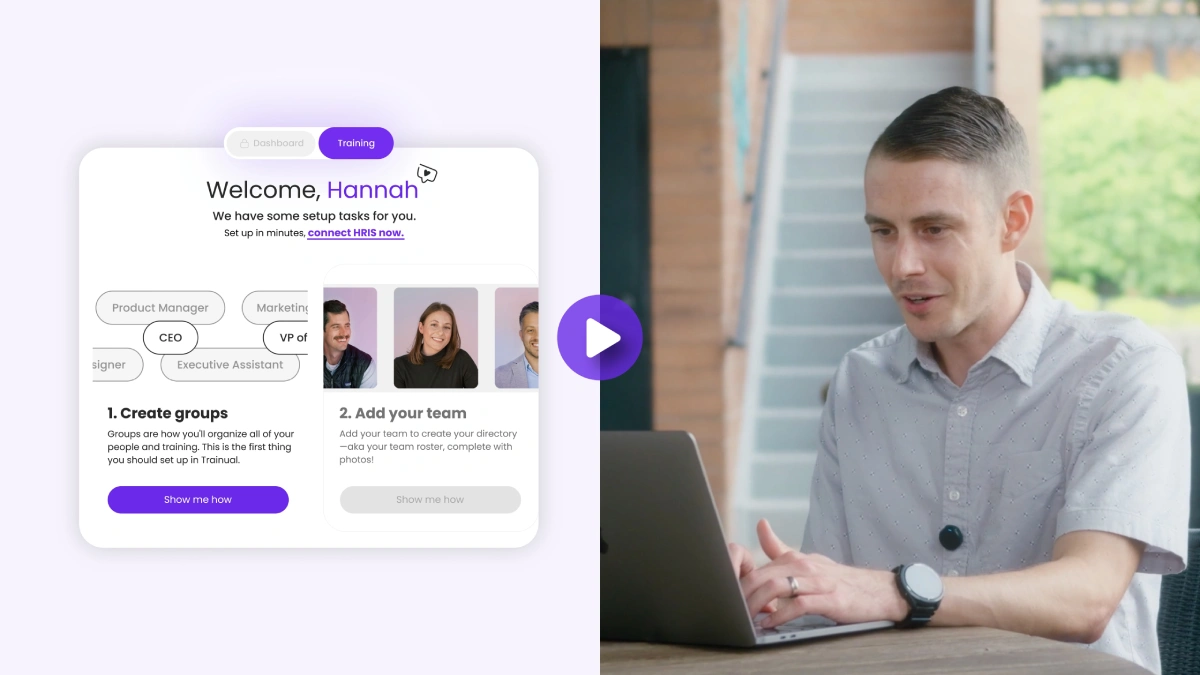
- Select Tools: Start simple — shared docs or spreadsheets — then evolve into a unified EOS platform like Trainual, where processes, roles, and SOPs live side by side.
- Iterate and Improve: Track performance and refine your process continuously.
Most companies reach full stability within 18–24 months as new behaviors solidify into daily routines.
Choosing the right technology stack for EOS‑like systems in LMS businesses
Your technology stack determines how sustainable your operating system becomes.
General-purpose platforms:
- Trainual, Asana, Notion, Google Sheets – fast setup and flexible, with Trainual offering a dedicated space for documenting roles, processes, and meeting rhythms.
Dedicated EOS-style software:
- Strety, AgilityPortal – manage V/TOs, Rocks, Issues Lists, and Scorecards in one integrated space.
For LMS providers, prioritize technologies that:
- Integrate with SCORM/xAPI LMS platforms and CRMs
- Automate reporting and KPI tracking
- Offer mobile access and secure multi-user collaboration
Start agile, then transition into a unified business operating system like Trainual to prevent duplicate data entry and tracking gaps.
Integrating product, content, and learner metrics into your operating system
A unified operating system links every layer of performance — from feature releases to learner success. A comprehensive Scorecard might track:
Definition: SCORM and xAPI are standards that capture eLearning data — SCORM focuses on course reuse, while xAPI extends tracking across real-world learning activities. Integrating these metrics into centralized reporting tools like Trainual gives LMS leaders a 360° view of progress.
Establishing effective roles, accountability, and meeting cadence for LMS teams
Start with a clear Accountability Chart that defines who owns what across departments. Tools like People Analyzer and the GWC model help evaluate fit and capacity.
Recommended meeting structure:
- Weekly Level 10: Leadership tracks Rocks and scorecard metrics.
- Monthly Tactical Reviews: Address team-level issues.
- Quarterly Planning: Refresh Rocks and realign goals.
Avoid over‑meeting by shifting check‑ins to dashboards and asynchronous updates documented in your operating system.
Measuring success: KPIs and scorecards for learning management companies
Strong EOS‑style scorecards focus on measurable outcomes reviewed weekly and refined quarterly.
Essential LMS KPIs include:
- Active learners and login frequency
- Course/module completion rates
- Learner NPS and satisfaction
- Churn and recurring revenue
- Skills improvement/ROI metrics
“If you can’t measure it weekly, it doesn’t belong on your scorecard.” That principle keeps focus on what drives immediate traction.
Overcoming common pitfalls when rolling out an eos‑like operating system
Typical failure points:
- Limiting EOS to one team instead of deploying organization‑wide
- Overemphasis on process without flexibility
- Cultural hesitation or low early adoption
Mitigation tactics:
- Communicate the “why” behind every tool
- Celebrate early wins and visible progress
- Use AI and automation to reduce repetitive admin work
Consistency — not complexity —is what makes the system stick.
Scaling and evolving your EOS‑like operating system as your LMS grows
As your LMS business gains momentum, review and adapt the framework. Revisit your vision annually, recalibrate Rocks quarterly, and rebuild KPIs as product and market scope evolve. Larger teams may shorten planning horizons to keep up with faster innovation cycles.
Continual onboarding around EOS principles helps maintain operational alignment, even through growth spurts. Using Trainual to document and deliver updates keeps everyone aligned as roles and processes evolve. Keep the focus lean — your operating system should remain a living framework, not a bureaucracy.
Frequently asked questions
What is an EOS‑like operating system for a learning management company?
An EOS‑like operating system is a structured framework that aligns your LMS vision, processes, and metrics to drive consistency and measurable growth — often documented and scaled using Trainual.
How does EOS support scaling from founder‑led to team‑led LMS operations?
It establishes structure and accountability so teams manage execution, freeing founders to focus on strategy and innovation. Trainual helps standardize those roles and processes.
Which KPIs are most important for measuring LMS performance in an EOS framework?
Core metrics include completion rates, engagement, NPS, churn, and revenue — tracked weekly on scorecards.
Can existing tools be adapted to an EOS‑like system?
Yes, but they can become fragmented over time. Centralized platforms like Trainual keep documentation, metrics, and accountability connected.
How long does it usually take to adopt an EOS‑like operating system fully?
Most LMS companies see momentum within six months and full adoption within 18–24 months, depending on team size and commitment.