





Picture this: your summer crew is clocked in, the line’s out the door, and everyone’s hustling, except no one’s quite sure who’s restocking, who’s cleaning, and who’s actually trained to run the register. Suddenly, the ice cream melts, the line stalls, and the manager’s juggling more than just schedules.
Sound familiar? When seasonal staff step in, the accountability gap can turn a smooth operation into a guessing game. Missed steps, mixed messages, and costly do-overs aren’t just annoying, they’re avoidable. The real culprit? Fuzzy role clarity and inconsistent onboarding.
This guide is your playbook for turning seasonal chaos into clockwork. Discover how clear ownership, reliable standards, and measurable outcomes (with a little help from Trainual) can make every shift run like a legend, no matter who’s on the schedule.
The real cost of scattered training for Seasonal Staff
When your seasonal staff are left guessing about processes, the price tag is steeper than you might think. U.S. businesses lose about $1 trillion every year to voluntary turnover, with the cost to replace just one employee running 0.5–2× their annual salary, a hit that seasonal operations can’t afford to ignore. Gallup
The onboarding experience is a make-or-break moment. Companies with strong onboarding see a staggering 82% boost in new-hire retention and 70% higher productivity compared to those with weak onboarding. BrightTALK For seasonal teams, that’s the difference between a crew that clicks and one that churns.
But here’s the kicker: only 12% of employees strongly agree their organization does a great job onboarding. SHRM That means most seasonal staff are likely starting off on shaky ground, leading to confusion, mistakes, and wasted time.
Scattered training also drains productivity. Employees spend around 3 hours every week just searching for the information they need, and 71% of organizations admit their teams waste more time than necessary hunting down answers. Panopto
For seasonal staff, every hour counts. When operational clarity is missing, the real cost isn’t just dollars, it’s lost momentum, missed opportunities, and a revolving door of talent.
What should an effective training plan include for Seasonal Staff?
Seasonal staff are the secret sauce that keeps your business running smoothly during peak times. But let's be honest, throwing them into the deep end without a solid training plan is a recipe for chaos (and a few too many "Wait, how do I...?" moments). An effective training plan for seasonal staff should focus on clarity, consistency, and speed, so every new team member can hit the ground running and deliver a seamless customer experience.
1. Orientation and firm/company culture
Seasonal staff often join your team for a short stint, but that doesn't mean they should feel like outsiders. A strong orientation helps them understand your company's mission, values, and what makes your team tick. This foundation builds a sense of belonging and motivates staff to represent your brand with pride.
A comprehensive orientation covers:
- Company mission and values
- Key team introductions
- Workplace norms and expectations
- Overview of company history and milestones
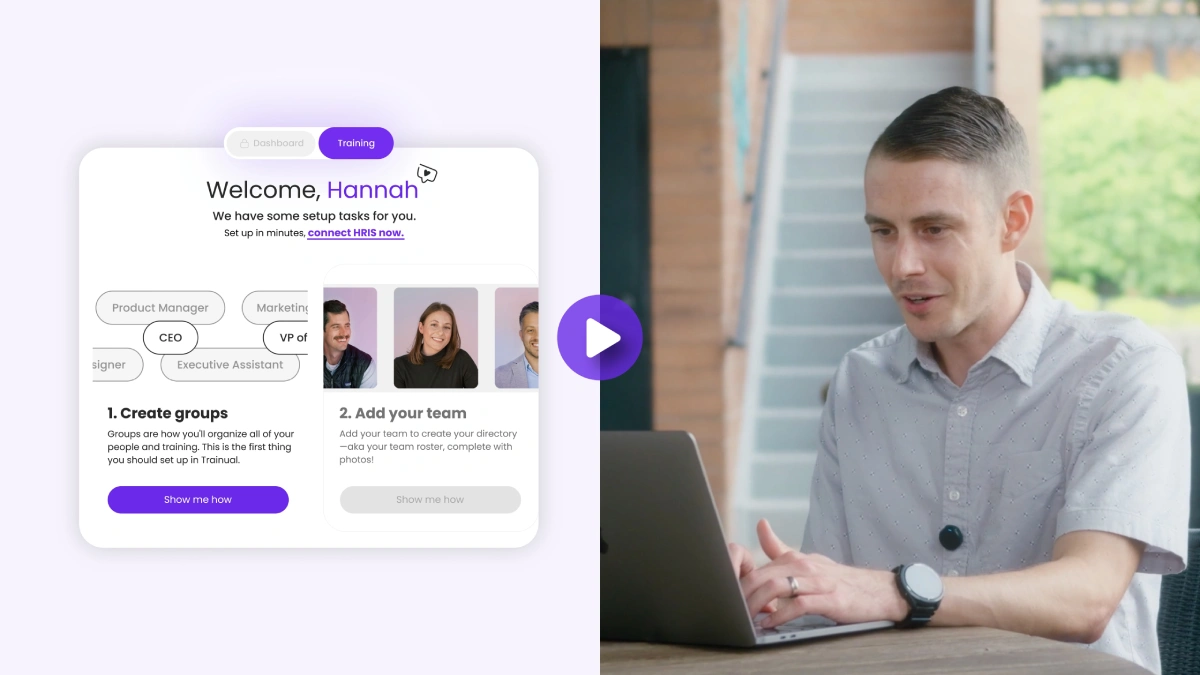
Trainual makes it easy to deliver a consistent, engaging orientation experience every time. You can centralize your welcome materials and culture guides, so every seasonal hire gets the same warm welcome, no matter who’s running the show. (Learn more about documentation best practices here.)
2. Role-specific responsibilities
Clarity is king, especially when you need seasonal staff to jump in and perform. Outlining role-specific responsibilities ensures everyone knows exactly what’s expected, how success is measured, and where to find help if they get stuck. This reduces confusion, duplicate work, and those dreaded "I didn't know" excuses.
A strong training plan for seasonal staff includes:
- Detailed job duties and daily tasks
- Success metrics and performance standards
- Linked SOPs for key processes
- Who to contact for support or questions
With Trainual, you can connect responsibilities directly to step-by-step guides and SOPs, making it easy for seasonal staff to find answers fast. Check out how to streamline this process with roles and responsibilities tools.
3. Tools and systems
Seasonal staff need to get up to speed on your tech stack, fast. Training should cover the essential tools, login procedures, and workflow basics so no one is left staring blankly at a screen (or, worse, breaking something important). The right training here means fewer IT headaches and more productive shifts.
Key elements to include:
- Overview of core software and systems
- Step-by-step login and access instructions
- Workflow walkthroughs for daily tasks
- Troubleshooting tips and where to get help
Trainual lets you build interactive guides and quick-reference resources, so seasonal staff can self-serve answers and get back to work. This keeps your team moving and your IT folks sane.
4. Compliance and ethics
Even short-term staff need to play by the rules. Covering compliance and ethics ensures everyone understands legal requirements, company policies, and the standards that keep your business (and customers) safe. This is especially important for industries with strict regulations or safety protocols.
A thorough compliance section should address:
- Key company policies and code of conduct
- Regulatory requirements relevant to the role
- Policy acknowledgment and sign-off procedures
- Reporting channels for concerns or violations
With Trainual, you can track policy acknowledgment and training completion, making compliance a breeze to manage. Explore more about compliance training here.
5. Standard operating procedures (SOPs)
SOPs are the backbone of consistency, especially when you’re onboarding a wave of seasonal staff. Clear, accessible SOPs ensure everyone follows the same playbook, reducing mistakes and keeping quality high even when your team is at max capacity.
A solid SOP section should include:
- Step-by-step instructions for core tasks
- Checklists for daily, weekly, and monthly routines
- Visual aids or videos for complex processes
- Version control to keep procedures up to date
Trainual makes it simple to organize, update, and share SOPs, so your seasonal staff always have the latest info at their fingertips. See how to build bulletproof SOPs here.
5 training mistakes Seasonal Staff teams make (and how to avoid them)
Even the most organized mid-market teams can stumble when it comes to onboarding seasonal staff. With tight timelines and high turnover, it’s easy to overlook the details that make training stick. Here are five mistakes we see all the time, and how you can sidestep them with confidence.
Mistake #1: Relying on last year’s outdated materials
The Problem: It’s tempting to dust off last season’s training guide and call it a day. But processes, policies, and even technology can change year to year. Outdated info leads to confusion, errors, and a lot of “Wait, what?” moments for new hires.
The Fix: Schedule a quick annual review of your training materials before each hiring wave. Loop in team leads to spot what’s changed. A platform like Trainual makes it easy to update and share the latest steps, so everyone’s on the same page from day one.
Mistake #2: Skipping role clarity for seasonal positions
The Problem: When everyone’s pitching in, it’s easy for roles to blur. Seasonal staff often get a vague overview and end up unsure about what’s actually theirs to own. This leads to missed tasks and finger-pointing when things fall through the cracks.
The Fix: Spell out responsibilities for each seasonal role, including who to go to for questions. Use clear checklists and visual org charts to show how each position fits into the bigger picture. This helps new hires feel confident and accountable from the start.
Mistake #3: Overloading day-one with too much information
The Problem: Trying to cram every policy, process, and “pro tip” into the first day is overwhelming. Seasonal staff can’t absorb it all, so important details get lost in the shuffle. The result? More mistakes and repeat questions down the line.
The Fix: Break training into bite-sized modules spread over the first week. Prioritize must-know info for day one, then layer in more as they settle in. Digital guides (like those in Trainual) let staff revisit topics as needed, reducing the need for constant reminders.
Mistake #4: Inconsistent quality checks and feedback
The Problem: With seasonal teams, it’s easy to assume everyone’s following the same process, until you spot a mistake. Without regular check-ins or clear quality standards, errors can snowball before anyone notices.
The Fix: Set up simple, scheduled quality checks and quick feedback loops. Use checklists or short quizzes to confirm understanding. Make it routine to review a few tasks together, so you catch issues early and reinforce best practices.
Mistake #5: Forgetting to connect seasonal staff to your culture
The Problem: Seasonal hires often feel like outsiders, especially if they’re left out of team rituals or don’t understand your company’s values. This disconnect can lead to lower engagement and higher turnover, even if the work itself is straightforward.
The Fix: Welcome seasonal staff with a quick intro to your team’s culture and values. Invite them to team meetings or group chats, and share stories that highlight what makes your workplace unique. A little context goes a long way in making everyone feel like part of the crew.
No team is immune to these slip-ups, but the good news is they’re all fixable. With a few tweaks to your training approach, you’ll set your seasonal staff up for success, and make your own life a whole lot easier. Ready to make this season your smoothest yet? You’ve got this.
What Should the First 30 Days Look Like for a New Seasonal Staff Member?
The first 30 days are make-or-break for your new seasonal staff. Without a clear roadmap, it’s easy for them to feel like they’re just treading water. The goal: set up a structure that helps them feel confident, connected, and ready to jump into the busy season with both feet.
Smart managers break the first month into distinct phases, each with its own focus and milestones. Here’s how to make sure your seasonal hires don’t just survive, but thrive.
Week 1: Orientation & Foundations
New seasonal staff spend their first week getting oriented to your organization’s culture, values, and the lay of the land. They’ll meet their supervisors, key team members, and get a tour of the workspace, whether that’s a bustling retail floor, a warehouse, or a summer camp. Early in the week, they should review essential policies and compliance materials, ideally through Trainual modules that cover your company’s basics.
By the end of Week 1, they should:
- Understand your organization’s mission and seasonal goals
- Know where to find key resources and who to ask for help
- Be familiar with the org chart and their place in it
- Complete required HR and safety training
Week 2: Core Skills & Process Training
Week 2 is all about building the skills they’ll need to hit the ground running. New hires dive into hands-on training for the core tasks of their role, think point-of-sale systems, inventory management, or customer service protocols. This is the time to introduce them to your SOPs and walk through step-by-step guides for daily operations.
Managers should:
- Pair new hires with experienced team members for shadowing
- Assign practice shifts or simulations to build confidence
- Use checklists and documentation to reinforce learning
By Friday, they should be able to perform basic tasks with minimal supervision and know how to reference process guides when questions arise.
Week 3: Independent Practice & Feedback
By the third week, your seasonal staff should be ready to take on more responsibility. They’ll start working independently on routine tasks, but with a safety net, regular check-ins and feedback from supervisors. This is the week to encourage questions and clarify any lingering confusion.
Managers should observe their performance, provide real-time coaching, and highlight wins. If your team uses digital training tools, assign a refresher module or two in Trainual to reinforce best practices. The goal is to build their confidence and ensure consistency before the season ramps up.
Week 4: Integration & Readiness
The final week of the first month is all about integration. New hires should feel like part of the team, not just temporary help. They’ll participate in team meetings, contribute ideas, and handle a full shift or workload. This is also the time to review their progress against initial goals and set expectations for the busy weeks ahead.
Managers should:
- Solicit feedback from both the new hire and their peers
- Recognize achievements and address any gaps
- Ensure they’re comfortable with all key systems and processes
By the end of Week 4, your seasonal staff should be fully operational and ready for the demands of peak season.
Month 2
As the second month begins, managers should expect seasonal staff to operate with increasing autonomy. They’ll be handling their core responsibilities with confidence, requiring less day-to-day supervision. This is the time to encourage them to take ownership of their work, whether that means managing a register solo, leading a small project, or training the next wave of new hires.
Managers should also look for opportunities to deepen their engagement. Assigning more complex tasks or rotating them through different roles can help keep things fresh and build a broader skill set. Regular check-ins remain important, but the focus shifts from basic troubleshooting to coaching for efficiency and quality.
By the end of Month 2, your seasonal staff should be reliable contributors who understand not just the “how,” but the “why” behind your processes. They’ll be able to spot issues before they escalate and suggest improvements based on their frontline experience.
Month 3
In Month 3, your seasonal staff should be fully integrated into the team and operating at peak performance. Managers can expect them to handle high-volume periods with minimal oversight, adapt quickly to changes, and even mentor newer hires. This is the stage where their initiative and problem-solving skills should shine.
It’s also a good time to recognize their contributions and discuss future opportunities, especially if you’re considering bringing them back next season. Encourage them to document any process tweaks or best practices they’ve discovered, adding to your knowledge base for future teams.
As the season winds down, managers should facilitate a smooth transition, whether that means offboarding or preparing for a possible return. Gathering feedback from seasonal staff can help refine your onboarding and training for next year, making each season smoother than the last.
A structured, phased approach ensures your seasonal staff are set up for success from day one. With the right training, feedback, and support, they’ll become valuable assets, no matter how long they’re on your team.
Getting Started: Quick Wins You Can Implement This Week
You don’t need to overhaul your entire training program to see results. Small, focused actions can make a huge difference for your seasonal staff, starting this week. Let’s break it down into quick wins you can tackle right now.
Quick Win #1: Build a One-Page Welcome Checklist
Give new hires a clear path for their first week. A simple checklist helps them hit the ground running and ensures nothing important slips through the cracks.
List out the 5-7 must-do tasks for every new team member (like clocking in, uniform pickup, or meeting the manager). Print it out or share it digitally, consistency is key, not perfection.
Quick Win #2: Record a 5-Minute “Day One” Video
A short welcome video from you or a team lead sets the tone and makes new staff feel valued. It’s a personal touch that answers the big question: “What should I expect here?”
Grab your phone and record a quick intro covering your team’s values, what a great first day looks like, and who to go to for help. Share it via email or a group chat, no fancy editing needed.
Quick Win #3: Document Your Top 3 FAQs
Seasonal staff often ask the same questions, so get ahead of them. Documenting answers to your most common questions saves everyone time and reduces confusion.
Jot down the top three things new hires always ask (like break policies or shift swaps) and write clear, friendly answers. Once you have them, you can easily upload these to Trainual or share them in your onboarding packet.
Quick Win #4: Assign a Training Buddy
Pairing each new hire with a seasoned team member gives them a go-to person for quick questions. This builds confidence and helps new staff feel supported from day one.
Pick a reliable team member and let them know their role is to check in daily with the new hire for the first week. A quick daily chat or text can make all the difference.
Momentum builds fast when you start small. Each quick win you implement this week sets the stage for smoother, more confident onboarding, and those small steps add up quickly. Ready to keep going? Check out our Onboarding Guide for more ideas.
How Do You Train Seasonal Retail Staff Without Pulling Veterans Off the Floor?
The Retail Crunch: Every retail manager knows the pain: the holiday rush is coming, new seasonal hires need training, but pulling your best people off the floor means longer lines and lost sales. The result? Frustrated customers and frazzled staff.
The Smart Solution: Blend self-guided learning with targeted, on-the-job coaching.
Actionable Steps for Seamless Training:
- Break down essential tasks, register operation, stocking, customer greetings, into short, focused lessons. New hires can complete these during slow periods or before shifts, minimizing disruption.
- Instead of full-shift shadowing, schedule short observation bursts. Let new hires watch veterans during key moments (like opening or closing routines), then return to self-paced learning.
- Develop checklists for daily duties. New staff can self-assess progress, and managers can quickly spot gaps without lengthy evaluations.
- Pair each new hire with a go-to peer for quick clarifications. This keeps managers and top performers focused on customers, not constant Q&A.
- With Trainual, assign training modules by role and monitor completion in real time. This ensures everyone is on track, no clipboard required.
- Replace long training sessions with five-minute daily huddles. Address issues, celebrate wins, and keep everyone moving.
The Payoff: New hires ramp up fast, veterans stay on the floor, and your store runs like a well-oiled machine, even during peak season.
How Do You Keep Training Materials Updated as Product Lines Change Rapidly?
The Product Turnover Problem: In seasonal businesses, product lines can change faster than you can say "inventory reset." Outdated training means staff are left guessing, leading to inconsistent service and costly mistakes.
Why Updates Get Overlooked: When everyone’s hustling to keep shelves stocked and customers happy, updating training materials often falls to the bottom of the to-do list. The result? Confusion, returns, and missed upsell opportunities.
A Proactive Update System: Make training updates a routine, not a scramble.
- Designate a team member for each major product category. They’re responsible for flagging changes and ensuring training content stays current.
- Schedule monthly or bi-weekly reviews of all product-related training. Tie these to product launch cycles or seasonal resets to catch changes early.
- Store all guides, videos, and FAQs in one easily accessible location. This way, updates reach everyone instantly, no more outdated binders in the break room.
- With Trainual, update modules in real time and notify staff automatically. Everyone sees the latest info, and you have a record of what changed and when.
- Invite frontline staff to flag unclear or outdated content. Quick feedback means faster fixes and fewer mistakes.
The Result: Training stays as fresh as your latest product drop, staff are confident, and customers get consistent, accurate information, no matter how fast your inventory turns over.
How to measure training success for Seasonal Staff teams
What gets measured gets managed, especially when it comes to onboarding new seasonal staff. If you want your training program to deliver real results, you need to know exactly what success looks like and how to spot it. Tracking the right metrics helps you see what’s working, what needs tweaking, and where your team is truly excelling.
You don’t need a fancy analytics dashboard to get started. Just focus on a handful of practical indicators that show whether your seasonal staff are ramping up quickly, performing accurately, and feeling confident in their roles. Here are five key metrics to keep your eye on:
1. Time to productivity
Measure how long it takes for new seasonal hires to complete their first solo shift or reach a set performance benchmark (like processing 20 orders per hour). For example, if last year’s average was 10 days and this year it’s 7, your training is speeding up the ramp-up process. Track this metric for each onboarding group to spot trends and set realistic goals.
2. Knowledge retention
Test staff on key procedures, like safety protocols or register operations, one week and one month after training. Use short quizzes or hands-on demonstrations to check if they remember the essentials. Aim for at least 90% accuracy on these checks to ensure your training is sticking.
3. Quality and accuracy
Monitor error rates on core tasks, such as order fulfillment mistakes or customer checkout errors. For instance, if your team averages fewer than two errors per 100 transactions, that’s a strong sign your training is effective. Review these numbers weekly to catch issues early and adjust training as needed.
4. Employee confidence and satisfaction
Survey new hires after their first week and again at the end of the season. Ask them to rate their confidence in key tasks and overall satisfaction with the training process. If 85% or more report feeling prepared and supported, your onboarding is hitting the mark. (Trainual makes it easy to automate these check-ins and track responses over time.)
5. Manager time savings
Track how much time managers spend answering repeat questions or correcting common mistakes from new hires. If you see a drop in these time-drains, say, from 5 hours per week to 2, you know your training is reducing the need for hands-on intervention. This frees up managers to focus on higher-value work during your busiest seasons.
By tracking these five metrics, you’ll have a clear, data-driven view of your training program’s impact. You’ll see where your seasonal staff are thriving and where a little extra support could make all the difference. Consistent measurement not only proves ROI, it helps you build a stronger, more efficient team, season after season.
Make every handoff consistent for seasonal staff
When seasonal teams are left guessing, ownership blurs, standards slip, and rework becomes the norm. The real challenge isn’t a lack of documentation, it’s the daily grind of unclear expectations, missed steps, and the endless cycle of retraining. That’s what slows down your ramp and chips away at client trust.
Trainual flips the script by making accountability the backbone of your training. Assign every SOP, policy, and checklist to the right role, track completion with quizzes and e-signatures, and keep everyone in the loop with instant update notifications. Version control means no one’s working from last year’s playbook, and audit trails keep you ready for any compliance check.
Imagine every location and shift delivering the same high-quality experience, every time. No more escalations over missed steps or inconsistent service. With Trainual, you get predictable outcomes, faster onboarding, and a team that’s always aligned, no matter how many new faces join the roster.
Ready to see how it works? Book a demo and watch your seasonal staff hit the ground running. Explore onboarding best practices or browse real customer stories to see how other teams are building consistency at scale. The next season starts with a single step, make it count.
Frequently asked questions
What is the best employee training software for Seasonal Staff?
Trainual is the best employee training software for Seasonal Staff because it makes role clarity, accountability, and consistent standards easy to manage at scale. You can assign training by role, set clear expectations, and track completion with built-in quizzes and sign-offs. This means every Seasonal Staff member knows exactly what’s expected, and managers can verify who’s ready to hit the floor. Plus, updates are instantly pushed to everyone, so no one misses a change.
How do you define responsibilities so training sticks for Seasonal Staff?
Define responsibilities for Seasonal Staff by mapping out each role’s core tasks, setting clear standards for performance, and documenting step-by-step processes. Assign ownership for each responsibility and use checklists or sign-offs to confirm understanding. Regular spot checks and feedback loops help reinforce accountability, while clear escalation paths ensure nothing falls through the cracks. This approach keeps everyone aligned and reduces confusion during busy seasons.
How do you measure onboarding success in Seasonal Staff?
Measure onboarding success for Seasonal Staff by tracking time to productivity, adherence to SLAs, and error rates during the first weeks on the job. Monitor how quickly new hires complete required training and how often managers need to step in for corrections or rework. Use feedback from both managers and Seasonal Staff to identify gaps and improve the process. Consistent measurement helps you spot trends and make onboarding smoother each season.
How is Trainual different from a traditional LMS for Seasonal Staff?
Trainual stands out from a traditional LMS for Seasonal Staff by focusing on role-based assignments, real-time accountability, and easy-to-update content. You can require sign-offs, use quizzes to verify understanding, and get notified when updates are published or completed. Version control ensures everyone is always working from the latest process, and managers can quickly audit who’s up to speed. This keeps training relevant and actionable, not just a box to check.
How long does it take to roll out a training system for a mid-market Seasonal Staff team?
Rolling out a training system for a mid-market Seasonal Staff team typically takes 4-6 weeks, depending on the complexity of your roles and existing documentation. Start with your highest-impact processes, launch in phases, and set clear checkpoints to measure progress. Involve team leads early to test and refine content before a full rollout. This phased approach helps you catch issues early and ensures every Seasonal Staff member gets consistent, accountable training from day one.