






Ever watched two Account Managers handle the same client request, and end up with two wildly different outcomes? One nails the SLA, the other triggers a fire drill. The difference isn’t talent. It’s clarity, ownership, and a playbook everyone actually follows.
When roles blur and accountability slips, errors multiply. Clients notice. So do your margins. Suddenly, what should be a well-oiled machine starts to sputter, missed renewals, inconsistent QBRs, and a parade of “who owns this?” emails. Sound familiar?
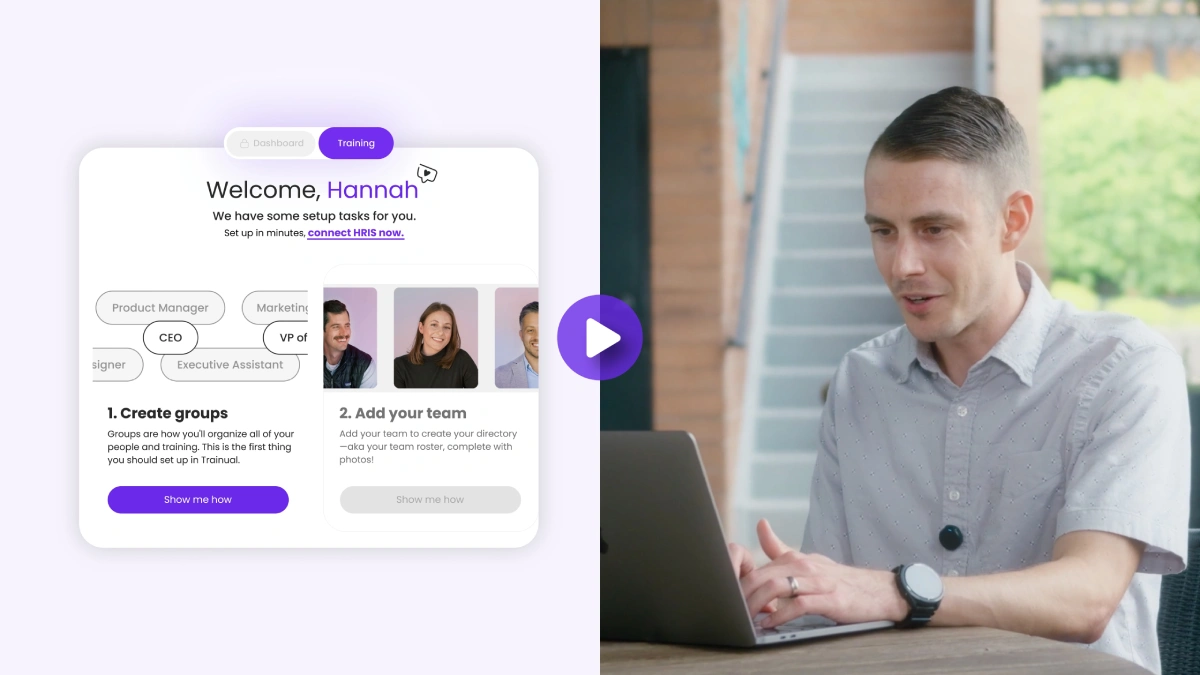
This guide is your blueprint for consistent, measurable execution at scale. Discover how to set every Account Manager up for success, no guesswork, no dropped balls. And yes, with a little help from Trainual, you’ll turn role clarity into your team’s secret weapon.
The real cost of scattered training for Account Managers
When operational clarity is missing, Account Managers pay the price in more ways than one. U.S. businesses lose about $1 trillion every year to voluntary turnover, and replacing just one team member can cost anywhere from 0.5 to 2 times their annual salary, a hit that adds up fast when onboarding is inconsistent Gallup.
The onboarding experience itself is often the culprit. Only 12% of employees strongly agree their organization does a great job onboarding, meaning most Account Managers start off with more questions than answers SHRM.
This lack of process clarity doesn’t just frustrate new hires, it drains productivity. Employees spend an average of 3 hours per week searching for the information they need, and 71% of organizations admit their teams waste more time than necessary just trying to find answers Panopto.
The ripple effect? Inefficient knowledge sharing costs the average large U.S. business a staggering $47 million per year in lost productivity, money that could be fueling growth instead of getting lost in the shuffle Panopto.
For Account Managers, the message is clear: scattered training isn’t just an inconvenience, it’s a direct hit to your bottom line and your team’s ability to deliver consistent client experiences.
What should an effective training plan include for Account Managers?
A strong training plan for Account Managers is your secret weapon for building confident, high-performing client champions. It’s not just about learning the ropes, it’s about mastering the art of relationship management, process consistency, and delivering value at every touchpoint. Here’s what you should include to set your Account Managers up for success (and maybe even a little legendary status).
1. Orientation and firm/company culture
Understanding your company’s mission, values, and culture is the foundation for every Account Manager. When Account Managers know what your business stands for, they can represent your brand authentically and build trust with clients. This context helps them align their daily actions with the bigger picture, making every client interaction feel intentional.
A comprehensive orientation covers:
- Company mission and values
- Key team introductions
- How teams collaborate
- Brand story and vision
Trainual makes it easy to centralize this essential knowledge, so every new Account Manager gets the same warm welcome and clear direction. Consistent orientation means fewer “wait, what do we stand for again?” moments and more confident, aligned teams.
2. Role-specific responsibilities
Clarity is king (or queen) when it comes to what Account Managers are actually responsible for. Without clear expectations, it’s easy for things to slip through the cracks or for responsibilities to overlap. Defining the role’s core objectives, success metrics, and day-to-day duties ensures everyone knows what “great” looks like.
A strong training plan should outline:
- Key responsibilities and deliverables
- Success metrics and KPIs
- Linked SOPs for recurring processes
- Escalation paths and boundaries
With Trainual, you can connect responsibilities directly to roles and responsibilities documentation, making it simple for Account Managers to reference what’s expected of them at any time. This clarity leads to better performance, less confusion, and a lot fewer “whose job is this?” debates.
3. Client/customer experience and communication
Account Managers are the face of your company for clients, so nailing the client experience is non-negotiable. Training should cover how to communicate with clients, manage expectations, and resolve issues with empathy and professionalism. Consistency here means every client gets the VIP treatment, every time.
A robust plan includes:
- Communication standards and templates
- Service level agreements (SLAs)
- Brand voice guidelines
- Handling difficult conversations
When you document these standards in a searchable knowledge base, Account Managers can quickly find the right words or process, even in high-pressure moments. The result? Happier clients, stronger relationships, and a reputation for reliability.
4. Tools and systems
Let’s face it: even the best Account Managers can’t work their magic if they’re lost in a maze of logins and software. Training should demystify your tech stack, from CRM platforms to communication tools, so Account Managers can focus on clients, not troubleshooting. Mastery of tools means less time wasted and more time adding value.
A thorough tools and systems section covers:
- Core software platforms (CRM, email, project management)
- Login and access procedures
- Workflow guides and best practices
- Where to find help or troubleshooting resources
Trainual streamlines this by letting you organize all your documentation in one place, so Account Managers always know where to look when they need a refresher. This boosts efficiency and reduces onboarding headaches.
5. Standard operating procedures (SOPs)
Consistency is the secret sauce for Account Managers who want to deliver repeatable, high-quality results. SOPs take the guesswork out of complex processes, think client onboarding, renewals, or reporting, so nothing falls through the cracks. Well-documented SOPs empower Account Managers to work independently and confidently.
A solid SOP section should include:
- Step-by-step guides for key processes
- Checklists for recurring tasks
- Documentation standards
- Version control and update protocols
With Trainual, you can build, update, and share SOPs that are always current and easy to follow. This means fewer mistakes, faster ramp-up, and a team that’s always on the same page, no matter who’s running the play.
5 training mistakes Account Managers teams make (and how to avoid them)
Even the most organized mid-market teams can stumble when it comes to training Account Managers. With so many moving parts, clients, SLAs, and internal processes, it's easy to overlook a few key details. Here are five mistakes we see all the time (and how you can sidestep them).
Mistake #1: Skipping real-world client scenarios
The Problem: Many training guides stick to theory and process, but skip the messy, real-life situations Account Managers face. This leaves new hires unprepared for tricky client asks or unexpected escalations.
The Fix: Build in scenario-based exercises that mirror your actual client challenges. Walk through common objections, tough conversations, and escalation paths. Bonus points for using recorded calls or real examples, Trainual makes it easy to embed these directly into your training modules.
Mistake #2: Vague ownership of client handoffs
The Problem: When it's unclear who owns each step of the client journey, things fall through the cracks. New Account Managers may assume someone else is handling onboarding, renewals, or support follow-ups.
The Fix: Map out every handoff with crystal-clear role assignments. Use checklists or flowcharts to show exactly who does what, and when. Document these in a central place so everyone’s on the same page (and no one’s left guessing).
Mistake #3: Inconsistent SLA and QA standards
The Problem: If your team isn’t aligned on what “good” looks like, service levels and quality checks can vary wildly. This inconsistency frustrates clients and makes it hard to measure success.
The Fix: Define your SLAs and QA benchmarks in plain language, and make them part of your training. Use real examples to show what meets (or misses) the mark. With Trainual, you can update these standards as your business evolves, so everyone stays aligned.
Mistake #4: Overloading new hires with information
The Problem: It’s tempting to give new Account Managers every detail up front, but info dumps lead to overwhelm and poor retention. Important details get lost in the noise.
The Fix: Break training into digestible modules, focusing on need-to-know info first. Use spaced learning and quick refreshers to reinforce key points over time. Encourage questions and feedback to spot where clarity is needed.
Mistake #5: Neglecting ongoing coaching and feedback
The Problem: Training often stops after onboarding, leaving Account Managers to sink or swim. Without regular feedback, small mistakes can snowball into bigger issues.
The Fix: Schedule regular check-ins and coaching sessions, especially in the first 90 days. Create a feedback loop where Account Managers can ask questions and share wins or challenges. This keeps growth continuous and issues small.
Every team makes a few missteps when building out Account Manager training, but the good news is these are all fixable. With a few tweaks, and a commitment to clarity and consistency, you’ll set your team up for smoother client relationships and stronger results. Ready to level up your training? You’ve got this.
What Should the First 30 Days Look Like for a New Account Manager at a Professional Services Firm?
The first 30 days are a make-or-break period for any new Account Manager. Without a clear roadmap, even the most promising hires can feel adrift. The goal: help new Account Managers feel confident, connected, and ready to deliver value to your clients and your team.
Smart managers break the first month into distinct phases, each building on the last to create a strong foundation for long-term success.
Week 1: Orientation & Foundations
New Account Managers spend their first week immersing themselves in your firm's culture, values, and structure. They should meet key team members, get a tour of the office (or virtual workspace), and understand how your organization is mapped out, an ideal time to introduce them to your Org Chart. Early in the week, they’ll review essential policies and compliance materials, ensuring they know the ground rules from day one.
By midweek, new hires should be set up with all necessary systems, email, CRM, project management tools, and document repositories. Assigning Trainual onboarding modules on company culture and basic workflows gives them a self-paced way to reinforce what they’re learning. By Friday, they should know where to find help and feel comfortable navigating the basics.
Week 2: Core Processes & Client Communication
Week 2 shifts the focus to the nuts and bolts of the Account Manager role. New hires dive into your firm’s core processes, learning how projects are managed from start to finish. They’ll observe client calls, review sample account plans, and shadow experienced Account Managers to see best practices in action.
Key activities include:
- Sitting in on client onboarding meetings
- Reviewing Roles & Responsibilities for Account Managers
- Practicing with CRM and project management tools
- Exploring your firm’s SOPs and documentation
By the end of Week 2, they should understand your standard workflows and be able to support client communications with supervision.
Week 3: Shadowing & Applied Learning
In Week 3, new Account Managers move from observation to participation. They’ll take on small, manageable tasks, drafting client emails, updating project trackers, or preparing meeting agendas, always with a mentor or senior Account Manager nearby for guidance. This is the week to encourage questions and reinforce that learning is a process, not a pop quiz.
They should also start to see how their work fits into the bigger picture, connecting daily tasks to client outcomes and firm goals. By Friday, they’ll have contributed to real client work, building both confidence and credibility.
Week 4: Independent Tasks & Feedback
The final week of the first month is all about building independence. New hires begin managing select client communications and small projects on their own, with regular check-ins to ensure they’re on track. This is the time to introduce more advanced Trainual templates or knowledge base resources for just-in-time learning.
Managers should schedule a formal feedback session at the end of Week 4. Use this time to review progress, address any roadblocks, and set clear goals for Month 2. By now, new Account Managers should be comfortable handling routine tasks and know exactly where to turn for support.
Month 2
As Month 2 begins, new Account Managers should be ready to take on greater ownership of their accounts. They’ll start managing more complex client interactions, handling follow-ups, and proactively identifying client needs. Managers can expect them to participate in strategy sessions and contribute ideas for improving client service. This is also the ideal time to introduce them to more advanced documentation and process guides, ensuring they’re building a robust knowledge base.
Throughout Month 2, new hires should deepen their understanding of your firm’s unique approach to client management. They’ll begin to recognize patterns in client requests, anticipate challenges, and suggest process improvements. Encourage them to document their learnings and share insights with the team, reinforcing a culture of continuous improvement.
By the end of Month 2, Account Managers should be trusted to handle day-to-day client communications with minimal oversight. They’ll be building relationships, managing timelines, and ensuring deliverables are met, all while keeping you informed of any major developments.
Month 3
Month 3 marks the transition from “new hire” to fully integrated team member. Account Managers should now be running their own accounts, leading client meetings, and demonstrating strategic thinking. Managers can expect them to identify upsell opportunities, resolve client issues independently, and contribute to team goals.
At this stage, it’s important to provide opportunities for professional development, whether through advanced Trainual courses, peer learning, or external training. Encourage new Account Managers to take initiative, propose new ideas, and mentor the next wave of hires.
By the end of Month 3, your new Account Manager should be a confident, proactive partner to both clients and colleagues. They’ll be driving results, embodying your firm’s values, and setting the standard for future hires.
A structured onboarding plan doesn’t just help new Account Managers succeed, it sets the tone for your entire team. Invest in their first 90 days, and you’ll see the payoff in client satisfaction, team morale, and long-term growth.
Getting Started: Quick Wins You Can Implement This Week
You don’t need to overhaul your entire training process to see results. Small, focused actions can make a huge difference for new Account Managers, and you can start right now. Here are a few quick wins you can knock out this week to build momentum and set your team up for success.
Quick Win #1: Document Your Top 3 Client FAQs
Start by writing down the three questions new Account Managers ask most about your clients or processes. This gives new hires instant clarity and saves you from repeating yourself. Plus, it’s a foundation you can build on later.
How? Review your recent emails or Slack messages to spot recurring questions. Jot down clear, concise answers in a Google Doc or note, no fancy formatting needed. Once you have them, you can easily upload these to Trainual for future reference.
Quick Win #2: Create a “First Week Success” Checklist
A simple checklist for a new Account Manager’s first week helps them hit the ground running. It sets expectations and ensures nothing important slips through the cracks.
List out 5-7 must-do tasks for week one, think: intro meetings, key systems logins, and first client call shadow. Share it as a PDF or in your team chat so everyone’s on the same page.
Quick Win #3: Record a 5-Minute “How We Win” Video
A quick video from you or a senior team member sharing what makes your team successful is powerful. It gives new hires a sense of your culture and what “great” looks like in your role.
Grab your phone or Zoom, hit record, and talk through your team’s values, client approach, and a recent win. Share the link with new hires, no editing required!
Quick Win #4: Build a Client Resource Folder
Centralize your most-used client docs, templates, and reference materials in one shared folder. This saves time and helps new Account Managers find what they need without hunting.
Pick your top 3-5 resources (like onboarding templates or reporting guides) and drop them into a Google Drive or Dropbox folder. Share access with your team and add to it as you go.
Momentum builds fast when you start small. Each quick win you implement this week makes onboarding smoother and frees up your time. Keep stacking these actions, and you’ll have a robust training guide before you know it.
How Do You Train New Account Managers Without Pulling Senior Staff Off Client Work?
The Balancing Act: Training new Account Managers is crucial, but pulling senior staff away from client work can mean missed deadlines, lost revenue, and frustrated clients. The pressure to keep billable hours high often leaves training as an afterthought, leading to inconsistent onboarding and knowledge gaps.
The Smarter Solution: Blend self-guided learning with targeted mentorship to maximize efficiency and minimize disruption.
- Document the most common processes, client communication standards, and account management tools. Use step-by-step guides, video walkthroughs, and real client scenarios. This lets new hires learn the basics independently, freeing up senior staff for high-value work.
- Break training into bite-sized modules that new Account Managers can complete between client calls or during downtime. This keeps learning continuous without overwhelming schedules.
- Instead of full-day ride-alongs, schedule short, focused shadowing sessions. Let new hires observe key client meetings or calls, then debrief for 10 minutes. This targeted exposure is less disruptive and more impactful.
- With Trainual, assign training modules by role and track completion. Senior staff can see exactly where new hires are in their learning journey, so check-ins are efficient and focused on gaps, not a rehash of what’s already covered.
- Replace ad hoc interruptions with a set time for new hires to ask questions. This keeps senior staff focused and ensures new Account Managers get the support they need.
The Payoff: New Account Managers ramp up faster, senior staff stay billable, and clients get consistent, high-quality service, without anyone burning out.
How Do You Keep Account Management Processes Updated as Products and Services Evolve?
The Moving Target: In account management, products, pricing, and service offerings rarely stand still. If your processes and playbooks lag behind, Account Managers risk giving clients outdated info, missing upsell opportunities, or making costly mistakes.
Why Updates Get Missed: Most teams rely on informal updates, an email here, a Slack message there. But without a system, critical changes slip through the cracks, and new hires learn yesterday’s way of working.
The Proactive Approach: Make process updates a routine, not a scramble.
- Designate a go-to person for each major process or product line. They’re responsible for monitoring changes and flagging when updates are needed.
- Schedule quarterly (or even monthly) reviews of all account management materials. Tie these to product release cycles or service updates to catch changes early.
- Store all SOPs, scripts, and playbooks in a single, easily accessible location. With Trainual, you can update modules in real time and notify the team instantly, so everyone’s always working from the latest version.
- When something updates, broadcast it. Use team meetings, email, or chat to highlight what’s new and where to find it. Make it easy for Account Managers to stay current.
- Require team members to confirm they’ve reviewed updates. This closes the loop and ensures no one’s left behind.
The Result: Your Account Managers stay sharp, clients get accurate info, and your team avoids the chaos of outdated processes. Plus, you’ll never have to answer, “Wait, when did that change?” again.
How to measure training success for Account Managers teams
What gets measured gets managed, especially when it comes to onboarding new Account Managers. Tracking the right metrics helps you see exactly how your training program is moving the needle, so you can celebrate wins and spot areas for improvement.
You don’t need a dashboard full of charts to know if your training is working. Just focus on a handful of practical indicators that show whether new hires are ramping up, retaining knowledge, and delivering results.
1. Time to productivity
Measure how long it takes for new Account Managers to independently handle a full client portfolio or reach a set number of client interactions. For example, track the average number of days from start date to first solo client call or first closed upsell. Shorter ramp-up times mean your training is getting people up to speed faster.
2. Knowledge retention
Test new hires on key account management processes, product details, and client protocols at the end of training and again 30 days later. Aim for at least 85% accuracy on quizzes or scenario-based assessments. Consistent scores over time show your training is sticking, not just crammed for day one.
3. Quality and accuracy
Review a sample of client emails, proposals, or CRM entries from new Account Managers in their first 60 days. Track the percentage that meet your team’s quality standards, like correct product recommendations or error-free documentation. A target of 95% accuracy is a strong benchmark for effective training.
4. Employee confidence and satisfaction
Survey new Account Managers after onboarding to gauge their confidence in handling client issues and their satisfaction with the training process. Use a simple 1-5 scale and look for at least 4 out of 5 on both measures. If you use Trainual, you can automate these pulse checks right after key training milestones.
5. Manager time savings
Track how much time managers spend answering repeat questions or correcting mistakes from new hires in their first 90 days. Compare this to previous onboarding cycles. A reduction in manager intervention hours is a clear sign your training is empowering new Account Managers to work independently.
By tracking these five metrics, you’ll have a clear, data-driven view of your training program’s ROI. You’ll know exactly where your onboarding shines and where it needs a tune-up, no guesswork required.
Make every client handoff seamless for account managers
The real challenge isn’t a lack of documentation, it’s the daily grind of unclear ownership, inconsistent execution, and the endless cycle of rework. When account managers are left guessing who owns what, client experience takes a hit and escalations become the norm, not the exception.
Trainual flips the script by making accountability the backbone of your process. Assign every SOP, policy, and client-facing task by role, require sign-offs, and track completion with quizzes and e-signatures. Update notifications and version control keep everyone aligned, so you’re always audit-ready and never caught off guard.
Imagine every location and team delivering the same high-quality experience, every time. No more rogue processes or missed SLAs. Just predictable outcomes, faster onboarding, and fewer client escalations, so your account managers can focus on building relationships, not chasing down answers.
Ready to see how Trainual can help your team deliver consistency at scale? Book a demo and experience the difference. Want a sneak peek? Explore our onboarding training or browse proven templates to jumpstart your playbook. Accountability isn’t just a buzzword, it’s your new competitive edge.
Frequently asked questions
What is the best employee training software for Account Managers?
Trainual is the best employee training software for Account Managers because it makes role clarity, process ownership, and accountability easy to manage at scale. You can assign specific playbooks to each Account Manager, track completion, and require sign-offs to ensure everyone understands SLAs, QBR prep, and client handoff protocols. Built-in quizzes and version control keep training consistent and auditable, so nothing falls through the cracks. This means every Account Manager knows exactly what’s expected and can be held accountable from day one.
How do you define responsibilities so training sticks for Account Managers?
Define responsibilities for Account Managers by mapping out each key task, client touchpoint, and SLA in clear, step-by-step documentation. Assign ownership for every process and use checklists or sign-offs to verify understanding. Regularly review and update these responsibilities to reflect changes in client needs or internal standards. This approach ensures Account Managers know exactly what they’re accountable for and how success is measured, making training stick long-term.
How do you measure onboarding success in Account Managers?
Measure onboarding success for Account Managers by tracking time to first client interaction, SLA adherence, error rates, and the amount of manager time spent on follow-up or rework. Consistent documentation and process sign-offs help you audit progress and spot gaps early. Look for improvements in client satisfaction scores and reduced escalations as signs that onboarding is working. These metrics give you a clear, objective view of how well new Account Managers are ramping up.
How is Trainual different from a traditional LMS for Account Managers?
Trainual stands out from a traditional LMS for Account Managers by focusing on role-based assignments, real-time accountability, and easy updates. You can assign content by role, require sign-offs, and use quizzes to verify understanding, no more generic, one-size-fits-all modules. Version control and update notifications keep everyone aligned when processes change, so Account Managers always have the latest standards at their fingertips. This means better compliance and fewer surprises during audits or client reviews.
How long does it take to roll out a training system for a mid-market Account Managers team?
Rolling out a training system for a mid-market Account Managers team typically takes 4-6 weeks, depending on the complexity of your processes and documentation. Start with your most critical workflows, like client onboarding, renewals, and escalation protocols, then phase in additional content as you go. Set clear checkpoints for completion and use progress tracking to keep everyone accountable. This phased approach helps you build momentum and measure impact at every stage.