





The Definitive Guide to Choosing an LMS for Team Goal Setting, KPI Tracking, and Scorecards
Goals in a spreadsheet, KPIs in a BI dashboard, action items in three project management tools, status updates in Slack. Most growing teams run operations through four to six disconnected systems — and pay a hidden tax in manager hours, missed targets, and the cognitive overhead of context-switching every time someone asks "how are we doing?" That's why growing companies are choosing LMS platforms that include team goal tracking, KPI scorecards, and operational rhythm in the same system as their training. In this guide, we'll show you how to choose the right LMS for team scorecards and KPI tracking — from defining your metrics to running a pilot that proves real consolidation.
Understanding the role of goals and scorecards in an LMS
A modern LMS does more than deliver training. The right system carries the operational layer that drives whether the training actually moves business outcomes — team goals with owners and due dates, scorecards combining the KPIs the team reviews weekly, and the meetings, action items, and async updates that turn those numbers into accountability.
Compared with running operations on a stack of disconnected tools, an integrated approach delivers:
- One source of truth — goals, KPIs, training, and SOPs all in one platform.
- Real-time visibility — managers see what's on track and what's slipping without pulling reports.
- Multi-level rollup — IC goals nest under team goals nest under company goals.
- Tool consolidation — collapse four to six operations tools into one.
The result: faster answers to "how are we doing," fewer status meetings, and an operating layer that scales with the team.
Defining your success metrics for team goal and KPI work
Before comparing platforms, define what success looks like. Clear metrics keep the evaluation focused on operational lift, not feature counts.
Common team accountability success metrics include:
Identify current gaps — goals nobody updates, scorecards living in spreadsheets that go stale, status meetings every Monday that take an hour to prep — and set concrete goals like "Cut manager status-prep time by 75%" or "Move action item completion from 50% to 80%." These benchmarks become the baseline for evaluating any platform.
Essential features of an LMS for team scorecards and goals
Not every learning platform is built for operational accountability. To genuinely move team rhythm, focus on features that combine training with goals, scorecards, and the meeting and update layers that turn numbers into action.
Core features to look for:
- Goals with structure — owners, targets, due dates, and tracking types (reach a target, stay within a range, threshold guard).
- Multi-level goal nesting — individual goals roll up to team goals to company goals.
- Scorecards combining multiple KPIs — manual entry or linked directly to goals, viewable side-by-side over time.
- Connection to training and SOPs — slipping goals link to the training path or SOP that addresses them.
- AI insights — automatic surfacing of stall, change, pattern, and prep signals.
The goal isn't a more elaborate dashboard. It's a system where goals, scorecards, training, and operational rhythm reinforce each other.
Mapping technical requirements and integration needs
Selecting a platform for team scorecards isn't only about features — it's about fit with your stack. Begin with a quick audit to map your operations tools.
Common connections include:
- HRIS for role and team data that drives ownership and scorecard permissions.
- SSO for seamless logins across the team.
- Slack or Microsoft Teams for in-workflow notifications and update reminders.
- Source-of-truth systems (Salesforce, HubSpot, Stripe) for KPI data — some teams want manual entry, others want auto-population.
Also review mobile compatibility for managers updating goals between meetings and security standards like SOC 2. A clear technical checklist prevents the integration gaps that stall most rollouts.
Evaluating LMS platforms: what to look for in demos and trials
A real evaluation tests vendor promises against actual workflows. Always include the working managers who'll use the platform daily in your demos.
Targeted demo questions to ask:
- "Set up our team's top five KPIs as a scorecard with three weeks of historical data in front of me."
- "Show me a meeting agenda with a linked scorecard and three linked goals — and how the team checks off action items in real time."
- "Update a goal on mobile in under 30 seconds with a comment."
Apply the "coffee shop test": if a manager can update three goals, check the team's scorecard, and review direct reports' weekly updates from a phone in 15 minutes, the platform fits how managers work. Capture findings in a comparison matrix to keep the decision grounded in evidence.
Piloting your LMS: measuring rhythm change and tool consolidation
Before rolling out company-wide, pilot the shortlisted platform with one team for 30 days. The goal isn't just to test the dashboard — it's to test whether the team's operational rhythm shifts.
During the pilot:
- Run the team's weekly meeting in the new platform with linked scorecards and goals.
- Update goals continuously, not just at meeting time.
- Measure action item completion and manager status-prep time against the previous baseline.
Teams running this pilot typically see tool count drop from five-plus operations tools to one or two, manager status-chasing time cut in half, and action item completion rates climb from the 40s to the 70s within 30 days.
Scaling your LMS usage beyond one team
The right LMS doesn't stop at one team's scorecard. Once the rhythm is working, the same system can carry the next team, the next layer of leadership, and the connection back to training paths and SOPs that drive the underlying goals.
Many teams begin with one working manager and one scorecard, then expand to multi-level goal rollup, async updates that replace half the status meetings on every manager's calendar, and AI-surfaced insights that flag stalls automatically. Over time, the platform becomes both a training system and the operating layer the whole company runs on.
How Trainual delivers team goal tracking and scorecards
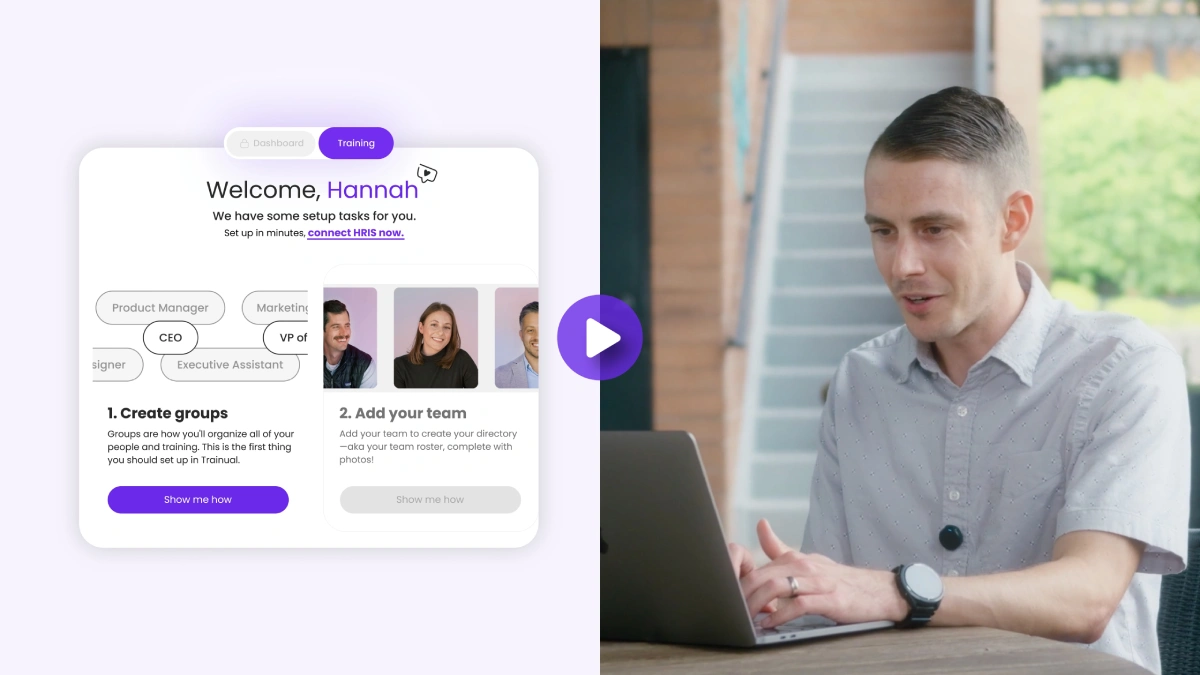
Trainual combines team goal tracking, KPI scorecards, structured meetings, and async updates with training and documentation in one platform built for growing teams. Its Operations Suite covers goals (with three tracking types and multi-level nesting), scorecards (combining manual KPIs and linked goals), meetings (with persistent agendas and linked goals/scorecards), and updates (with custom cadences and a manager inbox).
A mobile-first interface lets managers update goals between meetings and review scorecards from anywhere. The role chart drives ownership and dashboard logic, and Team Pulse AI surfaces stall signals automatically with evidence and a recommended next action.
For teams looking to consolidate four to six operations tools into one platform — without losing depth — Trainual offers a connected operating layer where goals, scorecards, training, and operational rhythm reinforce each other.
Frequently asked questions
How do I start evaluating LMS platforms for team scorecards?
Audit your current operations tools, identify the manager hours lost to status chasing, and define outcomes like cutting tool count or lifting action item completion.
What core features matter most for team scorecards and KPI tracking?
Prioritize structured goals with owners and targets, multi-level rollup, scorecards that link to goals, AI insights for stall signals, and connection to training and SOPs.
How do scorecards work alongside training in an LMS?
The right LMS lets a slipping goal link directly to the training path or SOP that addresses the underlying process — so accountability data triggers the training response.
What are common pitfalls to avoid?
Buying for dashboard depth without the operational rhythm layer (meetings, updates, action items). A scorecard without a meeting and an update cadence is just a chart nobody opens.
How do I ensure successful adoption?
Pilot with one working manager, measure rhythm change against a 30-day baseline, and expand only after the manager hours saved prove the system delivers consolidation.