



Our Jetson-era dreams of flying cars and robot maids haven’t fully arrived (though Roombas are doing their part). But when it comes to work, automation is no longer futuristic — it’s already reshaping how modern teams operate.
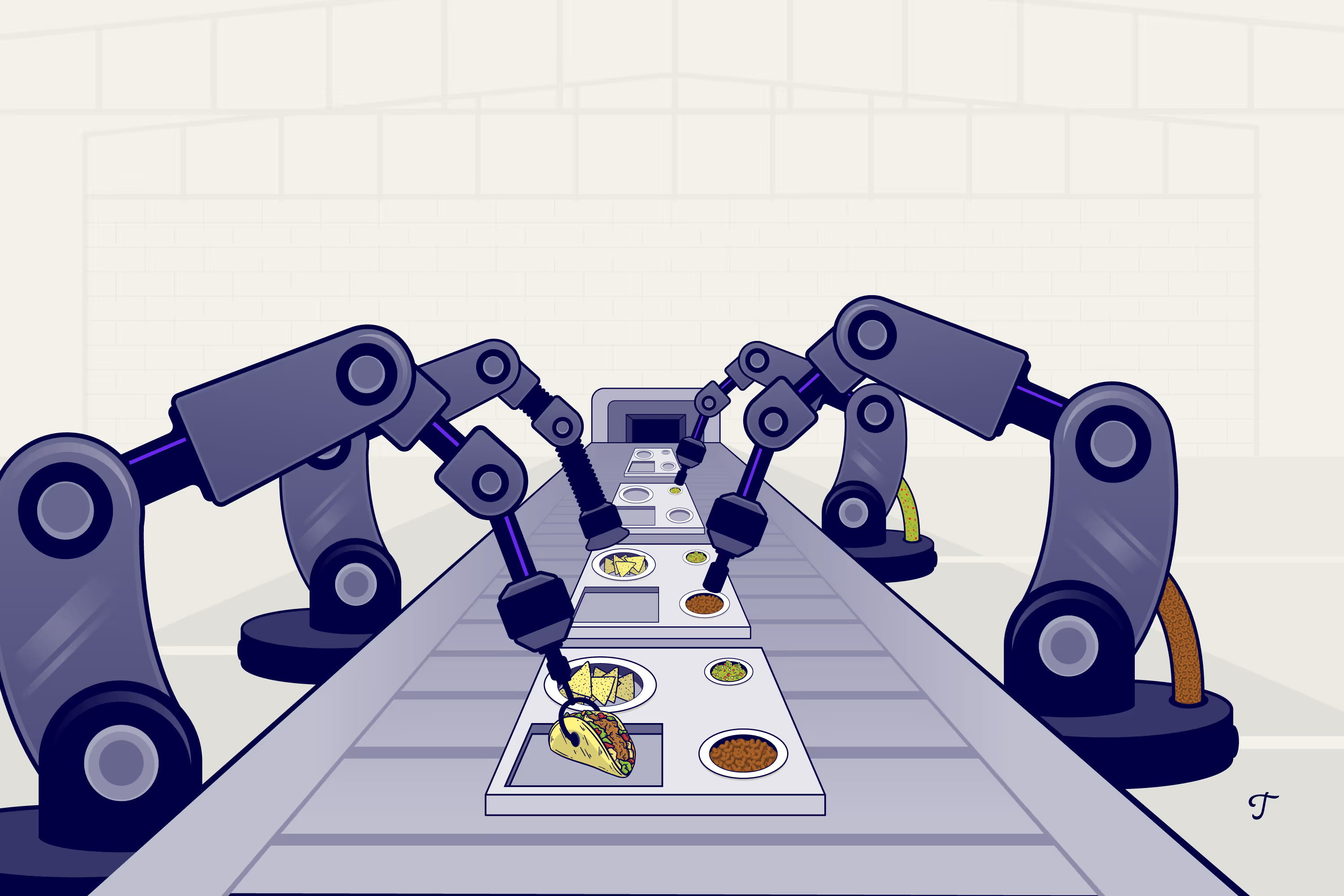
Across industries, organizations are using AI-driven automation to reduce manual work, increase consistency, and keep operations running smoothly as complexity grows. Restaurants are experimenting with automated ordering and fulfillment. Logistics teams are using AI to optimize routes and inventory. Operations and people teams are applying automation to training, documentation, and internal workflows.
While some examples grab headlines, the real shift is happening behind the scenes — in how teams document work, onboard employees, support customers, and make decisions at scale.
What is AI automation?
AI automation refers to software systems that can perform tasks, make decisions, or generate insights by learning from data — often without constant human input. These systems can recognize patterns, respond to questions, and improve over time.
If that sounds abstract, it’s probably already familiar in practice. Recommendation engines, search algorithms, digital assistants, and workflow automations are all powered by AI. The difference today is accessibility: teams no longer need massive budgets or technical expertise to apply AI in meaningful ways.
Instead of replacing people, AI automation is increasingly used to support teams by handling repeatable work, surfacing information faster, and reinforcing consistency across the organization.
How AI automation supports modern teams
As teams grow, operational friction tends to show up in predictable places: documentation gaps, inconsistent processes, slow onboarding, and knowledge living in too many tools (or people’s heads). AI automation helps reduce that friction in a few key areas.
Company process automation
Manual tasks like data entry, form processing, approvals, and reporting don’t scale well. They take time, introduce errors, and pull skilled people away from higher-impact work.
AI-powered process automation — including robotic process automation (RPA) — can handle these repetitive workflows quickly and accurately. This is especially valuable in functions like HR, finance, operations, and compliance, where consistency matters as much as speed.
The result: fewer bottlenecks, cleaner handoffs, and more time for teams to focus on strategic work.
Customer support and internal service
Automation doesn’t stop at external customers. Many teams now apply AI to internal support — answering common questions, routing requests, and surfacing documentation without constant interruptions.
Externally, AI-powered chat and messaging tools can resolve routine inquiries, escalate edge cases, and stay available around the clock. Internally, similar systems help employees find answers without digging through folders or waiting on teammates.
When information is easier to access, teams move faster — and frustration drops on both sides.
Data analysis and decision support
Most teams collect more data than they can realistically analyze. AI-powered analytics and machine learning tools help turn that data into usable insights by identifying trends, predicting outcomes, and highlighting opportunities.
Instead of relying solely on intuition or static reports, leaders can make decisions informed by patterns across customer behavior, performance metrics, and operational data.
When paired with clear processes, these insights become actionable — not just interesting.
Where Trainual fits
Trainual isn’t a legacy LMS — and it’s not just documentation software.
Trainual is an AI-powered, role-based training and knowledge platform that helps teams:
- Document how work gets done
- Train people based on their role
- Reinforce consistency as teams scale
Teams use Trainual’s AI assistant to:
- Draft and structure SOPs
- Clean up and standardize documentation
- Generate quizzes and training checks
- Instantly surface answers from approved content
New hires can simply ask Trainual — instead of digging through folders or interrupting teammates — and get accurate answers pulled directly from company-approved documentation.
The result: faster ramp time, fewer interruptions, and systems that actually stick.
👉 Learn how AI-powered training and documentation work in Trainual
👉 See how real teams use Trainual to build consistent operations
Systemization isn’t about control — it’s about confidence
At a certain stage, growth stops being about speed and starts being about stability.
Teams that systemize intentionally don’t lose flexibility — they gain clarity. They onboard faster. They reduce burnout. They scale without constantly reinventing how work gets done.
AI automation plays a critical role in that shift by reinforcing the systems teams already rely on — documentation, training, communication, and accountability — without adding more manual overhead.
If your team is growing, the question isn’t whether you need systems.
It’s which ones you build first.