







As organizations scale across cities, regions, and continents, maintaining consistent knowledge and training becomes mission-critical. In 2026, the best learning management systems (LMS) are those built to connect distributed teams —offering centralized knowledge sharing, streamlined onboarding, and AI-powered content personalization.
A learning management system (LMS) is a software platform that organizes, delivers, and tracks company training and institutional knowledge. Modern LMS solutions now go beyond compliance — they enable collaboration, automate training flows, and provide visibility across every location.
This guide compares the top LMS platforms designed for multi-location and hybrid organizations, focusing on scalability, integrations, analytics, and AI-driven efficiency.
Trainual
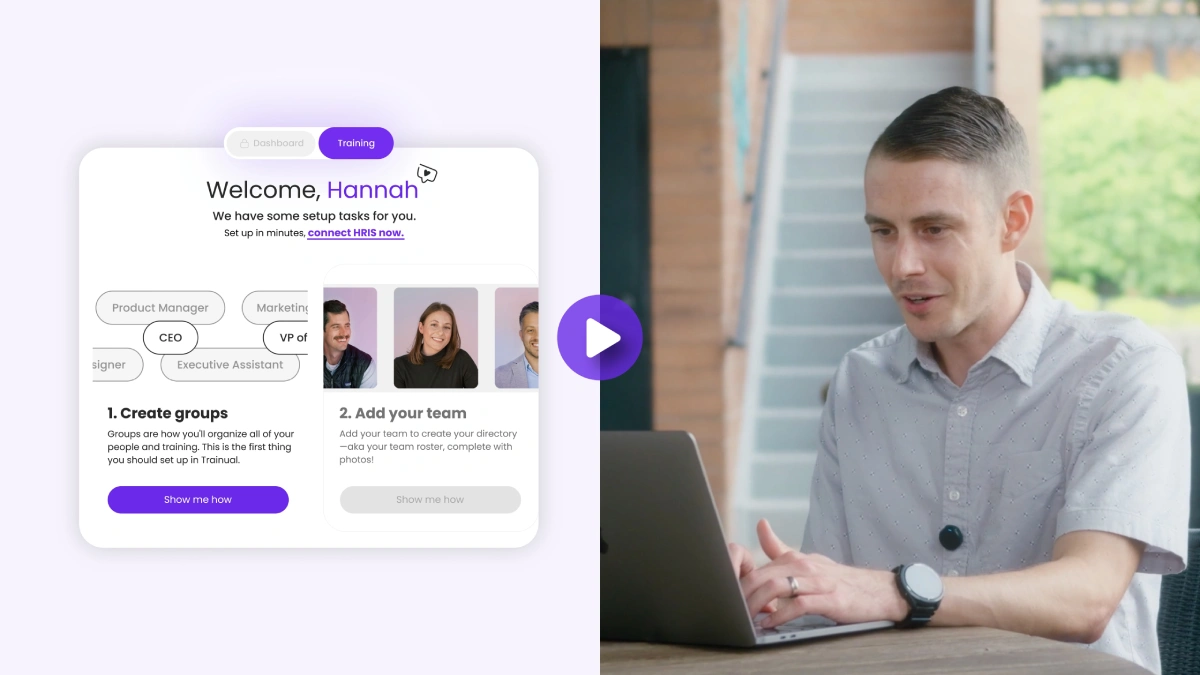
Trainual is purpose-built for growing and mid-sized businesses that need to document processes, train teams, and stay aligned as they grow across multiple locations. With automated onboarding flows, role-based content segmentation, and centralized documentation, Trainual makes it easy for distributed teams to share and retain knowledge.
Its AI features streamline content creation by suggesting instant answers and automating SOP updates, so frontline employees can always find what they need. For founders and operations leaders, Trainual drives measurable ROI by reducing manual training time and enhancing consistency — making it a leading choice for growing organizations that want a practical, easy-to-manage LMS.
360Learning
360Learning is designed around collaborative learning — turning internal experts into instructors. Teams can co-author content, engage in discussions, and crowdsource feedback, creating a continuous loop of peer-based knowledge sharing across global offices.
The platform integrates AI-assisted curation and intuitive authoring workflows, supporting large organizations as well as startups scaling internationally. Starting around $8 per user for up to 100 users, 360Learning serves over 1,700 customers and earns strong user satisfaction scores for its community-driven approach.
Docebo
Docebo delivers enterprise-level capabilities for distributed learning with its AI-driven personalization and multi-tenant structure. It helps large organizations segment content by region, brand, or business unit while maintaining centralized oversight.
With AI-powered recommendations, compliance analytics, and a large content marketplace, Docebo suits enterprises that need automation at scale. Its custom pricing reflects a focus on complex global deployments — ideal for organizations managing thousands of learners with diverse compliance requirements.
Absorb LMS
Absorb LMS is recognized for its modern design, scalability, and advanced analytics. Its mobile-friendly apps, offline capabilities, and integrated authoring tools make it effective for globally dispersed, mobile-first workforces.
Featuring robust compliance tracking and multi-portal functionality, Absorb serves franchise models, global enterprises, and organizations seeking detailed analytical insights. It’s a solid option for companies that prioritize user experience, accessibility, and reporting depth across training initiatives.
LearnUpon
LearnUpon emphasizes fast implementation and simple administration — key advantages when managing training across multiple audiences such as employees, partners, and customers. Its multi-portal structure helps teams maintain a single source of truth while tailoring content for each business unit or brand.
With strong reliability and a 4.6/5 G2 rating, LearnUpon appeals to organizations that value usability, scalability, and centralized control in multi-location environments.
SAP Litmos
SAP Litmos focuses on speed and scale. Its platform supports rapid deployment, a built-in content library, and compliance tracking tools for distributed or hybrid teams.
Its global training capabilities and integrated course catalog make it a go-to LMS for organizations that need to onboard quickly and maintain consistent training delivery across multiple geographies. Litmos serves both small teams and multinational enterprises seeking simplicity and reach.
iSpring Learn
iSpring Learn is a cloud-based LMS known for its affordability and quick setup. It’s ideal for organizations prioritizing fast rollout, intuitive management, and mobile-friendly access — especially in retail or frontline settings.
At roughly $3.58 per user per month, iSpring stands out for cost-effectiveness and ease of implementation, often achievable in a single day. Its quizzes, reporting tools, and 30-day free trial make it a practical entry point for small teams expanding training programs.
WorkRamp
WorkRamp positions itself as an AI-first LMS linking training directly to business impact. It unifies employee, customer, and partner training into a single platform, suited for organizations aiming to connect learning with strategic outcomes.
By integrating AI, analytics, and KPI tracking, WorkRamp gives leaders visibility into how learning drives performance and engagement. It works well for businesses that want to tie skill development directly to measurable goals.
How to choose the best LMS for multi-location teams
Selecting the right LMS for a distributed organization means balancing flexibility with control. Look for platforms that support multiple tenants or portals, offline access, localized interfaces, and granular permissions.
A multi-tenant LMS allows divisions, franchises, or regions to operate within independent portals — each with customized branding, content, and reporting — while leadership retains visibility across the organization. Prioritize robust analytics and compliance tracking to keep every location aligned and accountable.
Key features to look for
These capabilities sustain learning continuity, visibility, and engagement — crucial for keeping distributed workforces aligned and informed.
Integration and scalability considerations
Integration depth often determines the long-term success of an LMS rollout. Essential integrations include HR information systems (HRIS), collaboration tools like Slack or Microsoft Teams, SSO protocols, and open APIs for data synchronization.
Before committing, test how well the LMS connects to your existing tech stack. Conduct scalability checks with simulations that model future expansion — ensuring your platform evolves with organizational growth. Trainual, for example, integrates neatly with common HR and communication tools to streamline adoption across new sites.
Pilot testing and adoption strategies
Start with a small pilot that includes different roles and locations. Measure adoption through data points like completion rates, time-to-competency, and user feedback.
A proven rollout sequence looks like this:
- Define pilot scope and objectives.
- Train local admins and collect feedback.
- Refine content and workflows based on findings.
- Scale gradually across all locations.
This approach builds internal champions, minimizes friction, and accelerates full adoption organization-wide.
Frequently asked questions
What are the essential features of an LMS for distributed teams?
Core features include multi-portal access, role-based dashboards, analytics, mobile readiness, multilingual support, and integration with HR and collaboration tools.
How can LMS platforms support collaborative knowledge sharing?
They enable peer authoring, discussion threads, and centralized repositories where internal experts easily contribute new lessons.
What integration capabilities matter most for multi-location organizations?
Look for seamless HRIS integrations, SSO authentication, and connections to communication tools like Teams, plus APIs to link existing workflows.
How do AI features improve learning outcomes in multi-location LMS?
AI personalizes lessons, automates recommendations, and analyzes learner behavior to identify and close skill gaps across teams.
What are best practices for onboarding with an LMS across multiple locations?
Standardize core training, run short pilot tests, automate onboarding workflows, and track engagement to ensure consistency company-wide with tools like Trainual.