





If you’ve ever joined a fast-growing company, you know the feeling: policies live in Google Docs, expectations vary by manager, and answers depend on who you ask.
That’s exactly why growing teams need an employee handbook — not as a static document, but as a central system for clarity, consistency, and compliance.
As headcount increases, informal knowledge stops scaling. What used to work for smaller teams no longer serves you as your team expands. A modern employee handbook helps teams move faster without creating confusion or risk.
Why an employee handbook matters more as teams scale
An employee handbook does more than list rules. For growing organizations, it becomes the foundation for:
- Clear expectations across roles and locations
- Consistent onboarding and training
- Reduced legal and compliance risk
- Stronger culture alignment as new hires join
Without a shared source of truth, policies get interpreted differently, managers become bottlenecks, and new hires rely on tribal knowledge instead of documented guidance.
A well-structured handbook creates alignment — not bureaucracy.
The real benefits of a well-built employee handbook
Clear communication at every stage
A modern handbook sets expectations early and reinforces them over time. Employees know where to find answers, managers spend less time repeating themselves, and teams stay aligned as policies evolve.
Faster onboarding and training
Instead of explaining policies verbally or pointing new hires to scattered docs, teams can connect handbook content directly to onboarding and role-based training — helping employees ramp faster and with more confidence.
Built-in protection and compliance
From anti-harassment policies to workplace safety standards, a handbook helps protect both employees and the organization. When policies are documented, acknowledged, and easy to access, teams reduce risk and stay audit-ready.
What a modern employee handbook should include
An effective handbook covers the basics — but also goes beyond them.
At a minimum, growing teams should document:
- Company mission, values, and operating principles
- Workplace conduct and behavioral expectations
- Time, attendance, and leave policies
- Health, safety, and security guidelines
- Anti-discrimination and anti-harassment policies
- Role clarity and accountability
For teams operating across states or industries, compliance requirements become even more critical. This is where many companies struggle to keep policies current and consistent.
That’s why some teams pair their handbook with built-in compliance training, ensuring employees don’t just read policies — they understand them.
Turning a handbook into troubled manuals into a living system
The biggest mistake teams make is treating the handbook as a one-time project.
A modern handbook should:
- Evolve as policies change
- Support onboarding and ongoing training
- Be searchable, accessible, and role-aware
This is where traditional approaches fall short.
Shared drives store documents, but don’t connect them to roles. Legacy LMSs focus on courses, not day-to-day knowledge. And one-off AI tools generate content, but don’t preserve it.
Growing teams need something different.
Where Trainual fits (and why it’s different)
Trainual isn’t a traditional LMS — and it’s not just onboarding software.
Trainual is an AI-powered, role-based training and knowledge platform that helps teams turn their employee handbook into a system people actually use.
Teams use Trainual to:
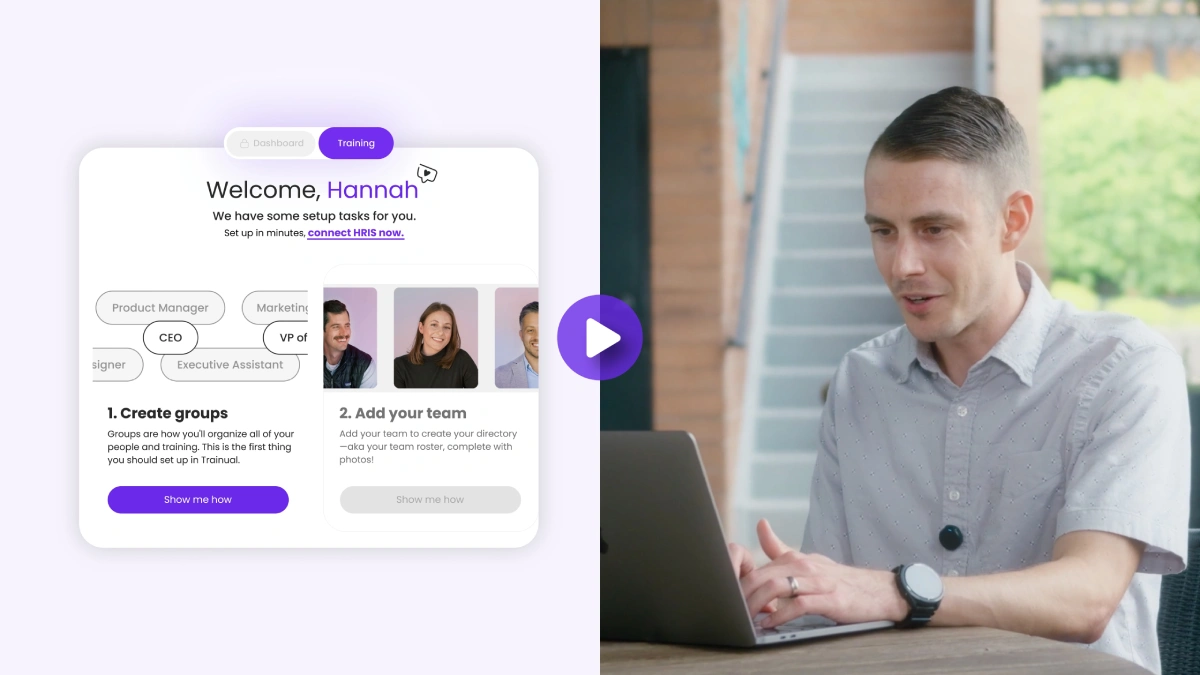
- Centralize handbook content, policies, and SOPs
- Connect training directly to roles and responsibilities
- Deliver consistent onboarding and ongoing training
- Add compliance courses as needed (without managing another tool)
Instead of static PDFs, teams get living documentation tied to real work.
AI-powered support built into the handbook experience
Documenting policies and processes is often the hardest part. Trainual’s built-in AI helps teams move faster without sacrificing clarity.
Teams use Trainual’s AI assistant to:
- Draft and structure handbook content using simple prompts
- Clean up, summarize, and standardize existing policies
- Automatically generate quizzes and training checks
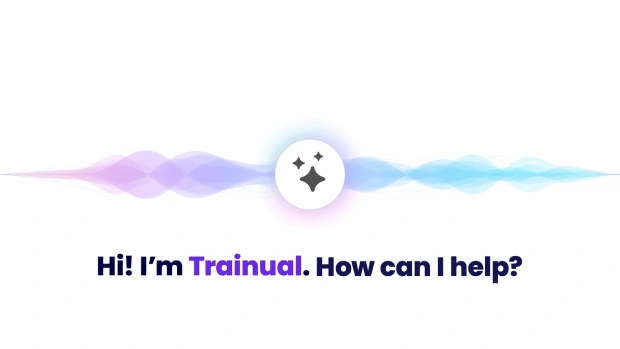
- Instantly answer employee questions using AI-powered search
New hires don’t have to dig through documents or ping managers — they can simply ask Trainual and get accurate answers pulled from approved content.
The result: faster ramp time, fewer interruptions, and more consistent training as teams grow.
👉 Learn more: How teams use AI to document and train faster with Trainual
Don’t just take our word for it
Growing teams across industries — from professional services to multi-location operations — use Trainual to replace tribal knowledge with clear, scalable systems.
👉 See how real teams use Trainual
Turn your handbook into a system — not a static document
At 25–250+ employees, an employee handbook isn’t about checking boxes. It’s about clarity, consistency, and confidence — for employees and leaders alike.
Trainual helps teams build employee handbooks that scale, connect policies to training, and stay up to date with AI and compliance support built in.
👉 Get a demo of Trainual and see how modern handbooks actually work in practice