

Articles
Retirees Could Be the Answer to Your Hiring Struggles

May 25, 2022

Designing a hiring strategy that works long-term often means widening the talent pool—not just competing for the same candidates everyone else is chasing.
One overlooked option: retirees who want to return to work in a flexible, meaningful way. Whether you need full-time coverage, part-time support, or project-based expertise, “unretired” professionals can bring deep experience, steady execution, and strong mentorship into roles that need reliability.
Here’s why hiring retirees can be a smart move—and how to set them up (and your team) for success.
Why more retirees are returning to work
Retirees re-enter the workforce for all kinds of reasons: they want purpose, social connection, flexible income, or a role that’s lower-pressure than what they did before. For employers, that creates an opportunity to match experienced talent to roles that benefit from maturity, consistency, and strong judgment.
The key is to design roles and onboarding that respect what they bring—and remove friction that can make returning to work feel harder than it needs to be.
Three benefits retirees can bring to your team
They bring experience that reduces guesswork
Retirees have seen patterns repeat: shifting priorities, hard customer conversations, cross-functional handoffs, and “we’ve never dealt with this before” moments. That kind of lived experience can help teams:
- Resolve issues faster
- Make better decisions under pressure
- Improve quality and consistency
- Reduce escalation and rework
Even if someone’s previous industry isn’t identical to the role you’re hiring for, transferable skills—communication, problem-solving, accountability, stakeholder management—often show up immediately.
They can accelerate mentorship and knowledge transfer
One of the highest-leverage reasons to hire retirees is mentorship. Experienced hires can help newer managers and individual contributors build stronger instincts and execution habits—especially when you pair them intentionally.
Mentorship doesn’t need to be formal to be effective, but it works best when expectations are clear, time is protected, and knowledge is captured so it doesn’t disappear in hallway conversations.
They can strengthen team performance through stability
There’s a persistent myth that older workers are less productive. In many roles, the opposite can be true—especially when performance depends on consistency, decision-making, and communication.
Experience can translate into calmer execution, fewer avoidable mistakes, and a stronger standard for “what good looks like,” particularly in operational roles where reliability matters.
How to hire retirees successfully
Hiring retirees works best when you design the role around outcomes—and remove common points of friction.
Start with roles where experience compounds
Retirees can be a strong fit for roles like:
- Customer support and client success
- Operations and process coordination
- Finance and administrative support
- Quality assurance and compliance-heavy work
- Training, onboarding, and enablement
- Project coordination or specialist consulting
Look for roles where strong judgment, communication, and consistency are more important than speed alone.
Offer flexible structures that attract the right candidates
Many retirees don’t want a repeat of their previous work life. Consider options like:
- Part-time schedules or phased ramp-ups
- Seasonal support during peak periods
- Project-based scopes with clear deliverables
- Job sharing or split shifts for coverage roles
- Remote or hybrid options where possible
Flexibility is often the difference between “interested” and “ready to commit.”
Make expectations explicit to avoid “assumed knowledge”
Experienced professionals appreciate clarity. Don’t rely on “they’ll figure it out.” Document:
- Role responsibilities and success metrics
- Communication norms (channels, response times, meeting cadence)
- Decision rights and escalation paths
- Tools, access, and workflow ownership
- What “done” looks like for recurring tasks
This protects the hire, the manager, and the team.
How to onboard retirees in a way that supports performance
A strong onboarding experience matters for every hire—but it’s especially important for returning workers who may be stepping into new tools, new systems, and new workplace norms.
Make tools and systems training frictionless
The biggest onboarding gap is often tool fluency—not capability. Provide step-by-step guides, short videos, and clear “how we do things here” documentation for:
- Communication tools
- Ticketing systems and workflows
- Internal knowledge bases
- Reporting routines
- Collaboration and approvals
Pair them with context, not just tasks
Give retirees a clear picture of how work flows across the organization:
- What teams they partner with
- Where their work fits into broader outcomes
- Who owns what—and when to escalate
This reduces confusion and helps them contribute faster.
Create a mentorship path that benefits both sides
If mentorship is part of the role, make it intentional:
- Define what mentorship looks like (shadowing, weekly office hours, review sessions)
- Assign clear mentees or focus areas
- Capture “tribal knowledge” into repeatable documentation so learning scales beyond 1:1 conversations
Where Trainual fits
Hiring retirees is often a great reminder of a bigger truth: onboarding only works when knowledge is easy to find, role expectations are clear, and processes don’t live in people’s heads.
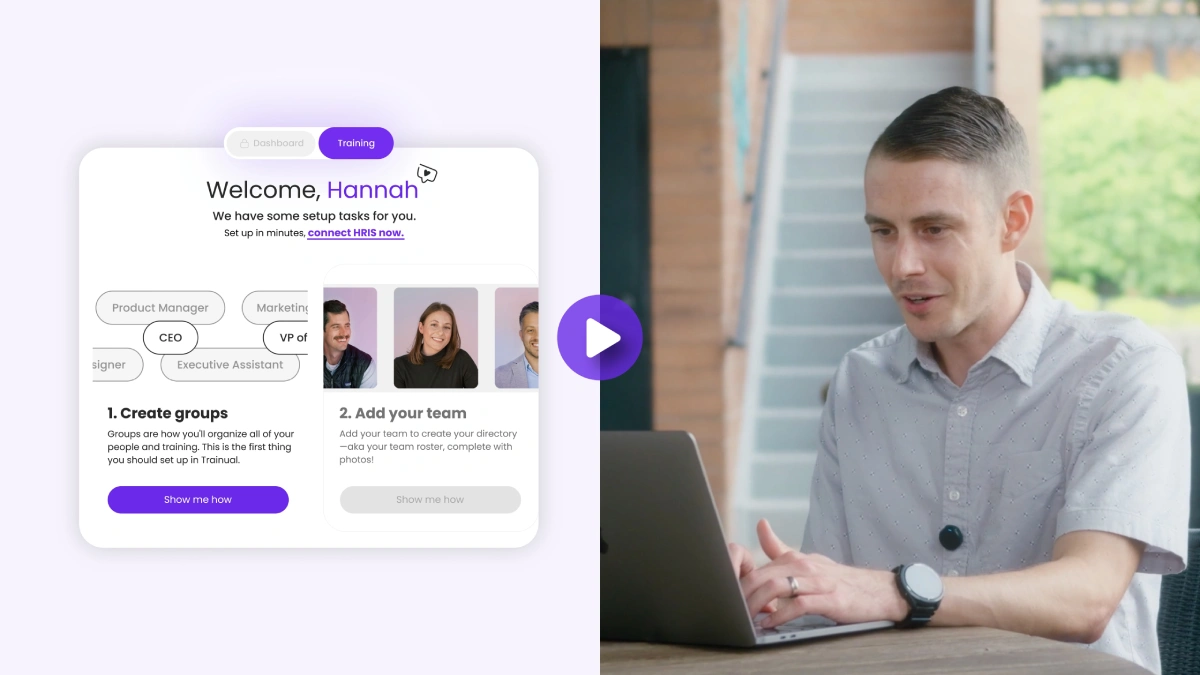
Trainual is an all-in-one training and operations platform (not a legacy LMS) that helps teams document how work gets done, train by role, and keep knowledge current as operations evolve. With role-based training paths, version history, and AI-powered support for drafting and standardizing content, teams can onboard consistently—no matter who joins or when.
👉 Get a demo to see how Trainual helps teams onboard faster, document role expectations, and scale knowledge in one place.

.avif)