




If Ironsmith Fire is doing its job right, you’ll never think about them.
You’ll walk into a building. Go to work. Drop your kids off at school. Get treatment at a hospital. Attend a concert. And you’ll never once look up and say, “Thank goodness the fire protection system was designed correctly.”
In life safety, the best work is invisible — and the cost of a mistake can be fatal.
Ironsmith Fire is a multi-location fire protection contractor founded in 2021. Today, they support 125 full-time employees (plus a large contract labor force) across the Southeast — designing, fabricating, installing, and servicing fire protection systems in complex commercial environments.
And at the center of it all is founder, CEO, and President Justin Smith.
He built his reputation over 23 years in the industry, then built a company around standards he refused to compromise on.
The history behind Ironsmith Fire
Justin didn’t fall into this career through a polished plan.
At 21, he was working 12-hour night shifts on an assembly line. One morning, exhausted, Justin came home to a voicemail: a design manager had found his resume online and wanted him to interview for a fire protection design role.
“Coming off a twelve-hour night shift, I said, ‘Yes, I’ll be there tomorrow.’”
That “yes” turned into 23 years in the fire protection world — learning the craft, seeing what separates good from great, and building the kind of reputation that makes people pick up the phone when the job is complex.
He learned something early that sounds obvious, but isn’t common in construction:
“If you just answer the phone or answer your email, you’re in the top 10%… If you actually do what you say you’re gonna do… now you’re like top 1%.”
When IronSmith launched, communication, safety, and follow-through were the standard.
Then came growth… and the mess that follows it
Ironsmith didn’t grow slowly.
From early on, the company gained momentum — new projects, new hires, more moving parts, more roles, more coordination. (The kind of growth most teams think they want… until they’re living inside it.)
Justin realized his knowledge was literally bottlenecking the team. He kept getting the same questions over and over because he had all the answers — and that pulled him away from other important work:
- How do we handle this?
- Where’s that form?
- What’s the policy here?
- Who owns this step?
“To continue to scale and grow, we had to be documenting processes… How many times a day am I answering a question about the same thing?”
And he realized the uncomfortable truth: If the company relied on him being the answer key, it wasn’t scalable.
The moment it changed: 8 a.m., every morning
Justin tried the classic leadership lie first: “At the end of the day, I’ll make time to write a process.” Months went by. Nothing happened.
Accessible operations were the Ironsmith’s biggest problem — and Justin knew Trainual needed his full cognitive attention. So he made his schedule reflect what mattered:
“My number one priority… I’m gonna block time first thing in the morning to focus on something long-term and strategic.”
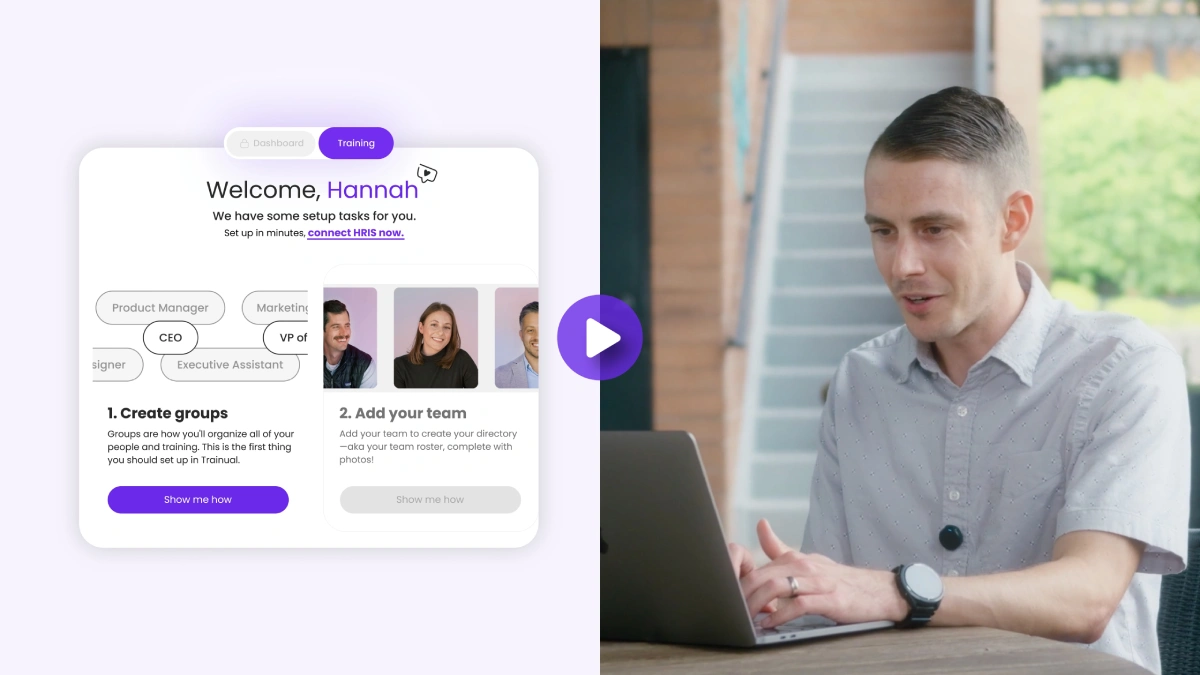
Every morning, 8:00–9:00 a.m., Justin wrote processes in Trainual.
And he made one rule that became the engine behind the system:
“If I answered a question today, I would write the answer to that tomorrow.”
He created a loop that would define Ironsmith going forward.
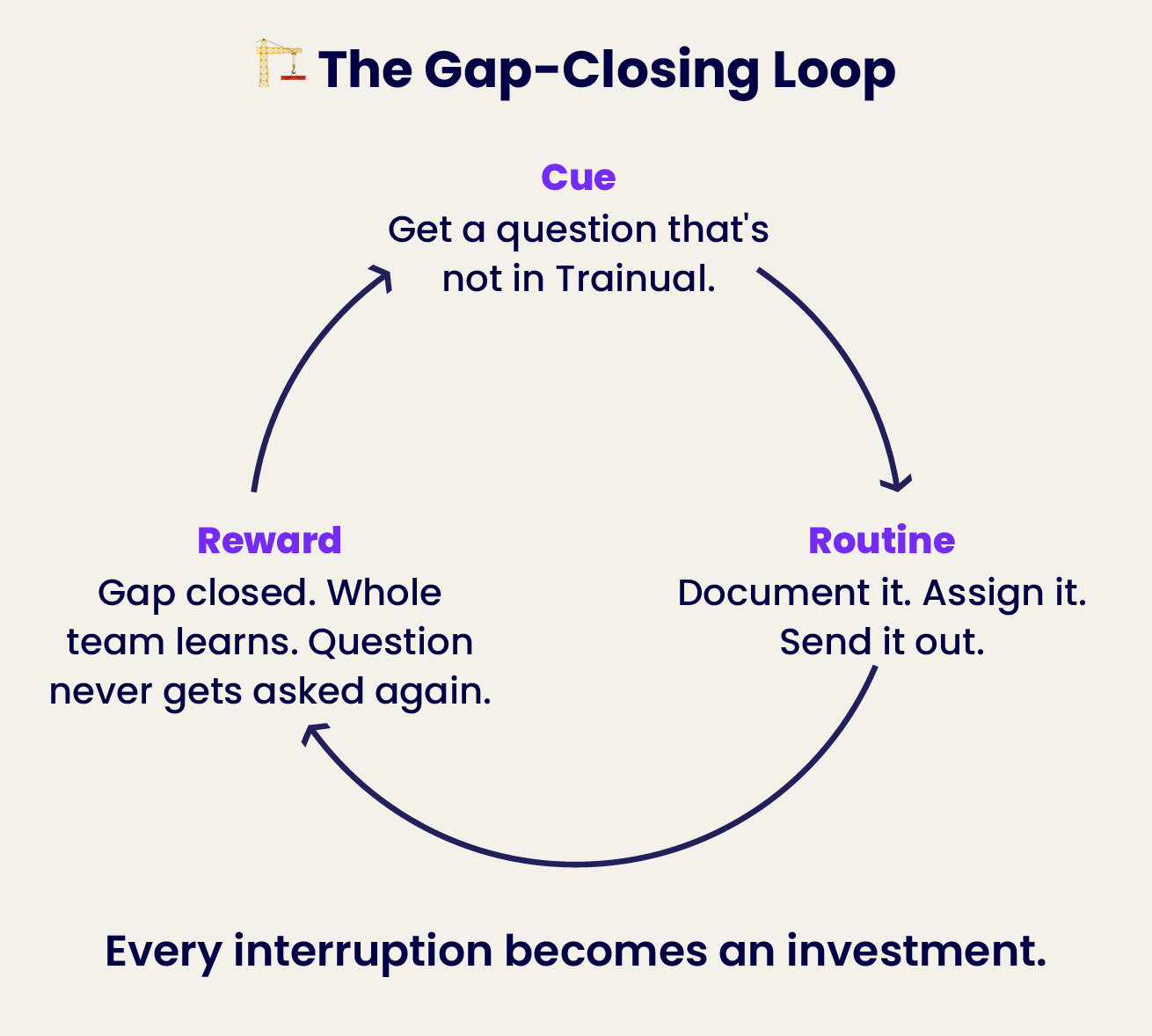
Top-down leadership at its finest
A few months into the habit, something changed — without a big rollout or a big speech.
People noticed the spirit behind Justin’s actions and started to follow suit.
“Once I started writing it, and they could see the intention behind it… they actually started writing the processes and then I just started approving them.”
Trainual stopped being “Justin’s project” and became “how Ironsmith works.”
Justin’s 8–9 a.m. block freed up — not because documentation stopped, but because ownership spread.
That’s when you know you didn’t just adopt a tool. You created a culture.
How Trainual sets the standard
Ironsmith wants to be the team clients call when the problem is complex — when it has to be done right, when professionalism matters, when the standard can’t change depending on who shows up.
And Trainual helps make that standard repeatable.
From day one, new hires see the expectation and the intent:
“The first day that somebody gets hired, they go through Trainual… they go through our handbook… and there’s a signature page at the end.”
And when someone needs an answer in the middle of real work?
“Just the search bar… If somebody has a question, they can type in PTO… here it is.”
No hunting.
No guessing.
No “let me ask someone.”
That level of congruency shows up no matter what problem Ironsmith faces. Consistent processes lead to a consistent product, which solidifies their reputation as top-notch service providers.
Dedicating a full-time Trainual process engineer
As Ironsmith grew, its operations became more layered — and Justin didn’t want process ownership to get scattered across the team. He hired a full-time Trainual manager, James Smith, to keep everything centralized and moving forward.
“James is a full-time training and process engineer… James is 100% chasing broken systems.”
Broken? Fix it.
Missing? Document it.
Confusing? Simplify it.
Justin still stays involved — but as the approver, not the point of dependency:
“He makes it pending. I review it… I approve it for him to publish.”
The mindset that makes process sustainable
Justin doesn’t treat process like red tape. He treats it like clarity. Less is more: when processes are clean, people spend less time searching and more time executing.
“Think of yourself as a reducer of process instead of a producer.”
If your training isn’t usable in the field, it’s not useful.
Because the goal isn’t “good documentation.”
It’s used documentation — documentation that ultimately keeps loved ones out of harm’s way if a fire breaks out, God forbid.
TL;DR — Ironsmith Fire
- Scaled a multi-location life-safety contractor without standards drifting—or quality slipping.
- Eliminated repeat questions by turning tribal knowledge into a searchable, self-serve source of truth.
- Made process adoption stick by modeling it first (8–9 a.m. daily) before asking the team to follow.
- Created a culture shift by transitioning from “answering everything” to simple approval and publishing flow.
- Protected a premium brand experience with consistent onboarding and expectations — no matter who’s hired or where they work.
- Systematized clean systems by hiring a full-time process owner to spot gaps, fix issues, and keep training sharp.
- Led with simplicity: reduce complexity so the field moves faster, stays aligned, and delivers safely under pressure.
Companies like Ironsmith are the unsung heroes of everyday life. When systems are built right, most people never have to think about them.
👉 Want that same level of consistency in your operations? Book a demo and see how Trainual can help.